The most common question on my desk from business owners isn't about price; it's about which kind of service they even need. Front-load and roll-off solve different problems, and businesses regularly pay for the wrong one: a retail store renting roll-offs month after month, or a renovation crew trying to stuff a construction site's debris into a front-load box behind the building.
Here's how I walk commercial accounts through the decision.
The Two Services in One Minute
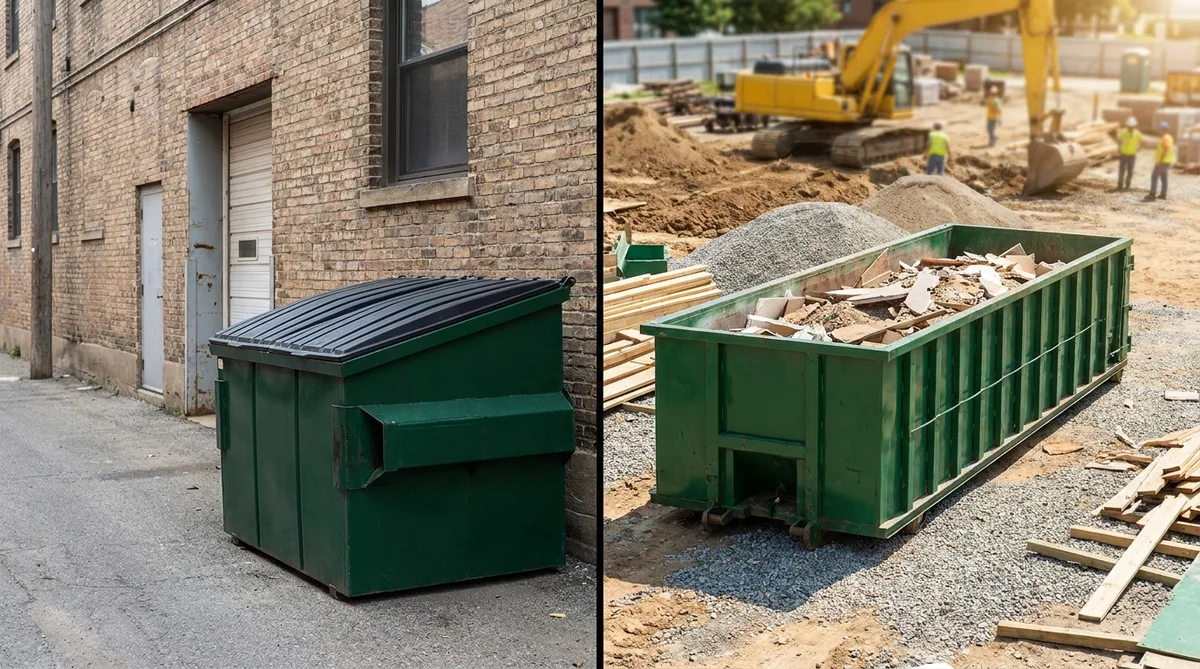
Front-load is the permanent dumpster behind a business (typically 2 to 8 cubic yards) emptied on a recurring schedule by a truck that lifts it overhead and moves on. You keep the container; the waste leaves on a rhythm.
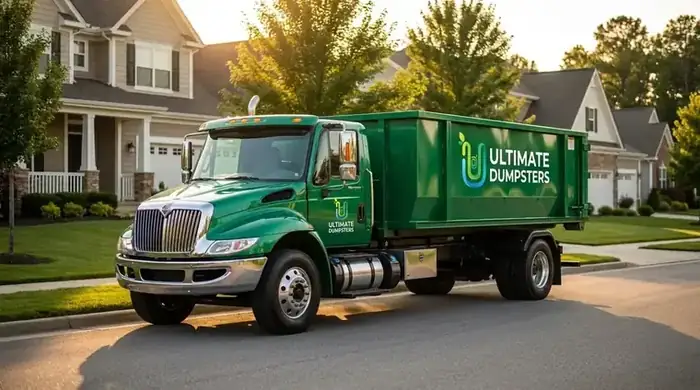
Roll-off is the big open-top container (10 to 40 cubic yards) delivered for a project and hauled away when you fill it. The whole container leaves each time.
The decision is rarely about which is "better." It's about what your waste actually looks like.
Choose Front-Load When Your Waste Is a Rhythm
If your business produces a steady stream (packaging, food waste, breakroom trash, retail returns), you have rhythm waste, and front-load is built for it.
The economics
Front-load pricing is a monthly rate driven by container size and pickup frequency. The efficiency comes from routing: your container is emptied alongside dozens of neighbors, which is why a weekly 4-yard pickup costs dramatically less per cubic yard than any on-demand option. The tuning question I always work through with new accounts: are you paying to haul air? A container that's half-full at every pickup means the size or the frequency is wrong, and right-sizing it is usually the fastest savings available.
Where businesses get it wrong
Two classic mistakes. First, sizing for the worst week instead of the normal week and paying year-round for December's volume. Better: size for normal, add an extra pickup during peaks. Second, ignoring compaction: once a business is filling large containers several times a week, a compactor often cuts haul frequency enough to pay for itself.
Choose Roll-Off When Your Waste Is an Event
Renovation, relocation, a warehouse cleanout, storm damage, a construction phase: that's event waste. It's bulky, it's heavy, it arrives all at once, and it would bury a front-load container in an afternoon.
The economics
Roll-off pricing is per haul: one flat rate covering delivery, the rental window, pickup, and disposal up to an included weight. The levers that matter are size selection (a second haul costs more than one right-sized container) and weight honesty: construction debris hits weight limits before volume limits, so tell your vendor what's actually going in the box and let them set the allowance correctly.
The swap-out pattern
Active jobsites rarely want one giant container; they want a 20 or 30-yard on a swap cadence: full one out, empty one in, same trip. It keeps the footprint manageable, the site safe, and debris always has somewhere to go. On multi-phase projects, matching container size to each phase (big and light for demo, small and heavy for concrete) beats any one-size approach.
The Answer Is Often Both
Plenty of my accounts run both simultaneously, and it's the right call: a distribution center with weekly front-load service adds roll-offs for a racking teardown; a restaurant with daily pickup rents a 20-yard for its renovation. The waste streams are different, so the services are different; the mistake is forcing one to do the other's job.
A quick decision test:
- Waste every week that looks the same? Front-load.
- A pile that exists because of a project? Roll-off.
- A steady stream AND a project? Both, priced together. Bundling recurring service with project containers is exactly the kind of package worth negotiating.
One Last Thing About Contracts
Front-load service usually comes with a term agreement. Read the auto-renewal and rate-escalation clauses before signing anything, with any vendor. Roll-off is transactional; no term to manage. If a vendor is vague about either, that vagueness is the answer to whether you should sign.
Not sure which side your operation lands on? That's literally my job. Call the main line at (866) 858-3867 ext. 609 and I'll walk your numbers with you.