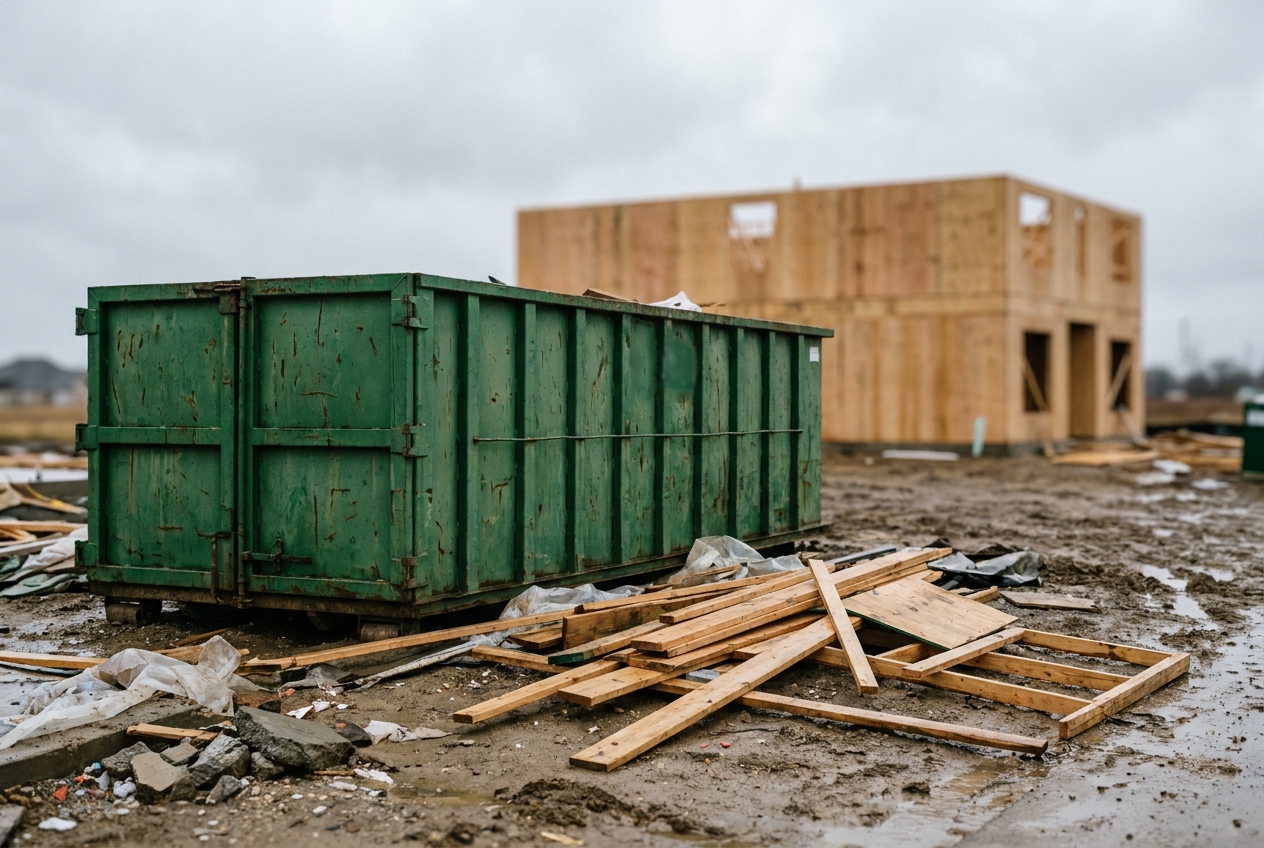
On a jobsite, it is a roll-off
I handle commercial and national accounts, so most of the people I talk to all day are contractors, and contractors do not ask for a dumpster. They ask for a roll-off container. That is the trade word, and if you spend any time on jobsites you hear it constantly. It is the same box a homeowner would call a dumpster. The reason the vocabulary is different is just who is talking.
What do contractors call a dumpster?
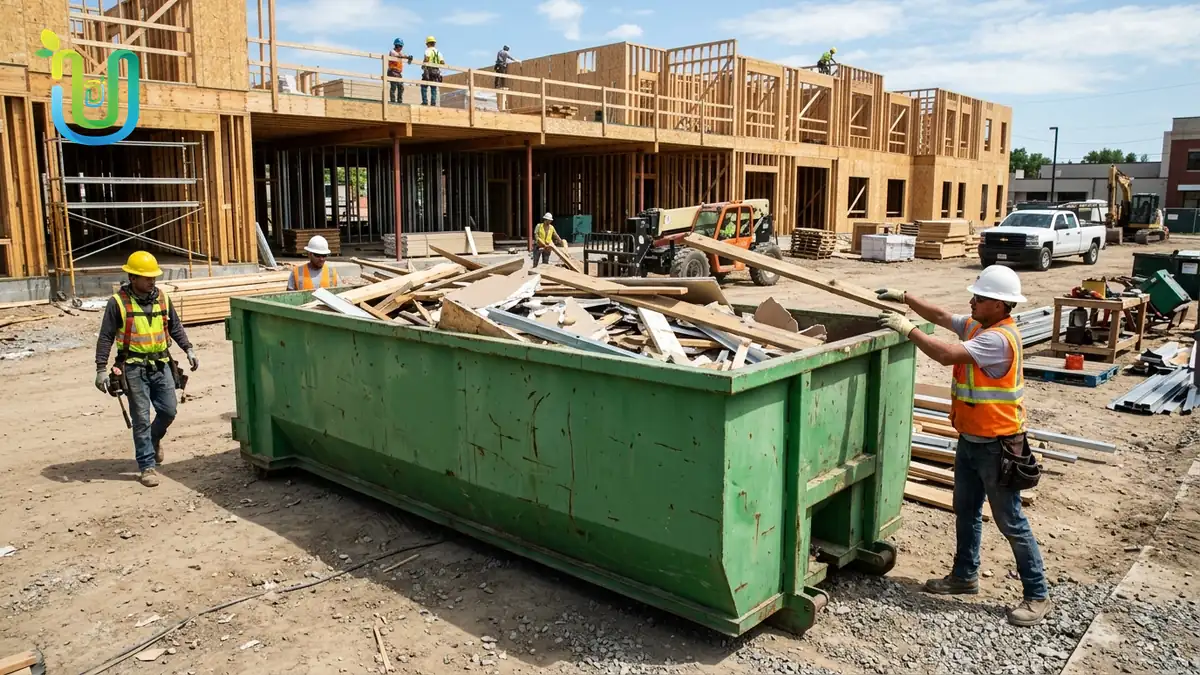
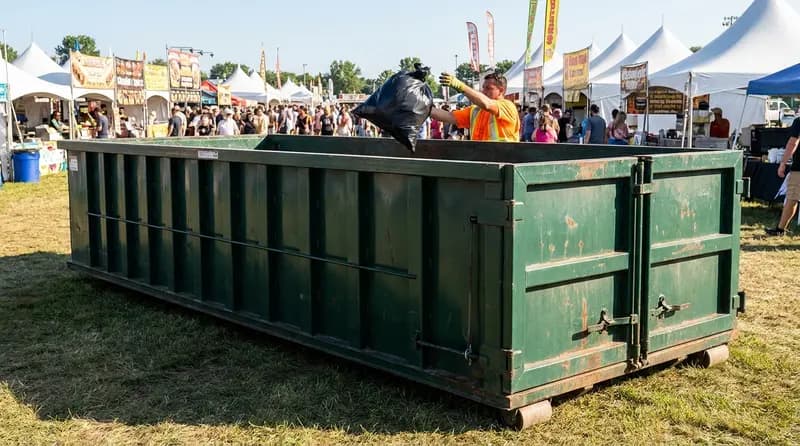
Contractors call it a roll-off container, or just a roll-off. It is the trade term for the open-top steel container, 10 to 40 cubic yards, delivered to a jobsite, filled, and hauled off when full. It is the same container a homeowner would call a dumpster. The name comes from the way it rolls off the back of the delivery truck onto the ground.
Is a roll-off container the same as a dumpster?
Yes. A roll-off container and a dumpster are the same open-top project box in everyday use. Contractors say roll-off, homeowners say dumpster, but it is the identical container. Nothing about the box is different, only the word that comes out of the mouth of the person calling.
Why does the trade use the word roll-off?
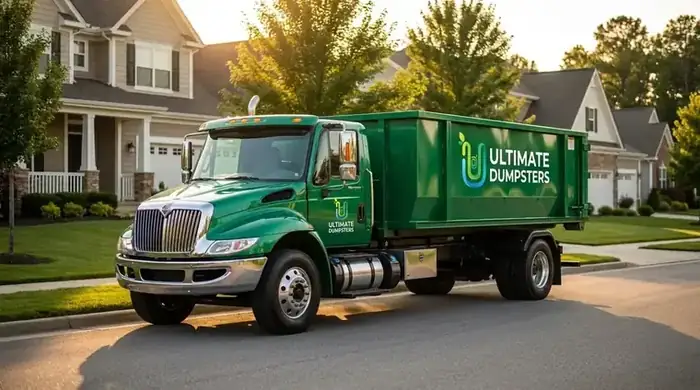
Because it describes the delivery. The container rolls off the back of the truck on rails and sits on the ground with no truck attached, then rolls back up when it is full. That is different from the lidded containers a route truck lifts and empties in place. On a jobsite where a box may sit for weeks, that roll-off mechanism is the whole point.
Why does getting the word right matter on a commercial job?
For a homeowner the name is just a name. On a commercial or construction job, the right vocabulary on the phone speeds things up and can save money, because the details ride on the words. When a contractor tells me roll-off, I already know we are talking about a project box, not a recurring service, and we can go straight to the questions that set the price and keep the job moving.
What questions actually set the price on a roll-off?
Three big ones. What material is going in it, what size and how many you need, and where it sits with what access. Clean construction debris, mixed construction and demolition, roofing tear-off, and heavy material like concrete or dirt all price and load differently. Nail those down and the quote is accurate the first time.
Can you save me money if I order a lot of roll-off containers?
Usually, yes. If you are ordering boxes left and right across a project, I guarantee I save you some money by setting the right sizes and a smart swap schedule instead of ordering piecemeal. Tell me the scope, the materials, and the timeline and I will build the container plan around the job.
What is a swap or a swap-out on a jobsite?
A swap is when we haul away a full container and drop an empty one in the same spot so your crew never stops working. On an active site that keeps debris moving and prevents an overflowing box from becoming a safety or schedule problem. Setting the swap cadence to your actual pace is a big part of what I do for commercial accounts.
What size roll-off do contractors usually use?
It depends on the trade and the debris. Roofing and demolition crews often run 20s and 30s, general construction leans on 20s and 40s for bulky framing and packaging, and tight urban sites sometimes need a smaller box that the truck can actually place. The right answer is the one that matches your material and your access, which is why I ask before I quote.
What size do I need for heavy material like concrete or dirt?
Something smaller than you would expect. Heavy material hits the weight limit long before it fills the box, so a big container just ends up half-empty and over the weight allowance. For concrete, dirt, brick, or shingles, we usually put you in a smaller, weight-rated clean load. The rule is big and light goes in a big box, small and heavy goes in a small one.
Can I mix heavy material with regular construction debris?
Usually not in the same box, and it matters for the bill. Mixing heavy material like concrete or dirt with mixed debris can push a load over its weight allowance and complicate disposal. It is almost always cheaper and cleaner to keep a heavy clean load separate. Tell me what is going in and I will set up the containers so you are not paying overage on a mixed box.
Do you handle recurring service or just one-time roll-offs?
Both. A roll-off is a project box for one-time or phased jobs, but if a commercial site needs ongoing waste service we set that up too. Plenty of businesses run a recurring container for everyday trash and pull in roll-offs for buildouts and cleanouts. Tell me the operation and I will match the right mix.
The one word that is not a roll-off: what about storage containers?
This is the one mix-up even pros hit. A storage container is not a roll-off. We run both, so if someone on your crew calls in and just says container, we confirm whether they mean the open-top waste box or a storage unit, because those are two different pieces of equipment on two different trucks. Everything else, roll-off, trash container, metal box, is the same open-top dumpster.
Do you coordinate multi-site or national projects?
Yes. I have coordinated waste and site logistics for everything from single commercial locations to multi-site national operations. If you run jobs across multiple states, I can set up consistent service, sizing, and billing across all of them through one point of contact instead of you chasing local vendors site by site.
Where should the roll-off sit, and what access do you need?
Ideally on a flat, firm surface with a clear straight shot for the truck to back in and roll the container off. We need overhead clearance with no low wires or branches over the drop spot, and enough room to pull the box back out when it is full. On tight urban sites, tell me the constraints up front and I will match a container the truck can actually place, so nobody shows up to a spot that will not work.
What should I tell you when I call about a roll-off?
Four things move fast: what material is going in the container, what size and how many you need, where the box will sit and what the access is like, and your timeline. Sizes, materials, odd locations, it does not matter, I will handle it. Call me directly at (866) 858-3867 ext. 609 and I will build the container plan around your job.