
Cubic Yard Calculator
To get cubic yards, multiply length x width x height in feet and divide by 27. A 12 x 8 x 4 ft pile is 384 cubic feet, about 14.2 cubic yards. Enter your measurements below for the exact volume, how it compares to each dumpster size, and what it weighs for common debris.
Cubic Yard Calculator
Measure your debris pile and we will calculate the volume in cubic yards.
Understanding Cubic Yards
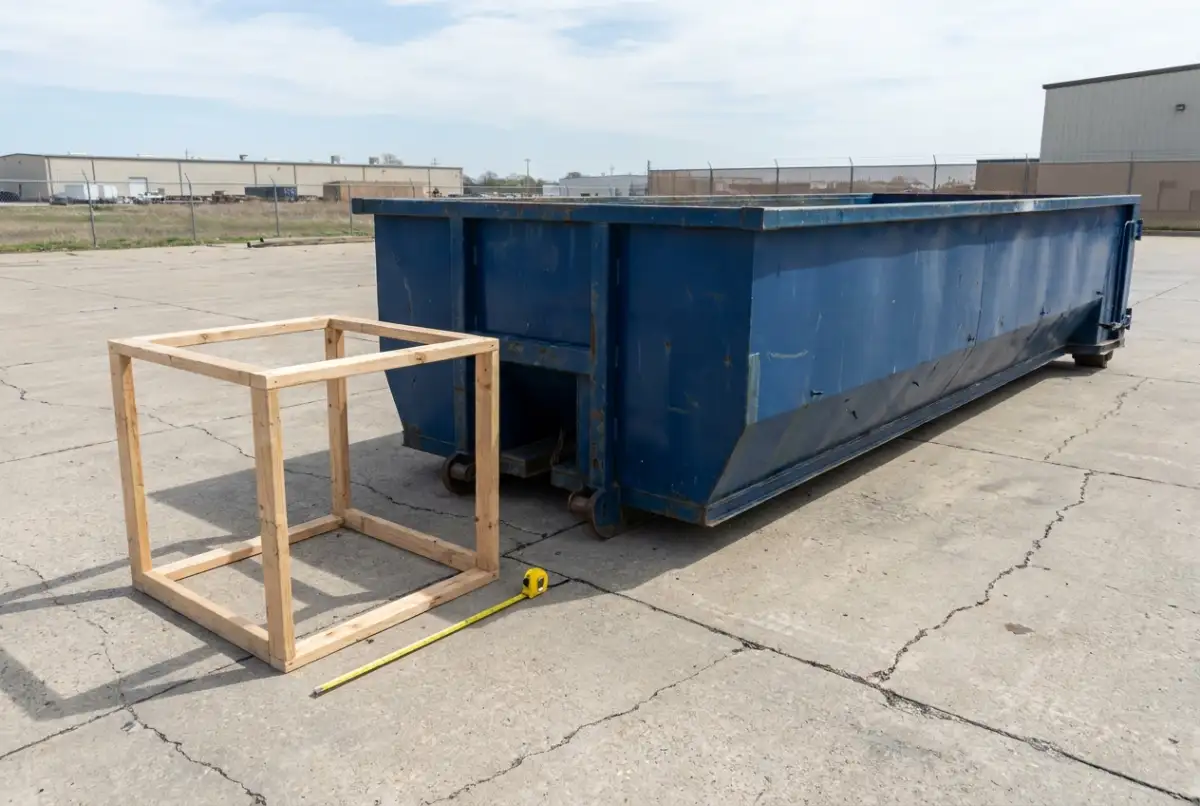
A cubic yard is a unit of volume equal to 3 feet x 3 feet x 3 feet, or 27 cubic feet. It is the standard measurement used by the dumpster rental industry to describe container capacity.
When estimating your debris volume, measure the approximate length, width, and height of your pile in feet. The calculator multiplies these together and divides by 27 to give you the result in cubic yards. Keep in mind that loose debris (like tree branches or insulation) takes up more space than dense materials (like concrete or dirt), even if it weighs less.
As a general rule, it is better to round up. If your calculation comes out to 14 cubic yards, a 15-yard dumpster is a tighter fit than you might expect: debris does not stack perfectly, and you want some breathing room. When in doubt, go one size up.
Quick Reference: What Fits in Each Size?
| Size | Capacity | Equivalent To |
|---|---|---|
| 10 Yard | 10 cubic yards | 3-4 pickup truck loads |
| 15 Yard | 15 cubic yards | 5-6 pickup truck loads |
| 20 Yard | 20 cubic yards | 6-8 pickup truck loads |
| 30 Yard | 30 cubic yards | 9-12 pickup truck loads |
| 40 Yard | 40 cubic yards | 12-16 pickup truck loads |
What is the cubic yard formula?
Cubic yards = length (ft) x width (ft) x height (ft) / 27. Measure in feet; if you have inches, divide by 12 first. For a round pile, use the widest diameter as both length and width and take about half the result, since a mound is not a box.
| Example | Math | Cubic yards |
|---|---|---|
| Garage pile 12 x 8 x 4 ft | 384 / 27 | 14.2 |
| Patio slab 20 x 10 ft, 4 in thick | 20 x 10 x 0.33 / 27 | 2.5 |
| Mulch bed 30 x 4 ft, 3 in deep | 30 x 4 x 0.25 / 27 | 1.1 |
| Room cleanout 10 x 10 x 3 ft | 300 / 27 | 11.1 |
How many tons is a cubic yard?
It depends on the material: a cubic yard of household junk weighs under 300 lbs, while a cubic yard of broken concrete can top a ton. Planning ranges for loose debris:
| Material | Lbs per cubic yard | Tons per cubic yard | Tons in 10 yards |
|---|---|---|---|
| Household junk and furniture | 150 - 250 | 0.07 - 0.13 | 0.8 - 1.3 |
| Green yard waste (branches, leaves) | 200 - 400 | 0.10 - 0.20 | 1.0 - 2.0 |
| Mixed construction debris | 300 - 500 | 0.15 - 0.25 | 1.5 - 2.5 |
| Roofing shingles (tear-off) | 400 - 600 | 0.20 - 0.30 | 2.0 - 3.0 |
| Dirt and soil | 1,500 - 2,000 | 0.8 - 1.0 | 7.5 - 10.0 |
| Broken concrete and brick | 2,000 - 2,400 | 1.0 - 1.2 | 10.0 - 12.0 |
Why it matters: every dumpster includes a set weight (about 1 ton on a 10 yard up to 4 tons on a 40). Ten yards of junk fits easily; ten yards of dirt is several times over, which is why dirt and concrete go in dirt and concrete boxes.
Common mistakes
- Measuring in inches and forgetting to divide by 12 before multiplying.
- Sizing by volume alone for heavy material: a half-full box of dirt can already be over weight.
- Forgetting that broken-up debris takes more room than the same material stacked or standing.
- Ordering the exact size: leave room, since loads must stay level with the top rim.
Sources and method: the cubic yard (27 cubic feet) is the standard U.S. volume unit. Material weights are planning ranges for loose debris from our disposal guides, consistent with the U.S. EPA's volume-to-weight conversion factors. Real loads vary with moisture and how tightly they are packed.
Cubic Yard Questions
Measure length, width and height in feet, multiply them to get cubic feet, then divide by 27, because one cubic yard is 3 ft x 3 ft x 3 ft = 27 cubic feet. A pile 12 ft long, 8 ft wide and 4 ft high is 384 cubic feet, or about 14.2 cubic yards.
Convert each measurement to feet first by dividing inches by 12. A 4 inch slab is 0.33 ft deep, so a 20 ft by 10 ft slab 4 inches thick is 20 x 10 x 0.33 = 66.7 cubic feet, or about 2.5 cubic yards.
Multiply the cubic yards by the material's weight per cubic yard, then divide by 2,000. Ten cubic yards of mixed construction debris at 300 to 500 lbs per yard is about 1.5 to 2.5 tons; the same volume of dirt is 7.5 to 10 tons.
A 15 yard dumpster holds 15 cubic yards, but loose debris never packs perfectly, so most people go one size up to a 20 yard. For heavy material like dirt or concrete, weight limits matter more than volume, so use a smaller heavy-material box.
Get Your All-Inclusive Price Today
One call. One price. Zero surprises. Get a real quote in minutes from one of America's highest-rated dumpster & site-service companies.
- No obligation
- Same-day available
- No hidden fees
Get my instant price
Enter your ZIP. See availability & pricing in seconds.

Live agents standing by
Real people answer, no phone trees