Call Now:(866) 858-3867Live agents standing by
Everything a first-time renter needs to know about ordering, loading, and managing a dumpster rental. No industry jargon, just clear, practical advice to make your project easier.

A dumpster rental is a temporary waste removal service where a large, open-top roll-off container is delivered to your home or job site. You fill it with debris at your own pace during the rental period, then the hauler picks it up and handles disposal, making it the easiest way to manage waste from renovations, cleanouts, and construction projects.
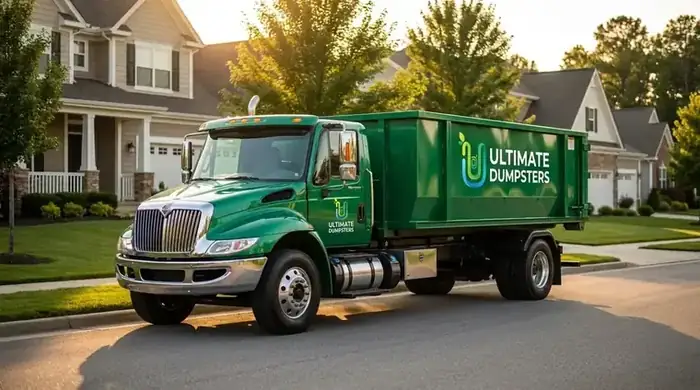
A roll-off dumpster is a large, open-top waste container designed to be transported by a special roll-off truck. Unlike the small dumpsters you see behind restaurants, roll-off containers are delivered directly to your home or job site and picked up once you are finished loading them.
They are called "roll-off" because the container literally rolls off the back of the delivery truck onto your driveway. Roll-off dumpsters are the go-to solution for renovations, cleanouts, roofing projects, landscaping overhauls, and construction jobs of all sizes.
Whether you are clearing out a basement, tearing down a deck, or managing debris from a new build, a dumpster rental simplifies waste removal by giving you a single, convenient container right where you need it. No multiple trips to the dump, no borrowing a friend's truck, and no piles of debris sitting in your yard for weeks.
If you are still deciding on a container, start with our dumpster sizes guide to match the yardage to your project, then review the dumpster rental pricing guide so you know exactly what is included before you book. First timers can also read our first-time renters guide for a plain-language walkthrough of the whole process.
Six essential topics every renter should understand before placing an order.
Dumpsters come in four standard sizes: 10, 20, 30, and 40 cubic yards. Think of a cubic yard as a box that measures 3 feet on each side. A 10-yard dumpster holds roughly 3 pickup truck loads of debris, while a 40-yard container can handle about 12 truck loads.
Dumpster rental pricing typically includes delivery, pickup, a set rental period, a weight allowance, and disposal fees. National averages range from $400 to $700 for a standard residential rental. Factors that affect cost include your location, dumpster size, debris type, and rental duration.
When the dumpster arrives, a roll-off truck will back up and place the container on your driveway or designated spot. You will need a clear path at least 10 feet wide and 60 feet long for the truck. Overhead clearance of at least 23 feet is required for tree branches and power lines.
Start by placing flat, heavy items on the bottom like plywood, drywall, or furniture panels. Break down large items when possible. Distribute weight evenly across the container. Never load debris above the top edge of the container; this is called overfilling and may result in additional charges.
Most household debris, construction materials, furniture, and yard waste are accepted. However, hazardous materials like paint, chemicals, batteries, asbestos, and motor oil are prohibited in standard dumpsters. Tires, mattresses, and appliances with refrigerants may incur extra fees.
When your project is complete or the dumpster is full, simply call or go online to schedule pickup. Most providers can pick up within 24 to 48 hours of your request. Make sure the area around the dumpster is clear so the truck can safely access and load the container.
Tell us about your project: the type of debris, estimated volume, and your location. We will recommend the right dumpster size and provide a transparent, all-inclusive price with no hidden fees.
Choose a delivery date that works for your schedule. On delivery day, our driver will place the dumpster in your preferred location. Make sure the area is clear and accessible.
Load your debris at your own pace during the rental period. Keep items level with the top of the container and avoid prohibited materials. Take your time; there is no rush.
When you are done or the rental period ends, call us or schedule pickup online. We will haul the container away and handle proper disposal and recycling of your debris.
Dumpster rental costs typically run $390-$595 for a 10 yard up to $750-$1200 for a 40 yard, all-in for a standard 7-day rental. The total price depends on the dumpster size, your location, and the type of debris. Every quote includes delivery, pickup, disposal, and a set weight allowance.
For a single-room cleanout or small garage cleanup, a 10-yard dumpster is usually sufficient. For a whole-house cleanout, a 20-yard or 30-yard dumpster is recommended. When in doubt, go one size larger to avoid needing a second container.
Every rental includes 7 days standard. If you need the dumpster longer, extra days run $40 to $50 per day, and the exact rate for your ZIP is disclosed before you book. Let us know as early as possible if you need extra time.
Hazardous materials such as paint, chemicals, batteries, asbestos, and motor oil are prohibited in standard dumpsters. Tires, mattresses, and appliances with refrigerants like freon may be accepted for an additional fee. Always check with your provider for a full list of restricted items.
If the dumpster is placed on your private property such as a driveway, a permit is usually not required. However, placing a dumpster on a public street, sidewalk, or right-of-way typically requires a permit from your local municipality. Permit costs and processing times vary by city.
For most residential projects, booking 2 to 3 days ahead is sufficient. During peak seasons like spring and summer, we recommend booking at least a week in advance. Same-day delivery is often available in many service areas for last-minute needs.
A 10-yard dumpster is the most popular choice for homeowners tackling single-room cleanouts, small remodels, or garage decluttering. For larger projects like whole-house cleanouts or major renovations, a 20-yard or 30-yard container is typically a better fit.
In most cases, no permit is required if the dumpster is placed on your private property such as a driveway. However, if the dumpster needs to be placed on a public street, sidewalk, or right-of-way, most municipalities require a permit. Permit costs and processing times vary by city.
Standard rental periods are typically 7 to 14 days, depending on the provider and your location. Extensions are usually available for an additional daily fee. If you know your project will take longer, ask about extended rental periods when booking.
Prohibited items like hazardous waste, batteries, paint, and certain electronics can result in additional fees or refusal of pickup. The hauler may need to sort and remove these items at extra cost. Always check the accepted items list before loading your dumpster.
No. Dumpsters are extremely heavy even when empty and require specialized trucks for placement. If you need the container repositioned, contact your provider to schedule a move. Attempting to move a dumpster yourself can damage your property and is unsafe.
Written by the Ultimate Dumpsters Team
Reviewed by Ultimate Dumpsters Operations
Last updated September 2026
Now that you know the basics, pick the roll-off size that fits your project and book it online in minutes.
10-Yard Dumpster Rental
Heavy debris, concrete, small cleanouts
15-Yard Dumpster Rental
Renovations and mid-size cleanouts
20-Yard Dumpster Rental
Home cleanouts and renovations
30-Yard Dumpster Rental
Large construction and remodels
40-Yard Dumpster Rental
Large-volume demolition debris
Dumpster rentals in Oceanside, NY
See local sizes, pricing, and availability
Dumpster Sizes Guide
Compare 10, 20, 30, and 40-yard containers and what each one holds.
Dumpster Rental Pricing Guide
See what drives cost and what is included in an all-inclusive quote.
First-Time Renters Guide
A start-to-finish walkthrough for anyone renting for the first time.
How to Rent a Dumpster
The four-step process from quote to pickup.
Accepted Items
What you can toss in a standard roll-off dumpster.
Do I Need a Permit?
When street placement requires a municipal permit.
One call. One price. Zero surprises. Get a real quote in minutes from one of America's highest-rated dumpster & site-service companies.
Get my instant price
Enter your ZIP. See availability & pricing in seconds.

Live agents standing by
Real people answer, no phone trees