
Dumpster Sizes Guide
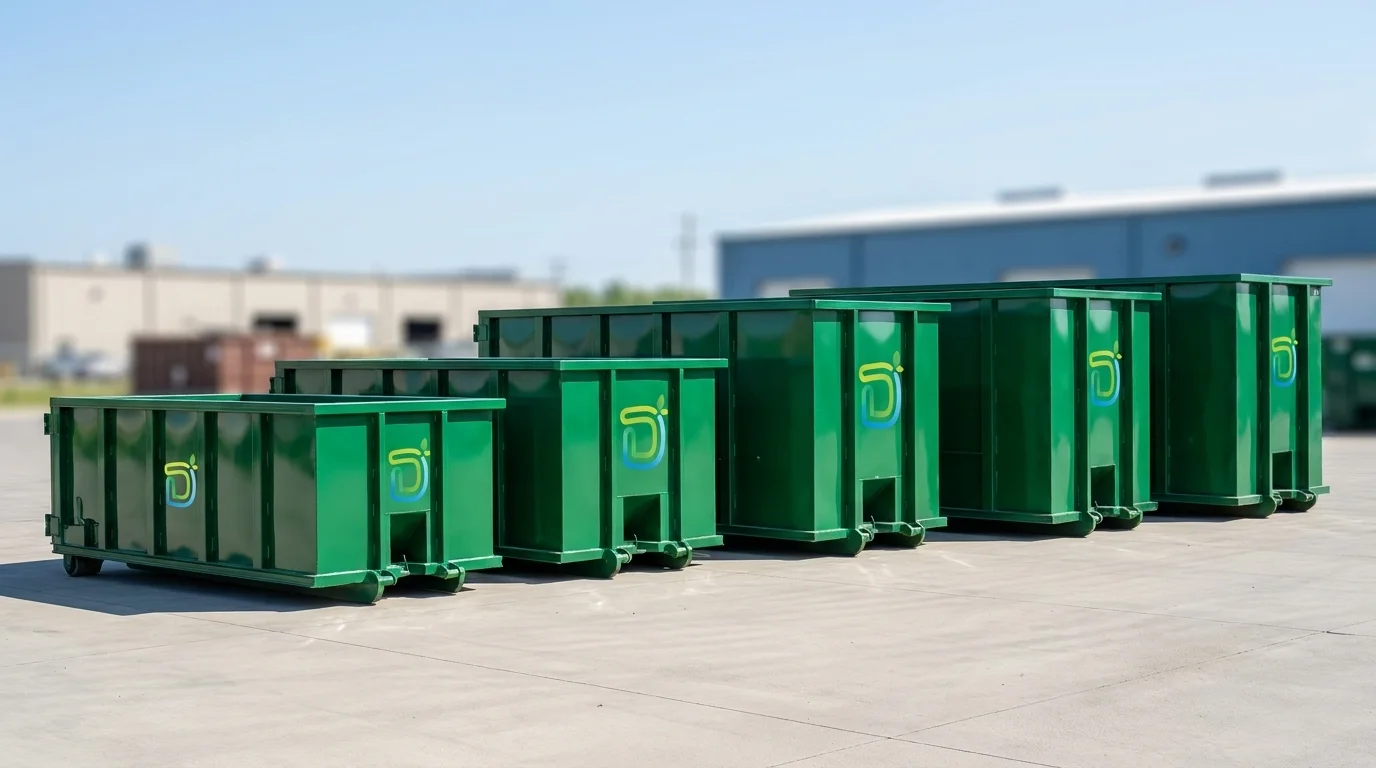
Not sure which size you need? Compare dimensions, capacities, and ideal project types for every standard dumpster size. Visual comparisons make it easy to choose with confidence.
What size dumpster do I need?
A 10 yard handles a single room or garage cleanout, a 15 or 20 yard covers a whole-house cleanout or a kitchen or bath remodel, and a 30 or 40 yard is for construction, demolition or a large roof. Heavy material like concrete or dirt goes in a smaller heavy-material box, because weight fills a dumpster long before volume does.
Ultimate Dumpsters offers roll-off dumpsters in 10, 20, 30, and 40-yard sizes. A 10-yard holds about 3 pickup truck loads and suits small cleanouts and single-room remodels, a 20-yard holds about 6 loads for whole-room renovations and roofing, a 30-yard holds about 9 loads for large renovations and construction, and a 40-yard holds about 12 loads for major demolition and commercial jobs. When you are between two sizes, choosing one size up costs far less than renting a second container.
What Does "Cubic Yards" Mean?
Dumpster sizes are measured in cubic yards. One cubic yard is a space that measures 3 feet long, 3 feet wide, and 3 feet tall, about the size of a kitchen stove. When we say a dumpster is "20 yards," it means the container holds 20 cubic yards of debris, or roughly the equivalent of 6 full-size pickup truck loads.
The physical dimensions of the dumpster do not directly correspond to the cubic yardage because containers vary in length, width, and height. A 10-yard and a 20-yard dumpster may be the same length but the 20-yard has taller sides, giving it more capacity. Understanding this distinction helps you avoid ordering too small or paying for space you do not need. Volume is only half the picture: check our dumpster weight limits guide before you load heavy debris, and see the dumpster rental pricing guide for how size maps to cost.
Compare Dumpster Sizes
Side-by-side comparison of all four standard roll-off dumpster sizes with dimensions, capacity, and ideal uses.
10-Yard Dumpster
12' L x 8' W x 3.5' H
Best For
- Small bathroom or kitchen remodel
- Single-room cleanout
- Garage or attic decluttering
- Small landscaping projects
- Minor deck removal
20-Yard Dumpster
22' L x 8' W x 4.5' H
Best For
- Roof replacement (up to 30 squares)
- Multi-room renovation
- Large garage or basement cleanout
- Medium construction debris
- Moving day cleanout
30-Yard Dumpster
22' L x 8' W x 6' H
Best For
- Whole-house cleanout
- Large renovation projects
- New construction debris
- Major landscaping overhaul
- Commercial tenant buildout
40-Yard Dumpster
22' L x 8' W x 8' H
Best For
- Large commercial demolition
- Industrial cleanout
- Multi-unit building renovation
- Major construction projects
- Estate cleanout (large property)
Size Recommendations by Project Type
Home Cleanout
Recommended: 10 to 20 yard
A single room is usually a 10-yard. Whole-house cleanouts often require a 20 or 30-yard.
Roofing Project
Recommended: 20 to 30 yard
Roofing shingles are heavy. A 20-yard handles up to 30 squares; larger roofs need a 30-yard.
Construction / Demolition
Recommended: 30 to 40 yard
Construction generates high-volume debris. Go with 30 for remodels, 40 for teardowns.
Yard Waste / Landscaping
Recommended: 10 to 20 yard
Branches and soil are heavy but compact. A 10-yard is often enough unless you are clearing a large property.
What does each dumpster size cost?
All-inclusive prices from our live price list: delivery, pickup, disposal, the included weight and 7 days. Your ZIP sets the exact number on the order page.
| Size | Dimensions | Weight included | Typical price | Most common |
|---|---|---|---|---|
| 10 Yard | 12' x 8' x 3.5' | 1 ton | $495 - $650 | $550 |
| 15 Yard | 16' x 7.5' x 4.5' | 1.5 tons | $550 - $750 | $625 |
| 20 Yard | 22' x 7.5' x 4.5' | 2 tons | $625 - $895 | $695 |
| 30 Yard | 22' x 7.5' x 6' | 3 tons | $750 - $995 | $850 |
| 40 Yard | 22' x 7.5' x 8' | 4 tons | $850 - $1,249 | $950 |
How we know: Dimensions and included weights are Ultimate Dumpsters' standard containers. Prices are the 10th to 90th percentile (typical) and median (most common) of the Ultimate Dumpsters price list across 40,000+ ZIP codes, refreshed nightly; weight allowances are our standard included tons.
Straight Talk From Our Team
“I'm here to help you, not hurt you. No one loves paying money to throw out garbage. I'm here to make the process as simple and cheap as possible.
Tell me exactly what you're throwing out and I will get you the size you need.
Nothing is free, nothing is unlimited.”

Judi K.
Site Services Specialist, Ultimate Dumpsters. Before you pick a size
Frequently Asked Questions
The 10-yard and 20-yard dumpsters are the most popular sizes for homeowners. A 10-yard works great for small cleanouts and single-room remodels, while a 20-yard handles most medium-sized projects like kitchen renovations, roof replacements, and multi-room decluttering.
Measure the length, width, and height of your debris pile in feet, then multiply all three numbers together and divide by 27. For example, a pile that is 6 feet long, 4 feet wide, and 3 feet high equals 72 cubic feet, or about 2.7 cubic yards. Our size calculator can help with this estimate.
If your dumpster fills up before your project is complete, you have two options. You can schedule a swap where we pick up the full container and deliver an empty one, or you can upgrade to a larger size. There may be additional fees for the extra trip, so it is generally more cost-effective to go one size up from the start.
While it is possible, 40-yard dumpsters are very large: 22 feet long, 8 feet wide, and about 8 feet tall. Most residential driveways can accommodate them, but you need significant clearance. These containers are more commonly used on commercial and construction sites. For most home projects, a 20 or 30-yard is sufficient.
Yes. Larger dumpsters cost more because they hold more debris and require larger trucks for transport. However, the price per cubic yard often decreases as you go up in size, making larger containers more cost-effective for bigger projects. A 20-yard dumpster typically costs 30 to 40 percent more than a 10-yard, not double.
Dumpster wall heights vary by size. A 10-yard container has sides about 3.5 feet high, making it easy to load by hand. A 20-yard is about 4.5 feet, a 30-yard is about 6 feet, and a 40-yard reaches roughly 8 feet. All dumpsters have a rear swing door that you can open for walk-in loading of heavy items.
Written by the Ultimate Dumpsters Team
Reviewed by Ultimate Dumpsters Operations
Last updated September 2026
Rent a dumpster by size
Picked your size? Compare roll-off dumpsters and book online in minutes. Prices shown for our home market; enter your ZIP for local pricing.
10-Yard Dumpster Rental
Heavy debris, concrete, small cleanouts
15-Yard Dumpster Rental
Renovations and mid-size cleanouts
20-Yard Dumpster Rental
Home cleanouts and renovations
30-Yard Dumpster Rental
Large construction and remodels
40-Yard Dumpster Rental
Large-volume demolition debris
Dumpster rentals in Oceanside, NY
See local sizes, pricing, and availability
Related resources
Size Calculator
Estimate your debris volume and get a recommended dumpster size in seconds.
Dumpster Weight Limits
How weight allowances scale with size and how to avoid overage fees.
Pricing Guide
What each size costs and the five factors that shape your quote.
Loading Tips
Pack your dumpster efficiently so you get the most out of the size you rent.
Accepted Items
What you can and cannot put in a roll-off dumpster.
How to Rent a Dumpster
Step-by-step from quote to delivery for a smooth first rental.
Get Your All-Inclusive Price Today
One call. One price. Zero surprises. Get a real quote in minutes from one of America's highest-rated dumpster & site-service companies.
- No obligation
- Same-day available
- No hidden fees
Get my instant price
Enter your ZIP. See availability & pricing in seconds.

Live agents standing by
Real people answer, no phone trees