
Porta Potty Rental in Omaha, NE
Portable toilet rental in Omaha starts at $270 for a weekend or $320 per month, all-inclusive. Ultimate Dumpsters delivers and services standard, deluxe flushing, ADA-accessible, hand-wash, and luxury restroom-trailer units across Omaha and Douglas County. No brokers, no surprise fees.
Live agents standing by. Calling is the fastest way to book.
Updated , reviewed by Michael V., Head of Operations. Prices pulled from our live Omaha rate sheet.
Omaha porta potty pricing at a glance
- Standardfrom $270/weekend
- Deluxe Flushingfrom $374/weekend
- ADA-Accessiblefrom $374/weekend
- Hand-Wash Stationfrom $270/weekend
- Restroom Trailerfrom $1610/weekend
Serving Omaha and Douglas County
Same Day
Delivery Available
4.3 Stars
Company-wide Google rating
Flat Rate
No Hidden Fees
4 Visits
Per Monthly Rental
How much does a porta potty cost in Omaha?
A standard portable toilet in Omaha, NE starts at $270 for a weekend rental (up to 7 days), or $320 per month with 4 service visits included in every 28-day rental. Guest-facing and specialty units cost more: deluxe flushing and ADA-accessible units, hand-wash stations, and luxury restroom trailers are all priced in the table below. Every Omaha rate is all-inclusive.
The number we quote is the number you pay. Delivery, pickup, fuel, and environmental and local fees are all folded into the one price. Online orders are $0.39 higher than the phone rate; either way, a vetted local partner delivers and services the unit, with one point of contact: us. Prices last verified September 2026.
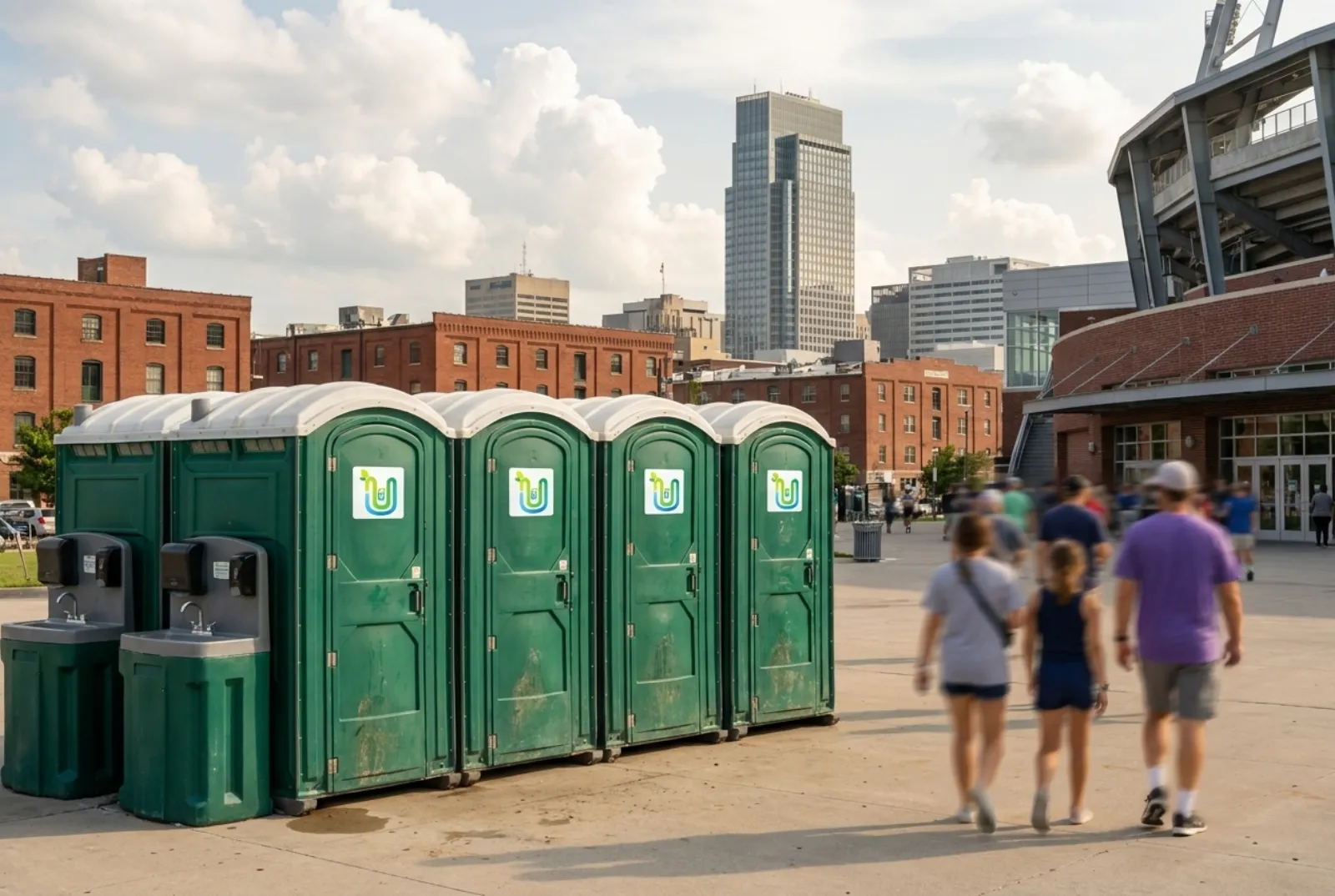
Omaha portable toilet prices by type
Real Omaha, NE rates. The weekend rate covers up to 7 days; the monthly rate is 28 days and includes 4 service visits. Your exact price shows at checkout.
| Unit type | Weekend (up to 7 days) | Monthly (28 days, 4 visits) | What is included |
|---|---|---|---|
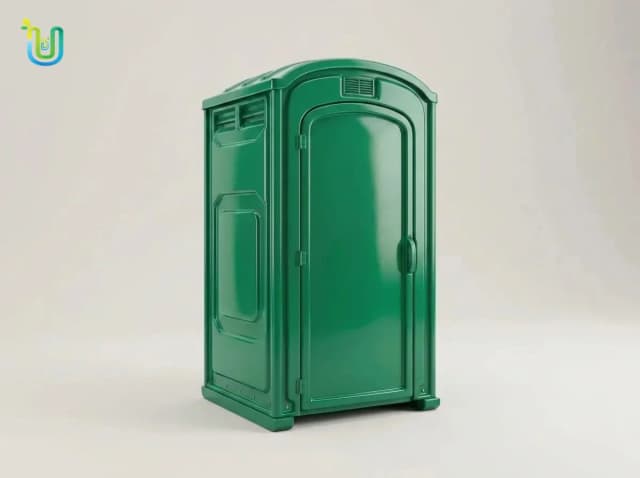
| Standard Portable Toilet | from $270online $270.39 | from $320online $320.39 | Enclosed unit, hand sanitizer, and toilet paper. Restocked at every service visit. |
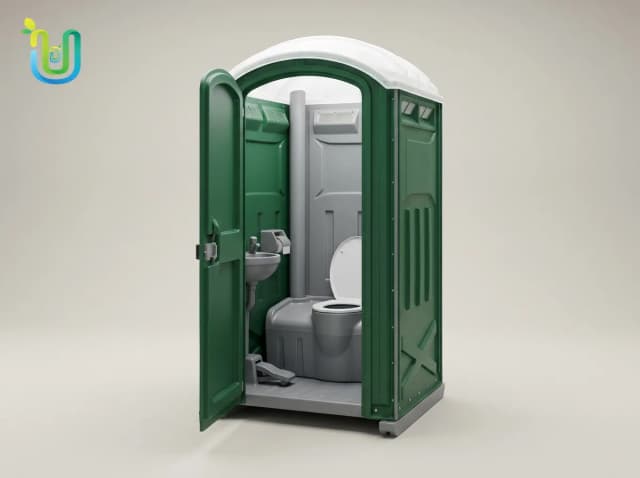
| Deluxe Flushing Portable Toilet | from $374online $374.39 | from $424online $424.39 | Foot-pump flushing bowl plus an in-unit hand-wash sink. The guest-friendly upgrade. |
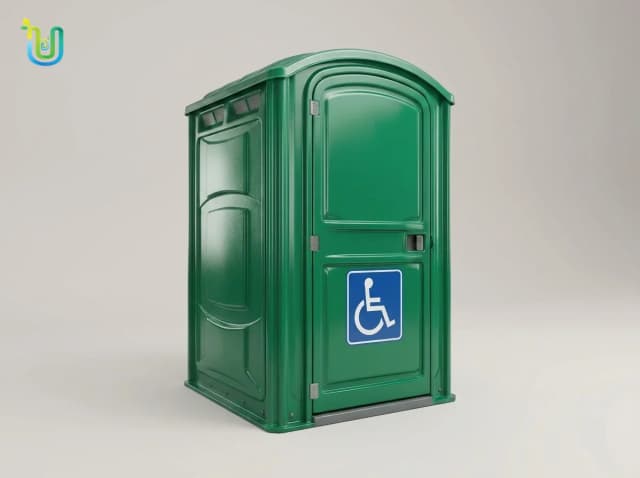
| ADA-Accessible Portable Toilet | from $374online $374.39 | from $424online $424.39 | Ground-level entry, interior grab bars, and a full wheelchair turning radius. ADA-compliant. |
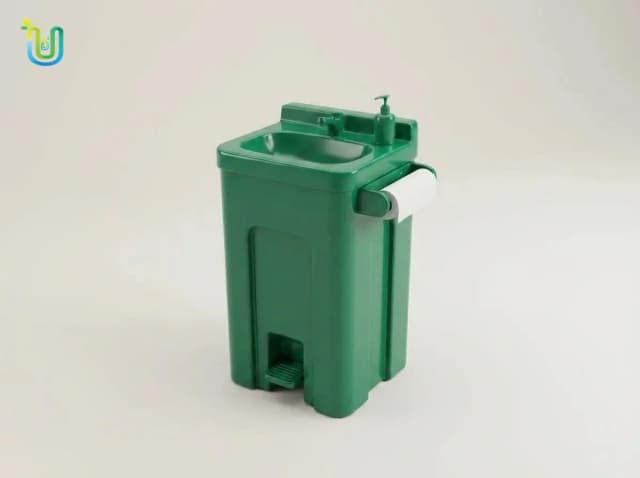
| Portable Hand-Wash Station | from $270online $270.39 | from $320online $320.39 | Freestanding basin with a foot-pump faucet, soap, and paper towels. No hookups needed. |
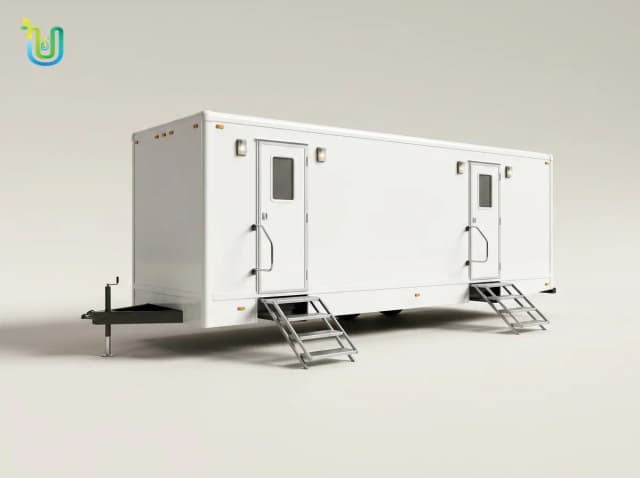
| Luxury Restroom Trailer | from $1610online $1610.39 | from $1930online $1930.39 | Climate-controlled multi-stall trailer with flushing porcelain toilets, running-water sinks, mirrors, and lighting. |
Phone price shown as the “from” rate. Online orders are $0.39 higher. Delivery, pickup, fuel, and environmental and local fees are included in every rate.
How many portable toilets you need in Omaha
Jobsite counts follow OSHA 29 CFR 1926.51(c); event counts follow the ratios most health departments and event permits expect. Use this as a starting point, then tell us your exact Omaha crew or guest count and we size the order to code.
| People on site | Jobsite (OSHA, full week) | Public event (peak crowd) | Hand-wash stations |
|---|---|---|---|
| Up to 20 | 1 toilet | 1-2 toilets | 1 station |
| 20 to 50 | 2 toilets | 2-3 toilets | 1 station |
| 50 to 100 | 2-3 toilets | 3-4 toilets | 1-2 stations |
| 100 to 250 | 3-5 toilets | 5-7 toilets | 2 stations |
| 250 to 500 | 5-8 toilets | 8-12 toilets | 3 stations |
| 500 to 1,000 | Ask for a site plan | 13-20 toilets | 4-5 stations |
OSHA sets the jobsite floor: 1 toilet for up to 20 workers, then 1 toilet and 1 urinal per 40 up to 200, and 1 per 50 above that, with a unit within about a 10-minute walk. Event ratios assume a multi-hour crowd with food and drink; add units for alcohol, all-day duration, or long lines. At least 5 percent of event units (minimum one) must be ADA accessible.
How we set Omaha porta potty prices
Every price on this page comes straight from our live Omaha rate sheet, the same numbers our phone team and online checkout quote. Nothing here is an estimate, a national average, or a “starting at” teaser that grows at checkout.
- Source
- The Ultimate Dumpsters pricing matrix our order desk quotes from, read for Omaha, NE (ZIP 68101).
- What is priced
- 10 rates: 5 unit types, each at a weekend rate (up to 7 days) and a monthly rate (28 days with 4 service visits).
- Date
- Synced September 29, 2026, and re-synced whenever the Omaha rate sheet changes.
- Included
- Delivery, pickup, fuel, and environmental and local fees. The phone price is the price; online orders are $0.39 higher.
- Limits
- Rates are for one unit at one Omaha address. Other ZIPs in the area can price differently, and multi-unit events, extra service visits, and special placements are quoted to the job. Enter your ZIP for your exact rate.
- From our order records
- We have served Omaha since 2019. Our busiest Omaha months are May and August, so book ahead for those. Exact order counts stay private.
Cite this pricing
Ultimate Dumpsters, “Porta Potty Rental in Omaha, NE” rate sheet, updated September 29, 2026. https://dumpsterrentals.us/services/portable-toilets/nebraska/omaha
Which portable toilet do you need in Omaha?
Two questions size every order: how many people, and for how long. Here is how the five unit types map to the most common Omaha jobs.
Construction & jobsites
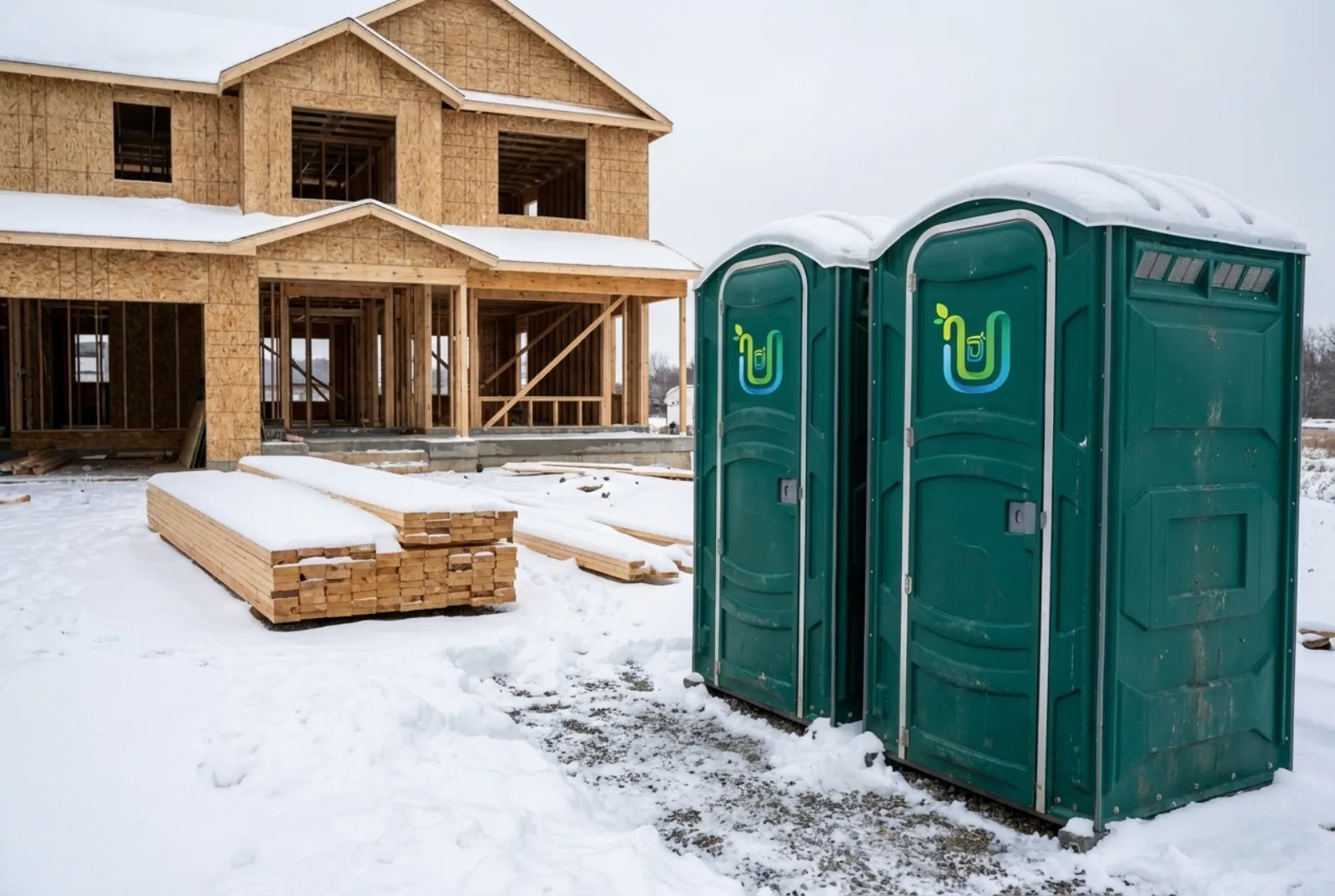
Standard units are the jobsite workhorse in Omaha. OSHA 1926.51(c) sets the minimum at 1 toilet for up to 20 workers, then 1 toilet plus 1 urinal per 40, and a unit has to be within about a 10-minute walk. On Omaha sites we size above the bare minimum so crews never wait through a humid 90-degree afternoon, add a hand-wash station at the break area, and plan service around the winter freeze-thaw and snow so ice never blocks the route. On riverfront or low-lying ground we keep units on the highest stable footing and out of the drainage path, because Omaha's Missouri River flood history is real, and on open sites through the May-into-June storm peak we keep units clear of equipment and glass and secure them rather than leaving them loose.
Weddings & upscale events
Deluxe flushing units or a luxury restroom trailer are the guest-facing picks. A flushing bowl and in-unit sink change how the whole event is remembered. For 100-plus guests, one trailer plus standard units for peak load usually beats two trailers on cost.
Public & permitted events
The 2010 ADA Standards require at least 5 percent of single-user units at a public event to be accessible, minimum one, each marked with the accessibility symbol. Every unit has ground-level entry, grab bars, and a full turning radius. Tell us your guest count and we build the right ratio in.
Food service & health-code sites
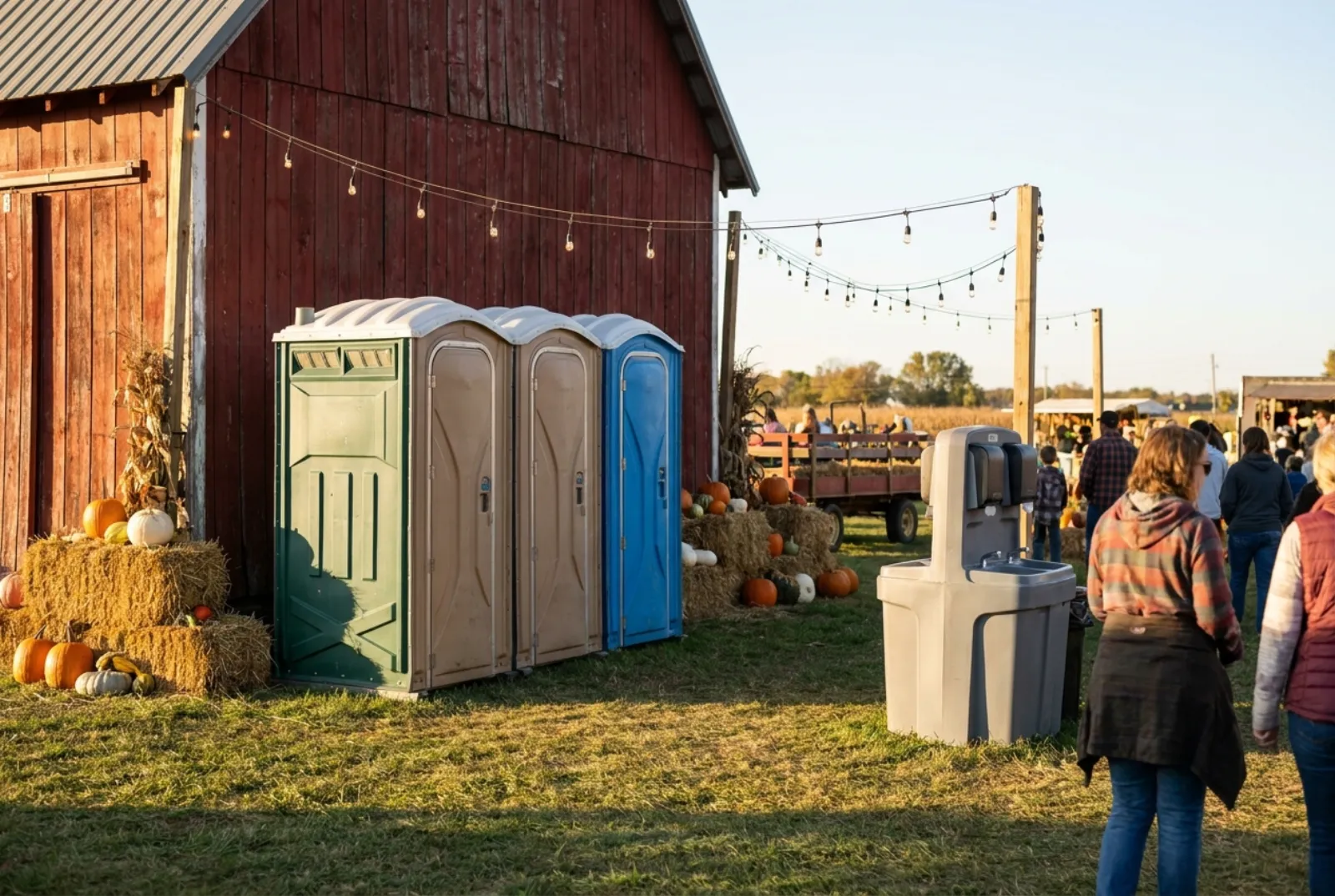
Wherever food is served or sold, health codes expect hand-washing. Pair a hand-wash station (one per roughly four toilets) with your units. Food-heavy events get one station per two toilets, and inspectors look for one near the vendors.
Delivery & placement in Omaha
Same-day and next-day drop-offs
We deliver across Omaha and Douglas County with same-day and next-day availability in most of the area when you book early. Weekend event units arrive clean before your event and leave after.
Level ground, clear approach
Units place best on firm, level ground with a clear path for the delivery truck. Restroom trailers need a reasonably level spot and access for delivery, and we confirm the site details with you before the truck rolls.
Permits handled
Private-property placement in Omaha generally needs no permit. Public streets, sidewalks, and permitted public events may require one. Tell us where the unit goes and we will confirm what your address needs.
Service & sanitation
4 service visits per month, built in
Every 28-day monthly rental in Omaha includes 4 service visits, roughly weekly. Each visit pumps the tank, sanitizes the interior, and restocks paper, soap, and sanitizer, so compliance never depends on a phone call.
Sized to OSHA 1926.51(c)
The federal construction sanitation rule sets 1 toilet for up to 20 workers, then 1 toilet and 1 urinal per 40, with a 10-minute access rule. We size Omaha jobsites to that standard and add units when crews grow or usage climbs.
Hand-wash stations to code
One hand-wash station serves roughly four toilet units, the ratio most health departments expect. For food-service events we recommend one station per two toilets, one near the vendors and one near the units.
What renting a porta potty in Omaha is actually like
Omaha is not a market you can service by a national playbook, and we do not try. Three local realities shape almost every Omaha order: the plain fact that this is a corporate-finance powerhouse that punches far above its size, home to Berkshire Hathaway, whose May meeting draws as many as 40,000 people, to Fortune 500 Mutual of Omaha, and to Union Pacific, the largest railroad in North America, plus a heartland base of rail logistics and food and agribusiness; a College World Series that fills Charles Schwab Field for two weeks every June, a sustained crowd event most cities never plan for; and a humid continental Plains climate on the Missouri River that stacks hot, storm-prone summers against hard winters and a real riverfront flood history. Here is how each one changes what we recommend.
Why a humid continental Omaha climate changes how a unit is serviced
Omaha runs a genuine humid continental climate with four hard seasons, not the milder pattern people sometimes assume for the Plains. Summers are warm, humid, and thunderstorm-prone, with July average highs in the upper 80s and hot days into the low 90s, and the humidity pushes the felt heat above the raw thermometer. That sustained warmth and moisture break waste down fast inside a tank, so odor control on a busy jobsite or a summer event comes down to the service interval, not the amount of deodorizer poured in. Severe Plains storms are real here, with the highest tornado probability in the May-into-June transition, so on open sites in that window we keep units clear of vehicles, equipment, and glass and secure them rather than leaving them loose.
For that reason we treat weekly service as the floor for any busy Omaha jobsite or warm-weather event, and on high-traffic sites and food-service events we add a mid-week visit rather than stretch the schedule. Winter is a genuinely different problem here: Omaha averages roughly 27 to 28 inches of snow a year, with blizzard potential and freezing rain that glaze doors, latches, and the ground around a unit fast. In the cold months we keep units on stable, level footing off elevated or icing-prone surfaces, and we plan service around the freeze-thaw cycle so a route truck is not fighting a sheet of ice or a snowbank at your gate. Paying for the right interval is the single biggest difference between a unit people will actually use and one they walk past.
Berkshire weekend, the College World Series, and Omaha's big-crowd calendar
This is the reality that sets Omaha apart from every other market we serve, and it is not the weather. Omaha is a corporate-finance city that punches far above its population. Berkshire Hathaway is headquartered here, and its annual meeting every May, the one Warren Buffett fans call Woodstock for Capitalists, draws as many as 40,000 shareholders from around the world to the CHI Health Center, one of the largest annual shareholder meetings anywhere. Fortune 500 Mutual of Omaha, founded here in 1909, anchors a deep insurance and financial-services workforce downtown, and Union Pacific, the largest railroad in North America with track across 23 states and more than 32,000 employees, runs the whole network from its downtown Omaha headquarters tower. That mix of a global finance weekend, a downtown corporate base, and a national rail hub is the demand pattern we plan Omaha around.
The other event most cities never have to plan for is the College World Series. The NCAA Men's College World Series has been played in Omaha since 1950, is contracted to stay through at least 2035, and now runs across two weeks in mid-to-late June at Charles Schwab Field Omaha; total attendance across the run reaches into the hundreds of thousands. A two-week crowd is a different problem from a single festival day: it demands enough units to hold peak load plus a service cadence that resets them daily, not just a one-time drop-and-pump. Add the heritage base, South Omaha's Union Stockyards once made this the largest livestock market and meatpacking center in the world, a title Omaha held from 1955 until 1971, and food processing and agribusiness are still a real part of the regional jobsite mix. When a big weekend or a two-week tournament lands, temporary-restroom inventory across the metro tightens, so we lock event orders early and size them for the peak, not the average.
Placement, the Missouri River, and the City of Omaha street obstruction permit
On private property in Omaha, the practical questions are usually access and truck routing, not density. On genuinely private ground with clear truck access, a driveway, a fenced construction site, a backyard, or a private lot, you generally do not need a city permit for a portable toilet. One siting factor is specific to this city: Omaha sits on the Missouri River at the Iowa line, and the riverfront and low-lying east-side ground carry real flood exposure. The March 2019 flood was historically catastrophic here, putting about a third of nearby Offutt Air Force Base underwater and breaching a levee into Bellevue neighborhoods, with statewide 2019 weather losses topping $3.4 billion. On riverfront or bottomland jobsites we keep units on the highest stable footing available and out of the obvious drainage path, so a fast rise does not float or topple a unit.
The rules change the moment any part of the unit sits on a public street, sidewalk, curb, alley, or other right-of-way. The City of Omaha is unusually explicit about this: the Public Works Department requires a Street Obstruction Permit before any temporary use of the right-of-way for man lifts, cranes, construction or material storage, dumpsters, or portable storage units, and it names those temporary units directly. The published fee is $6.00 per calendar day for up to 300 linear feet of local street, sidewalk, alley, or other right-of-way (and $8.00 per day for 301 to 600 feet), the applicant must attach a site plan showing the obstruction with dimensions to the nearest property line and curb, and insurance must name the City of Omaha as an additional insured. A unit can never block a sidewalk, a curb ramp, a driveway, a fire hydrant, or the clear pedestrian route. Downtown demand around Berkshire weekend, the Old Market, and Charles Schwab Field adds its own placement pressure near the core. Requirements vary by address and by whether the drop is construction or an event, so tell us the exact address and whether the spot is private or in the right-of-way, and we confirm the path and coordinate the permit before the truck rolls. See the City of Omaha Public Works street obstruction permit.
Google Reviews for Omaha
See what real customers say about Ultimate Dumpsters on Google.
Ultimate Dumpsters: Serving Omaha from Our Nationwide Network
Rating and review count pulled live from Ultimate Dumpsters' Google Business Profile.
Porta potty rental in Omaha, NE: FAQs
Common questions about portable toilet rental in Omaha, Nebraska.
A standard portable toilet in Omaha, NE starts at $270 for a weekend rental (up to 7 days) or $320 per month, with 4 service visits included in every 28-day rental. Upgrades: deluxe flushing units run $374/weekend, ADA-accessible units $374/weekend, luxury restroom trailers from $1610/weekend. Every Omaha rate is all-inclusive: delivery, pickup, fuel, and environmental and local fees are built into the one price, so there are no surprise line items. Online orders are $0.39 higher than the phone price; either way, a vetted local partner delivers and services the unit, with one point of contact: us. Enter your ZIP for your exact Omaha rate.
OSHA's construction sanitation rule, 29 CFR 1926.51(c)(1), sets the floor: 1 toilet for 20 or fewer workers; 1 toilet seat and 1 urinal per 40 workers from 20 up to 200; and 1 toilet seat and 1 urinal per 50 workers above 200. OSHA also expects a worker to reach a toilet within about a 10-minute walk. On a busy Omaha jobsite, crews hydrate and use the unit more through a hot, humid Plains summer than a bare headcount suggests, so we recommend sizing above the OSHA minimum and adding a hand-wash station at the break area; and on riverfront or low-lying ground we set units on the highest stable footing given Omaha's Missouri River flood history. Tell us the crew size and we will size the order to the standard.
Our standard Omaha monthly rental includes 4 service visits over the 28-day period, roughly weekly. Each visit pumps the tank, sanitizes the interior, and restocks paper, soap, and hand sanitizer. In Omaha that weekly interval is the floor, not the ceiling. Summers are warm and humid, with July highs in the upper 80s and low 90s on hot days, and that muggy heat breaks waste down fast, so on high-traffic jobsites and food-service events we add a mid-week visit rather than stretch the schedule. For a multi-week event like the College World Series we service daily so units never fall behind the crowd. Winter flips the problem to snow and ice: Omaha averages roughly 27 to 28 inches of snow a year, so we keep units on stable, level footing off icing-prone surfaces and plan service around the freeze-thaw cycle so a route truck is not fighting a glazed gate. Service is built into the rate, so compliance never depends on anyone remembering to call.
For an event open to the public, yes. The 2010 ADA Standards for Accessible Design require that at least 5 percent of the single-user portable toilets in each cluster be accessible, with a minimum of one, and each accessible unit is marked with the International Symbol of Accessibility. (Units provided only for construction workers are exempt.) In practice a small Omaha event needs at least one accessible unit; a larger one needs one per every 20 standard units. ADA units in Omaha run $374 for a weekend. The accessible unit has ground-level entry, interior grab bars, and a full wheelchair turning radius, and it needs firm, level ground with a clear approach path. Tell us your guest count and we will build the right ratio in.
On genuinely private property with clear truck access, a driveway, a fenced construction site, a backyard, or a private lot, you generally do not need a city permit for a portable toilet in Omaha. The moment any part of the unit sits on a public street, sidewalk, curb, alley, or other right-of-way, the City of Omaha Public Works Department requires a Street Obstruction Permit; the city names temporary units directly, listing dumpsters and portable storage units among the uses that trigger it. The published fee is $6.00 per calendar day for up to 300 linear feet of local right-of-way (and $8.00 per day for 301 to 600 feet), the applicant must attach a site plan with dimensions to the nearest property line and curb, and insurance must name the City of Omaha as an additional insured. The unit can never block a sidewalk, a curb ramp, a driveway, a fire hydrant, or the clear pedestrian path. Tell us the exact address and whether the drop is private or in the right-of-way, and we confirm what your spot needs and coordinate the permit before delivery.
A standard unit is the jobsite and everyday-event workhorse: enclosed, stocked, and cost-effective at $270/weekend. A deluxe flushing unit adds a foot-pump flushing bowl and an in-unit sink for guest-facing events like weddings and corporate functions at $374/weekend. A luxury restroom trailer is a climate-controlled, multi-stall unit with porcelain toilets, running-water sinks, and mirrors, indistinguishable from a fine-venue bathroom, from $1610/weekend. Pick by how guest-facing the site is and how long the rental runs.
Yes. We deliver and service portable toilets throughout Omaha and the surrounding Douglas County area, with same-day and next-day drop-offs available in most of the area when you book early. Weekend event units are delivered clean before your event and picked up after. Enter your ZIP or call (866) 858-3867 and we will confirm the soonest available delivery for your address.
Yes. A freestanding hand-wash station pairs with any toilet unit and needs no power or water hookup: it has a foot-pump faucet, soap, and paper towels, stocked at delivery and every service visit. One station serves roughly four toilet units, the ratio most health departments expect. For food and drink events in Omaha, plan a station near the vendors and one near the toilets to cover both inspection points.
Plan for peak load and a daily reset, not a one-time drop. Omaha hosts two crowd events most cities never see: the Berkshire Hathaway annual meeting every May, which draws as many as 40,000 people to the CHI Health Center, and the NCAA College World Series, which fills Charles Schwab Field across two weeks in June (hundreds of thousands in total attendance across the run). For a single big day we size units to the expected headcount plus a buffer and add hand-wash stations; for a multi-week event like the CWS we add a service cadence that pumps, sanitizes, and restocks on a set schedule so units never fall behind the crowd. Because inventory across the metro tightens when these events land, we lock event orders early. Give us the venue, dates, and expected attendance and we build the count and the service plan to match.
Sources & standards
The sanitation, accessibility, and permit guidance on this page traces to the primary sources below. We cite them so you can verify the rules for your Omaha job yourself, not just take our word for it.
- OSHA 29 CFR 1926.51(c), Sanitation (construction)
Federal toilet-to-worker ratios for construction sites.
- 2010 ADA Standards for Accessible Design (DOJ, ADA.gov)
Scoping and technical rules for accessible single-user toilet units.
- U.S. Access Board, Chapter 6: Toilet Rooms
Plain-language guidance on the 5% accessible-unit scoping rule at events.
- City of Omaha Public Works Department, Street Obstruction Permit
The City of Omaha department that governs temporary use and obstruction of the public street, sidewalk, alley, and right-of-way. A Street Obstruction Permit is required before any temporary right-of-way use for man lifts, cranes, construction or material storage, dumpsters, or portable storage units; the published fee is $6.00 per calendar day for up to 300 linear feet of local right-of-way and $8.00 per day for 301 to 600 feet. The applicant must supply a site plan with dimensions to the nearest property line and curb, and insurance must name the City of Omaha as an additional insured. This is the City of Omaha's single-jurisdiction authority; on private property it does not apply.
- National Weather Service Omaha/Valley, Climate
Omaha temperature, snowfall, and severe-weather climate data behind the summer-heat and winter planning.
- NCAA Men's College World Series, Omaha
Official College World Series site for the June tournament at Charles Schwab Field Omaha.
- Berkshire Hathaway Inc.
Official company site, headquartered in Omaha, with annual meeting information.
Federal standards apply nationwide; local permit rules are specific to Omaha and the City of Omaha Public Works Department. Requirements can change, so we confirm the current rule for your exact address before delivery.
Written and maintained by the Ultimate Dumpsters operations team

Reviewed by Michael V., Head of Operations, on .
We coordinate portable-sanitation deliveries nationwide through a vetted carrier network, so the placement, permit, and sizing guidance on this page comes from jobs run on the ground, not a directory. We recheck the Omaha permit authority and the federal sanitation and accessibility standards on a set schedule and update this page when the rules change.
Local facts last reviewed . Prices last verified .
How Omaha porta potty rental connects to the rest of the job
Portable sanitation rarely stands alone. These are the related decisions that come up on the same Omaha project, and where to handle each one.
Site debris & cleanup
A porta potty and a roll-off dumpster share the same jobsite footprint and the same right-of-way permit path in Omaha. Crews that need one usually need the other.
Omaha dumpster rentalOSHA jobsite compliance
Toilet counts are one line in OSHA 1926.51(c). Hand-wash stations, water, and sanitary condition are the rest of the sanitation standard for a compliant crew.
Construction porta pottiesUpscale & public events
Guest-facing events trade the standard unit for flushing units or a restroom trailer, and the ADA 5 percent accessible-unit rule kicks in the moment the event is open to the public.
Luxury restroom trailersMore site services in Omaha
Dumpster rental in Omaha
Roll-off dumpsters, 10 to 40 yard, same-day delivery in Omaha.
Portable toilets by state
Browse portable toilet rental across all 50 states and DC.
Porta potties in Nebraska
All Nebraska cities we serve for portable toilet rental.
Luxury restroom trailers
Climate-controlled multi-stall trailers for upscale events.
Event portable toilets
Weddings, festivals, and public events, sized to your guest count.
Construction porta potties
OSHA-compliant jobsite units with weekly service.
Portable toilet rental near Omaha
Ready to book a porta potty in Omaha?
Call (866) 858-3867 for an on-the-spot quote, or order online in minutes.
Get Your All-Inclusive Price Today
One call. One price. Zero surprises. Get a real quote in minutes from one of America's highest-rated dumpster & site-service companies.
- No obligation
- Same-day available
- No hidden fees
Get my instant price
Enter your ZIP. See availability & pricing in seconds.

Live agents standing by
Real people answer, no phone trees