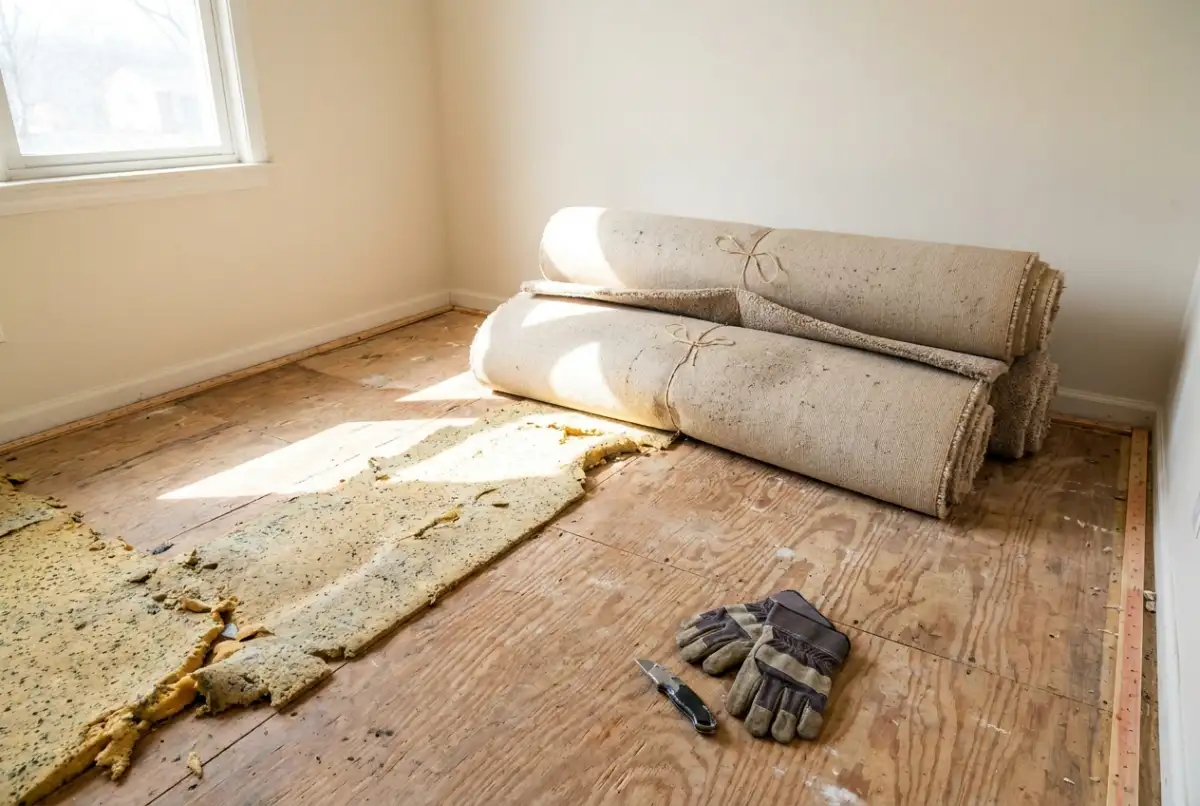
Tools You Need
Work gloves, knee pads, a utility knife with extra blades, pliers, a flat pry bar, a hammer, a floor scraper, duct tape, and a dust mask. Carpet tack strips are sharp, so gloves are not optional.
Step by Step
1. Clear the room. Move all furniture out, and take doors off their hinges if they swing over the carpet. 2. Start in a corner. Grab the carpet with pliers and pull it up off the tack strip along one wall. 3. Pull back a strip and cut it. Fold the carpet back and cut it into strips about 3 feet wide with the utility knife, cutting from the back side so you do not dull the blade on the floor. 4. Roll and tape. Roll each strip tightly and wrap it with duct tape. Rolls about 4 feet long are easy to carry and stack. 5. Remove the pad. The foam pad is usually stapled or glued down. Pull it up in sections, cut it into strips, roll it and tape it the same way. 6. Pull the staples. Go over the floor with pliers or a floor scraper and pull every pad staple. 7. Decide on the tack strips. If new carpet is going in, you can often leave the tack strips. For hardwood, tile or vinyl, pry them up with the flat bar, working from the wall side. 8. Sweep and inspect. Clean the subfloor and check for damage or soft spots before the new floor goes down.
How to Get Rid of Old Carpet
- Installer haul-away: most flooring installers remove and take the old carpet when they put in new floors. Ask for it in the quote.
- Carpet recycling: some regions have carpet recycling programs and drop-off sites.
- City bulk pickup: many cities accept rolled, tied carpet in rolls of about 4 feet.
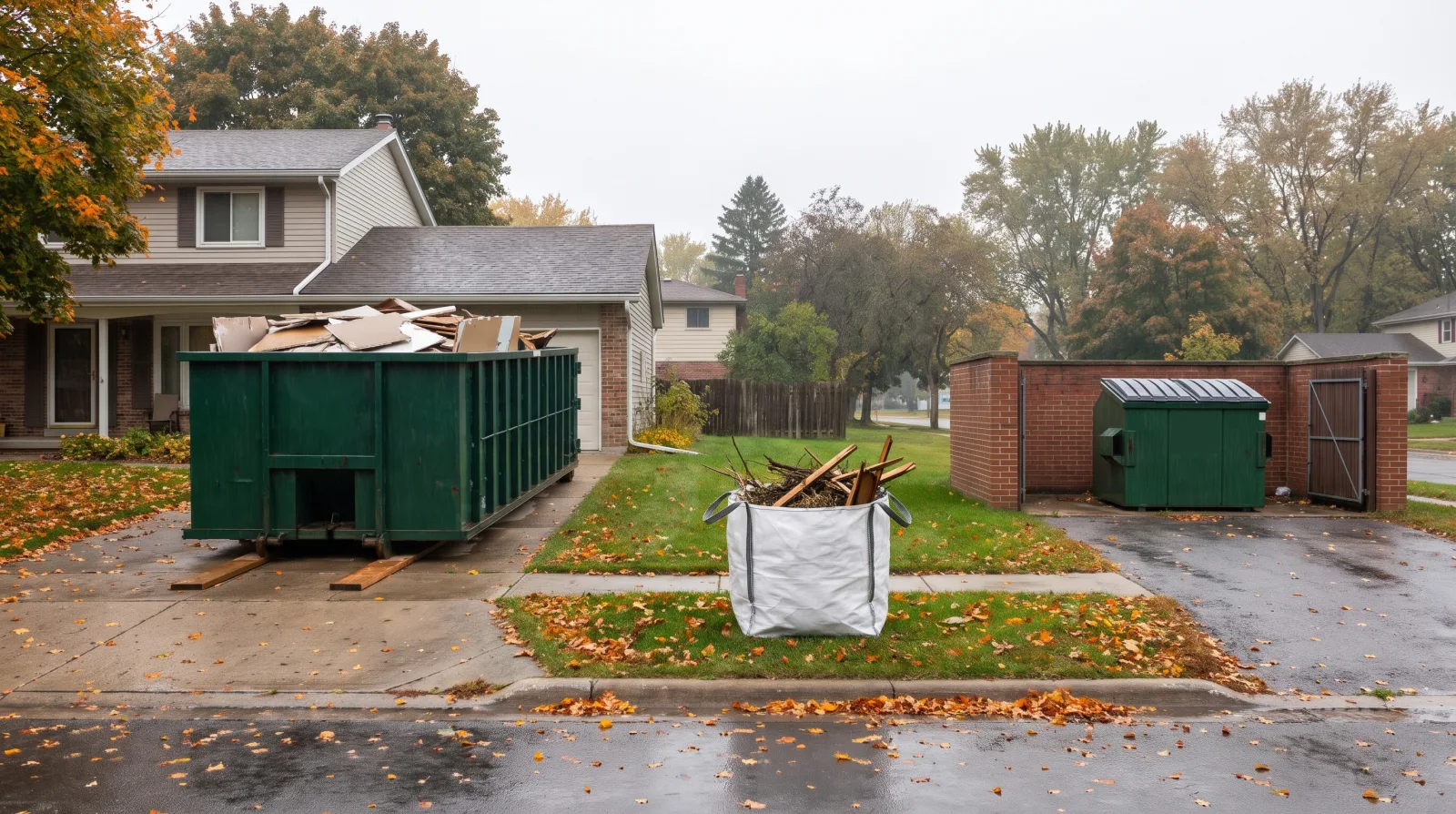
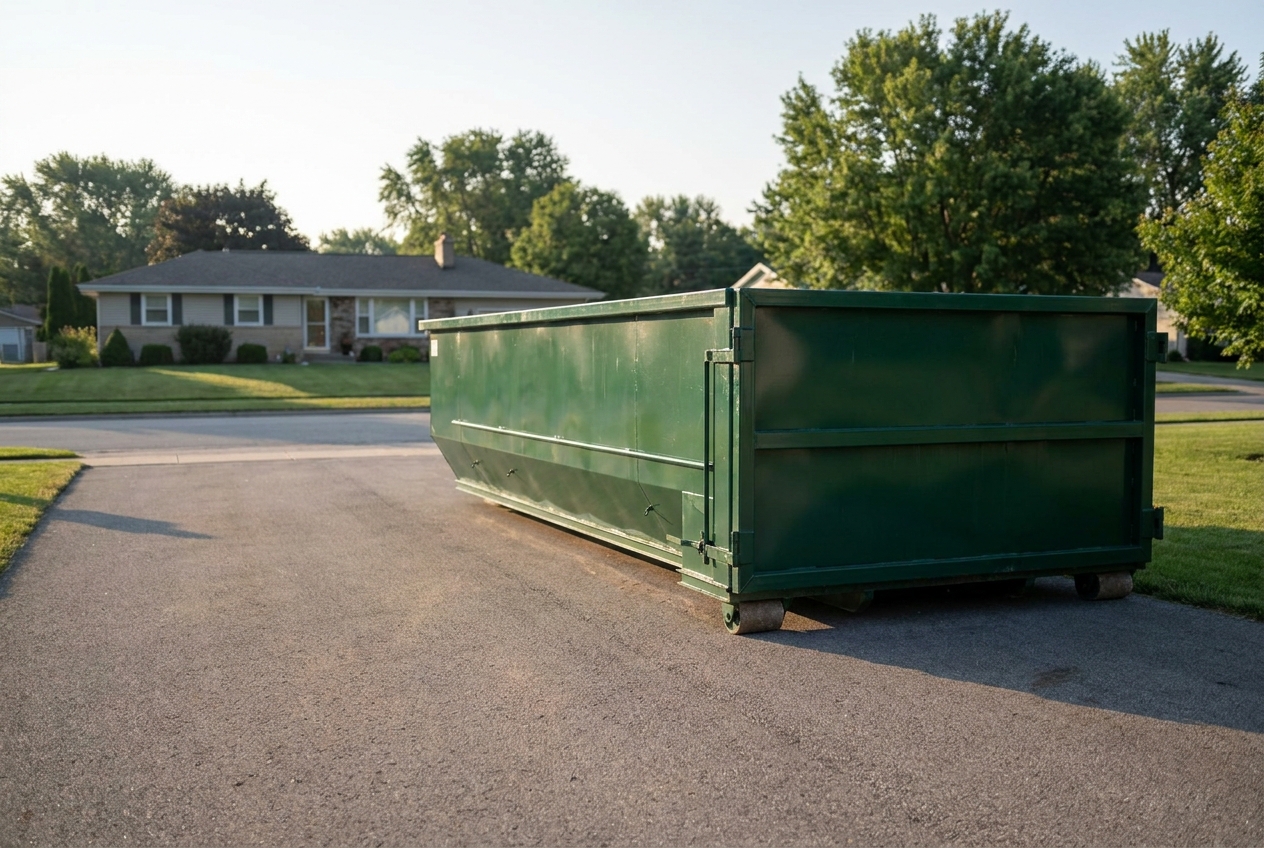
- Dumpster: for several rooms or a full flooring tear-out, a dumpster takes the carpet, pad and tack strips in one go. A 10 yard starts at $495 all-in. See our [carpet disposal guide](/resources/disposal-guides/carpet).