The thing I say every single day
My name is Judi, and I have spent over 20 years helping first-time customers rent dumpsters. If there is one thing I find myself explaining more than anything else, it is this: the 10 yard dumpster is smaller than most people picture.
People who think they need a 10 yard sometimes get upset when it shows up, because they thought it would be bigger. So let me set the picture before you order, and then walk through the real questions I get from first-timers every day.
How big is a 10 yard dumpster really?
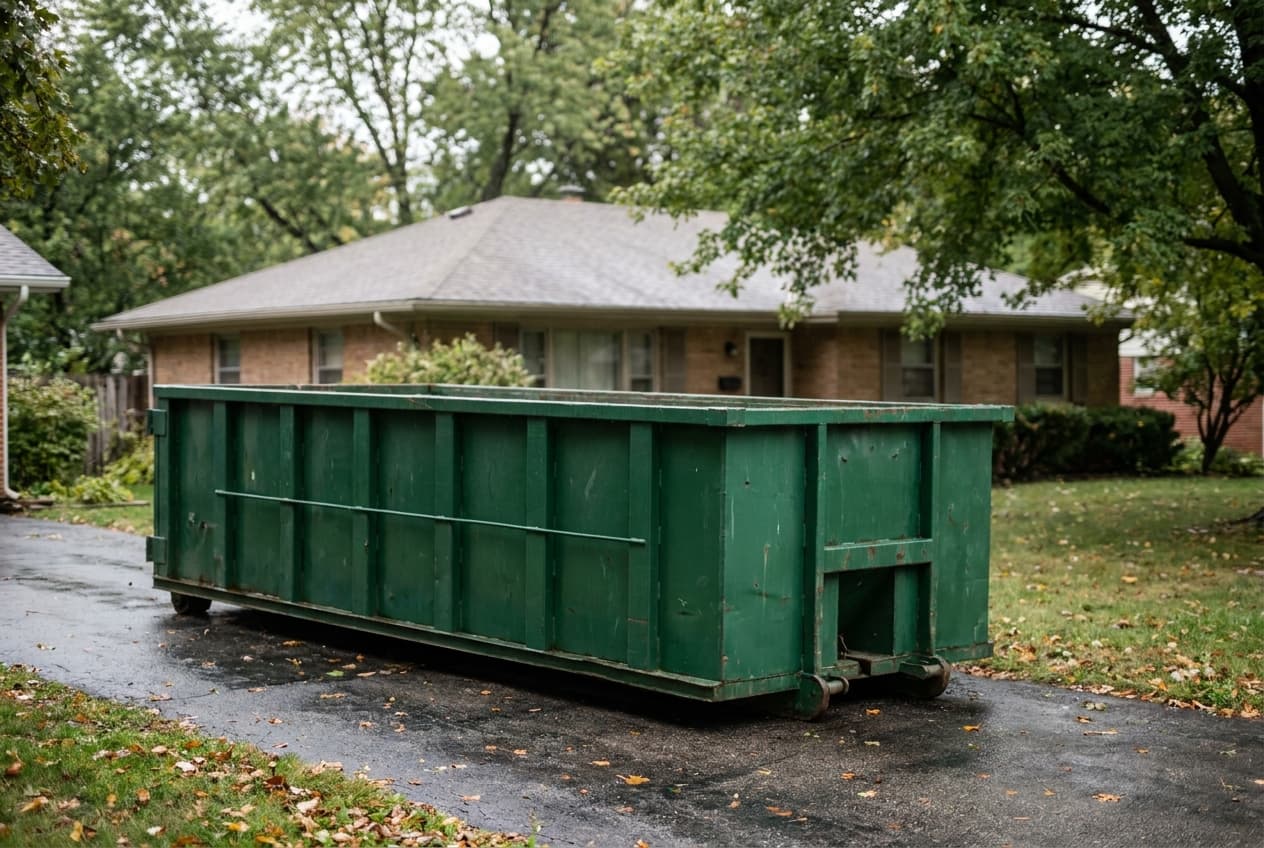
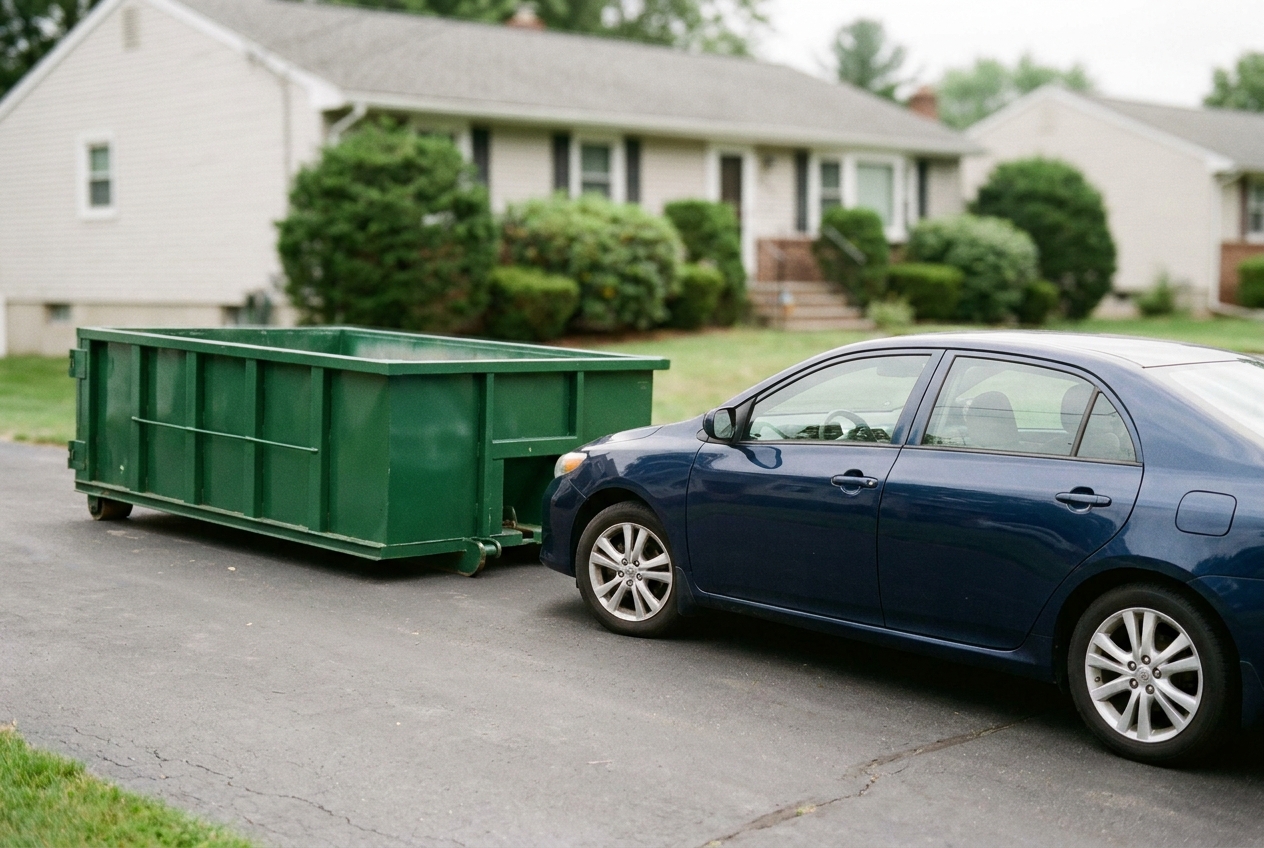
A 10 yard is only about the length of a car with a few feet of walls. That is it. It usually measures around 12 feet long, 8 feet wide, and 3.5 feet tall, and holds roughly 3 pickup truck loads. For a small, light job it is perfect. But the mental image people carry around is usually a lot bigger than what actually rolls off the truck, and that is where the surprise comes from.
Why does a 10 yard fill up so fast?
Because real projects make more volume than people expect. A single room of old furniture, a garage full of years of stuff, a small renovation with drywall and old cabinets, that adds up faster than you would guess. I have watched plenty of customers fill a 10 yard halfway with just the easy stuff and then realize they have a whole pile left. When that happens, you are calling for a second container, and now you are paying for two hauls instead of one.
Should I get a 10 yard or size up to a 15 or 20 yard?
Nine times out of ten, if you are on the fence, it makes sense to bump up. You pay a few extra dollars up front, and you do not have to worry about running out of room or ordering a second box. The jump from a 10 to a 15 or 20 yard is a small amount of money compared to renting a whole second container.
Is it cheaper to rent a bigger dumpster or two small ones?
One bigger container almost always wins. You pay for the container, not the air in it, so a box that handles the whole job in one haul beats two smaller ones nearly every time. A second delivery means a second delivery fee, a second disposal charge, and a second wait. That is the exact mistake I try to save people from before it happens.
What size dumpster do I need for a garage cleanout?
For a typical single garage, a 10 yard can work if it is mostly light odds and ends. But if you have furniture, old appliances, or years of accumulation, a 15 or 20 yard is the safer call so you are not stuck mid-job. Tell me what is actually in the garage and I will size it honestly.
What size dumpster do I need for a whole-house cleanout?
Most whole-house cleanouts land on a 20 yard. It handles the volume of furniture, boxes, and general household items from a full home without forcing a second haul. If it is a very large home or an estate with decades of belongings, we may step up from there, but the 20 is the workhorse for this job.
What size dumpster do I need for a small remodel?
A single-room remodel like a bathroom or a small kitchen usually fits a 15 yard, sometimes a 10 if the debris is light. Once you are into cabinets, tile, drywall, and flooring across more than one room, a 20 yard keeps you from running short. The material matters as much as the room count, so tell me what is coming out.
What is the difference between a 10, 15, and 20 yard dumpster?
Think of it as a ladder. A 10 yard is about the length of a car, best for a small, light, single-area job. A 15 yard is the common bump-up, right for a medium cleanout or a small remodel. A 20 yard is the workhorse, handling most whole-house cleanouts and larger remodels. Same open-top roll-off shape, just more capacity as you go up.
How many pickup truck loads fit in a 10 yard dumpster?
Roughly 3 pickup truck loads. That is a useful gut check: if you can picture your pile as more than about three truck beds, a 10 yard is going to be tight, and you should look at a 15 or 20. It is one of the quickest ways to sanity-check a size before you order.
Will a heavier material change the size I need?
Yes, and this is important. Heavy material like concrete, dirt, brick, or roofing shingles hits the weight limit long before it fills the box. For those loads you often want a smaller container rated for the weight, not a bigger one. So the real question is never just how big is the pile, it is whether it is big and light or small and heavy. Tell me the material and I will steer you right.
Does the type of material affect the price?
It can. Clean general junk, heavy material, and mixed loads are handled differently, and heavy material has weight limits that matter. That is why I always ask what you are throwing out. It is not to be nosy, it is so the size and the price are right the first time and you do not get surprised.
What is the most common mistake first-time renters make?
Renting too small. People underestimate their own pile, order a 10 to save a little, and then have to order a second container, which costs more than sizing up would have. The second most common mistake is not mentioning heavy material up front. Both are easy to avoid with a two-minute conversation.
Can I put a dumpster on my driveway?
Yes, and it is usually the best spot. On private property like a driveway you keep the container longer and you do not have to worry about a street permit. We just need a flat surface and enough room for the truck to drop it and pick it back up.
What happens when a first-time customer calls?
Our project managers walk you through everything: what you are throwing out, where you are located, the type of material, how many days you need the container, and what size fits best. It takes a few minutes and it prevents the two most common mistakes, renting too small and forgetting to flag heavy material.
How do I get the size right the first time?
Do not guess alone. That is what I am here for. Tell me exactly what you are throwing out and I will get you the size you need. Call me at (866) 858-3867 ext. 643, or compare the sizes online, and we will get it right the first time so you never pay to fix a too-small box.