
The Daily Haul
ALL THE DEBRIS THAT'S FIT TO DUMP
The 30 Yard Dumpster, Decoded: What It Holds, and the Honest 30 vs 20 Call
The 30 yard is the big-job container, the one people reach for on a whole-house cleanout, a real renovation, a roof, or a construction haul. Here is what it actually holds, how big it is, and the honest read on when you need it over a 20 yard, so you rent the right box instead of defaulting to the biggest one and paying for air.
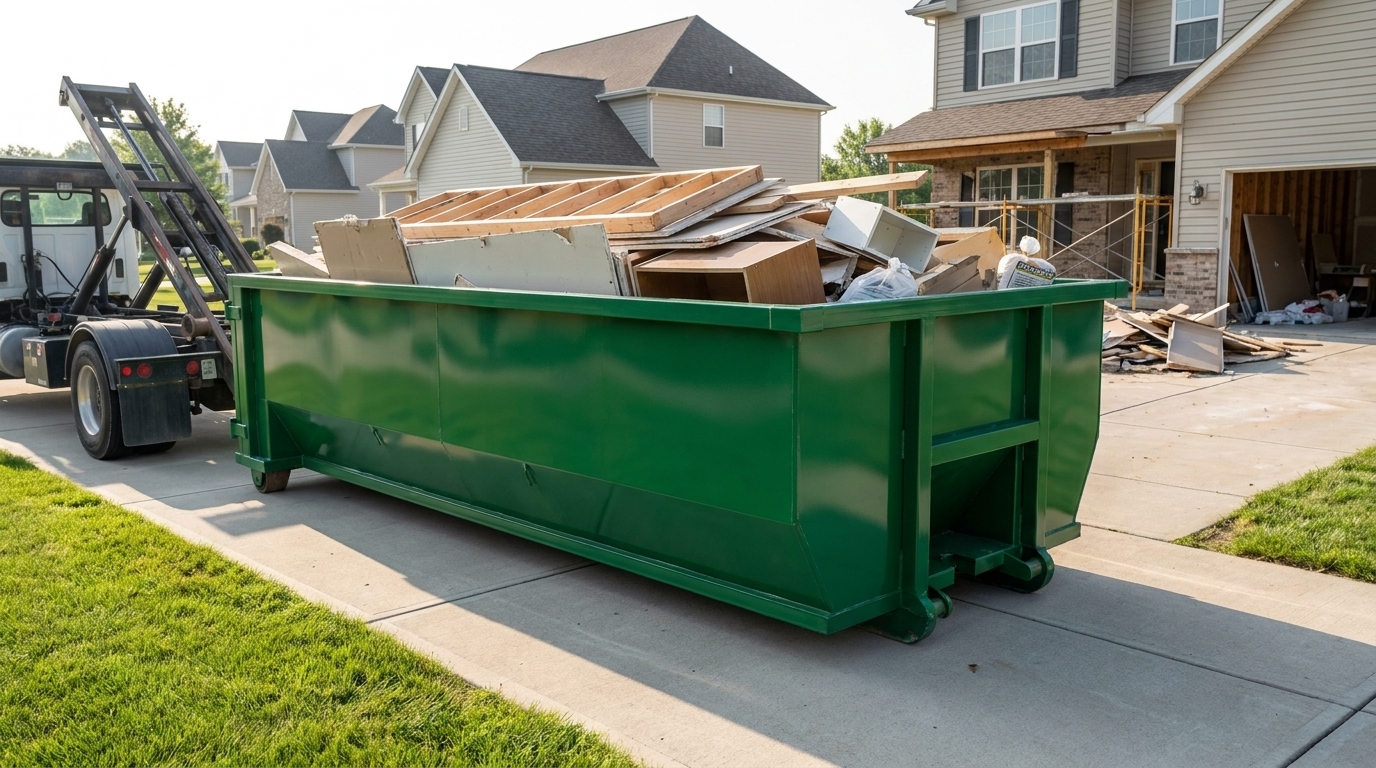
The 30 yard roll-off is the size people search for when the job got big. It holds about 30 cubic yards of debris, which is roughly nine pickup truck loads, or somewhere around 170 to 190 filled trash bags. It measures about 22 feet long, 7.5 feet wide, and 6 feet tall, and those 6 foot walls are the whole point: they are taller than a 20 yard, so bulky, high-volume material stacks up instead of maxing out the footprint. A standard 30 yard rental includes a 3 ton, 6,000 pound, weight allowance, and runs about 650 to 995 dollars all-inclusive across the markets we serve, delivery, pickup, disposal and a week of rental in one flat number.
What actually fits a 30 yard is high-volume work, not heavy work. A whole-house cleanout, a multi-room or whole-home renovation, a big roofing tear-off, a garage plus basement plus attic all at once, or construction and demolition debris that comes in bulky and fast. If you can picture the pile filling the bed of a pickup nine times over, that is a 30. The taller walls are what make it the right call for anything that is big in size rather than dense in weight, because you can keep loading up instead of running out of floor.
Now the honest part, the one most companies skip: a 20 yard already handles more than people think. A 20 yard holds about 20 cubic yards, measures 22 by 7.5 by 4.5 feet, and comes with a 2 ton allowance, and it covers most whole-house cleanouts and larger remodels just fine. So if your job is a single-room remodel, a garage or basement cleanout, a small roof, or a yard and deck teardown, the 20 is usually enough, and it is cheaper. The trap is renting the 30 as a safety margin. You do not pay for the space you do not fill, you pay for the container, so an oversized box is just money left in the driveway. Rent the 30 when you genuinely expect to fill more than a 20, or when the material is bulky enough to need the taller walls, not just in case.
There is one thing the 30 yard does not fix, and it is worth saying plainly: it does not carry more weight than its allowance, it carries more volume. Heavy material like concrete, dirt, brick, or roofing shingles hits the weight limit long before it fills the box, which is why those jobs usually go in a smaller, weight-rated clean load rather than a big 30. So the real question is never just how big is the pile, it is big-and-light or small-and-heavy. Big and light is the 30 yard job. Small and heavy is a 10 or a clean load. Getting that one distinction right is the difference between a smooth haul and an overage bill.
So the takeaway from the 30 yard desk is simple. The 30 is for big-volume, bulky jobs, whole-house, renovation, roofing, construction, and it holds about nine pickup loads behind six-foot walls. Below that, a 20 yard is usually the smarter, cheaper buy, and we will tell you so rather than upsell you. And if the material is heavy rather than bulky, the answer is a smaller weight-rated box, not a bigger one. Tell us the job and the heaviest thing going in, and we size it right the first time, at one flat price you can see before you book.
Capacity, wall height and included weight allowance for the three largest roll-off sizes, from Ultimate Dumpsters live specs. Bar length is a visual scale of volume, not a percentage. The 30 yard holds about 30 cubic yards, roughly nine pickup truck loads, behind six-foot walls. Pick by the volume and bulk of the job, and drop to a smaller weight-rated box for heavy material like concrete or dirt.
“The 30 yard is a volume box, not a weight box. If the pile is big and light, whole-house, renovation, roofing, that is the 30. If it is small and heavy, concrete or dirt, a big container just hits the weight limit half-empty. Tell me the heaviest thing going in and I will size it right the first time.”
from the 30 yard desk
People reach for the 30 to be safe, and half the time a 20 would have done it for less. You pay for the container, not the air in it. I will tell you when the 20 is enough, that is the whole job.
The six-foot walls are the tell. A 30 is right when the material is bulky and stacks up, framing, roofing, whole-house junk. For anything dense and heavy, we drop you to a smaller clean load so you are not paying overage on a half-full box.
TODAY'S NUMBERS · FROM THE ORDER LEDGER
What does a 30 yard dumpster hold, and when do I need one instead of a 20 yard?
A 30 yard dumpster holds about 30 cubic yards of debris, which is roughly nine pickup truck loads or about 170 to 190 filled trash bags, and it measures about 22 feet long, 7.5 feet wide, and 6 feet tall with a 3 ton weight allowance. Choose a 30 yard for high-volume jobs like a whole-house cleanout, a large renovation, a roofing tear-off, or construction and demolition debris. A 20 yard holds about 20 cubic yards, measures 22 by 7.5 by 4.5 feet, and already handles most whole-house cleanouts and larger remodels, so if your job is a single room, a garage or basement cleanout, or a small roof, the 20 yard is usually enough and cheaper. Rent the 30 when you genuinely expect to fill more than a 20 or the material is bulky enough to need the taller walls, and drop to a smaller weight-rated box for heavy material like concrete or dirt.
See full 30 yard specs and pricing →Placed by the desks of Ultimate Dumpsters. Every listing is real.
THE BIG-JOB BOX. Whole-house cleanout, big renovation, roofing tear-off or construction debris? The 30 yard holds about nine pickup loads behind six-foot walls, all-inclusive from about 650 dollars. See your real price.
See the 30 yard →MAYBE A 20 FITS. Single-room remodel, garage or basement cleanout, small roof? A 20 yard usually covers it and costs less. Do not rent the 30 as a safety margin, you pay for the box, not the air.
Start with the 20 yard →COMPARE SIZES. Not sure which box fits? See 20, 30 and 40 yard side by side, capacity, wall height, weight allowance, and the honest fit for your job. Pick by volume and bulk, not just the size of the pile.
Compare all sizes →AN ADVERTISEMENT FROM THE PUBLISHER
The Box Arrives Before The Coffee Is Done
(866) 858-3867or skip the call entirely
Order online in about 2 minutesExact local pricing, tonnage and rental days included, e-sign and pay from your phone.
Capacity, dimensions and weight allowances are drawn from Ultimate Dumpsters live size-page specs (30 yard and 20 yard), current for 2026. The 30 yard all-inclusive price range reflects our live pricing across the markets we serve, each price including delivery, pickup, disposal and a seven-day rental. Exact prices are set per ZIP because local disposal rates vary. Nine-pickup-load and bag figures are standard capacity conversions, not proprietary counts. Published weekday mornings by Ultimate Dumpsters. Vol. I · No. 19.