What Does a Dumpster Rental Actually Cost?
The cost of renting a dumpster depends on four main factors: the size of the container, how long you keep it, where you are located, and what type of debris you are disposing of. Nationally, prices range from about $390 for a small 10-yard dumpster to $1,200 for a large 40-yard container. But averages only tell part of the story. Your actual cost will depend on local market conditions and the details of your project.
Understanding how dumpster rental pricing works will help you get accurate quotes, compare providers fairly, and avoid surprise charges on your final invoice. This guide breaks down every component of dumpster rental pricing so you can budget with confidence.
Average Costs by Dumpster Size
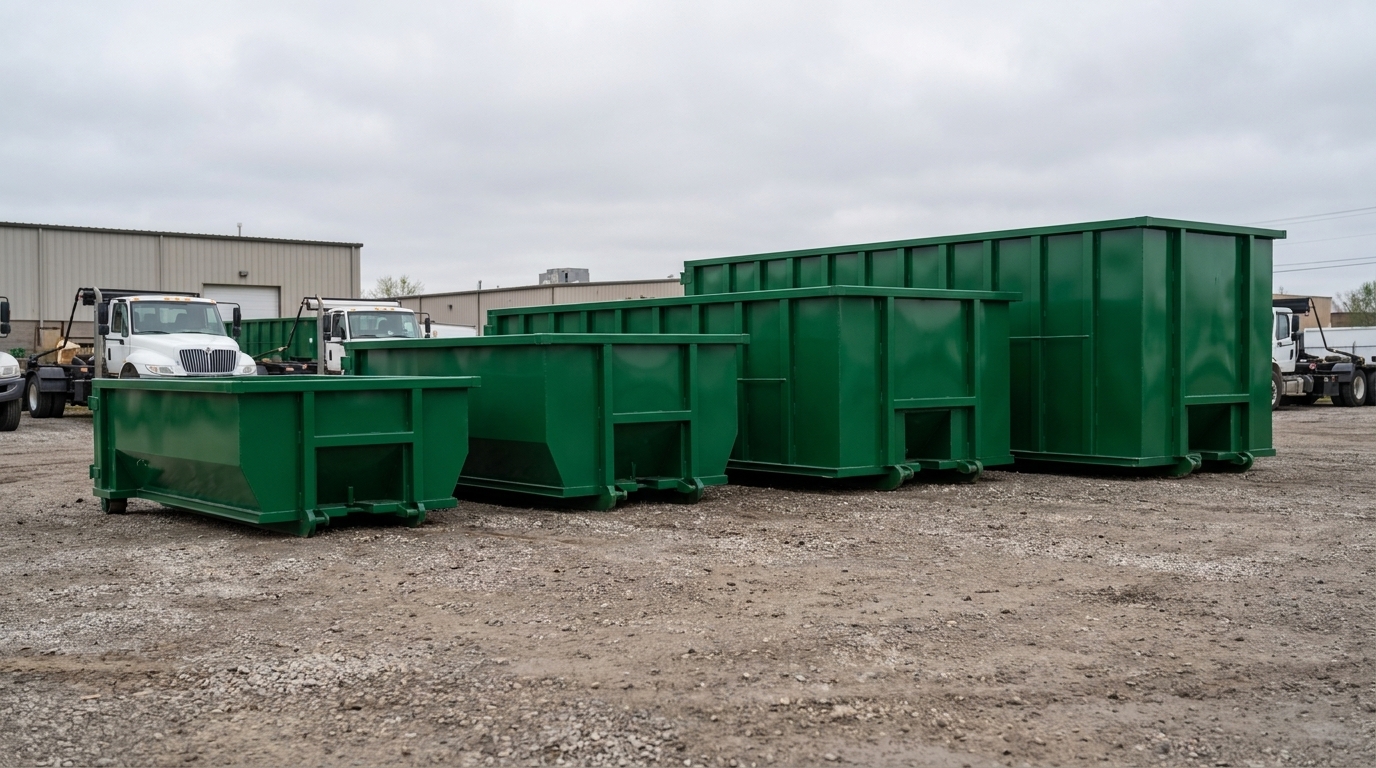
Here are typical price ranges for the most common dumpster sizes, based on the standard 7-day rental period with the standard weight allowance:
- 10-yard dumpster: $390 to $595 (median $550)
- 15-yard dumpster: $450 to $695 (median $595)
- 20-yard dumpster: $525 to $795 (median $675)
- 30-yard dumpster: $650 to $995 (median $795)
- 40-yard dumpster: $750 to $1,200 (median $899)
These figures come from live pricing across 40,000+ ZIP codes in all 50 states, updated July 2026. Your exact price depends on your ZIP, size, and debris type. Urban areas with higher disposal fees tend to land at the top of the range. Rural areas with lower landfill tipping fees tend to fall at the bottom. The sweet spot for most residential projects is the 15-yard or 20-yard range, where you get the best balance of capacity and value.
What Is Included in the Rental Price
A standard dumpster rental price typically includes delivery of the container to your location, a 7-day rental period, pickup and haul-away when you are done, disposal fees up to the included weight allowance, and applicable taxes and environmental fees.
Some providers bundle everything into a single flat-rate price. Others itemize delivery, rental days, disposal, and pickup as separate line items. Neither approach is inherently better; what matters is comparing the total cost, not individual line items.
Factors That Affect Your Price
Location. Dumpster rental prices vary significantly by region. Disposal costs (the fees that landfills and transfer stations charge per ton) are the primary driver of regional price differences. The Northeast and West Coast tend to have the highest disposal fees. The Midwest and Southeast tend to have the lowest.
Debris type. The type of material you are disposing of directly affects the cost. General household debris and construction and demolition waste are the most common and are priced at standard rates. Heavy materials like concrete, brick, dirt, and roofing shingles often carry a surcharge or require a dedicated heavy-debris dumpster with a higher weight allowance and a higher price.
Rental duration. Every rental includes 7 days. If you need the dumpster longer, expect a daily extension fee, typically $40 to $50 per additional day, with the exact rate disclosed in your quote. For longer projects like home renovations that stretch over several weeks, factor those extra days into your budget upfront.
Delivery distance. If your project is outside the hauler's standard service area, you may be charged a delivery fee based on the additional mileage. Most haulers include delivery within a 10 to 20-mile radius of their yard.
Hidden Fees to Watch For
Not all dumpster rental pricing is transparent. Here are the most common additional charges that can catch you off guard:
Overage fees. If the contents of your dumpster exceed the included weight allowance, you will be charged per ton for the excess weight. Overage rates typically range from $150 to $185 per ton depending on your area, and the exact rate is disclosed in your quote. This is the single most common surprise on a dumpster rental invoice.
Prohibited items fees. If hazardous materials are found in your dumpster, the hauler may charge a contamination fee; the amount depends on the material and the handling it requires. Note that items like mattresses, tires, and freon appliances are not prohibited; landfills simply charge per-item fees for them that vary by area.
Dry run fees. If the delivery truck arrives and cannot place the dumpster because of a blocked driveway, low-hanging wires, parked cars, or other access issues, the hauler may charge a dry run fee.
Permit fees. If the dumpster needs to be placed on a public street or right-of-way, you will need a permit from your local municipality. Permit costs vary by city (some are free, some are not), and they are typically your responsibility, not the hauler's.
How to Get the Best Price
Get multiple quotes. Prices for the same size dumpster in the same area can vary significantly between providers. Get at least three quotes before booking.
Be accurate about your debris type. If you tell the hauler you are disposing of household junk but then load the dumpster with concrete, you will face overage charges. Describe your project accurately so the hauler can quote you the right weight allowance.
Choose the right size. As we covered in our dumpster size guide, the cheapest option is rarely the smallest option; it is the one that fits your project correctly on the first haul. An extra pickup on an undersized dumpster costs far more than the price difference between sizes.
Ask about flat-rate pricing. Some haulers offer all-inclusive flat-rate pricing that covers delivery, rental, disposal, and pickup with no surprises. This can simplify budgeting significantly, especially if you are unsure about the weight of your debris.
Book in advance. Booking a few days to a week ahead gets you the best availability, especially during peak seasons. That said, same-day delivery is something we excel at: order before noon and we can usually make it happen.
Seasonal Pricing Trends
Dumpster rental demand follows predictable seasonal patterns. In our own delivery records of 100,000+ orders since 2019, June and May are the busiest months nationally, and December is the slowest. Home renovation projects, spring cleaning, roofing jobs, and construction activity all peak during warmer months, which makes availability tighter.
Fall and winter are slower seasons for most haulers, which means better availability. If your project timing is flexible, scheduling it during the off-season makes booking easier.
How Ultimate Dumpsters Pricing Works
At Ultimate Dumpsters, we believe in transparent, all-inclusive pricing. When we quote you a price, it includes delivery, a 7-day rental period, pickup, and disposal up to the weight allowance for your selected size: 1 ton on a 10-yard, 1.5 tons on a 15-yard, 2 tons on a 20-yard, 3 tons on a 30-yard, and 4 tons on a 40-yard. No hidden fees, no surprise line items. If your dumpster goes over the weight allowance, we will contact you before finalizing the invoice so there are no surprises.
Request a free, no-obligation quote online or by phone. We will ask about your project, recommend the right size, and give you a price that covers everything.