Learning from Other People's Mistakes
We have delivered thousands of dumpsters and talked to thousands of customers. After a while, patterns emerge. The same five mistakes come up again and again, costing renters money, time, and frustration. The good news is that every one of these mistakes is completely avoidable with a little knowledge and planning.
Here are the five most common dumpster rental mistakes, ranked by how much they cost the average customer, along with exactly how to avoid each one.
Mistake 1: Renting a Dumpster That Is Too Small
This is the number one most expensive mistake, and it is one of the most common we see among first-time renters. The thought process is understandable: "I do not want to overpay for space I do not use, so I will go with the smaller size." The problem is that when the smaller dumpster fills up before your project is done, you need a swap-out, and a swap-out restarts everything: a new box, a new invoice, and a new rental period. That costs far more than the modest price difference between adjacent sizes.
What it costs you: Essentially a second rental (a swap-out means a fresh invoice), plus project delays while you wait for the second pickup and delivery.
How to avoid it: Estimate your waste volume conservatively, then go one size up. Use the pickup truck comparison: a standard pickup bed holds about 2 to 3 cubic yards. Estimate how many truck loads your project would generate and match that to a dumpster size. When genuinely uncertain, the next size up is always the safer bet.
Mistake 2: Not Knowing What You Cannot Put In
Haulers inspect loads before and after transport. The only truly prohibited materials are hazardous ones (paint, chemicals, batteries, motor oil, asbestos, and the like), and when those are found, the hauler charges a contamination fee that depends on the material and the handling it requires. In worst-case scenarios, the entire load is rejected at the disposal facility, and you are charged for transport to a second facility or for the load to be returned.
A separate point of confusion: items like mattresses, tires, electronics, and appliances with Freon are NOT prohibited. Landfills simply charge per-item fees for them, and those fees vary widely by area: a mattress and box spring might cost around $75 in one place and nothing in another.
What it costs you: Contamination fees for hazardous materials, potential load rejection, and project delays, or unexpected per-item landfill charges you did not plan for.
How to avoid it: Review the prohibited items list before you start loading, and arrange hazardous waste disposal through your local household hazardous waste program. For per-item charged materials, just ask: we call the landfill, get the exact rates, and relay them back before you load.
Mistake 3: Overloading the Dumpster
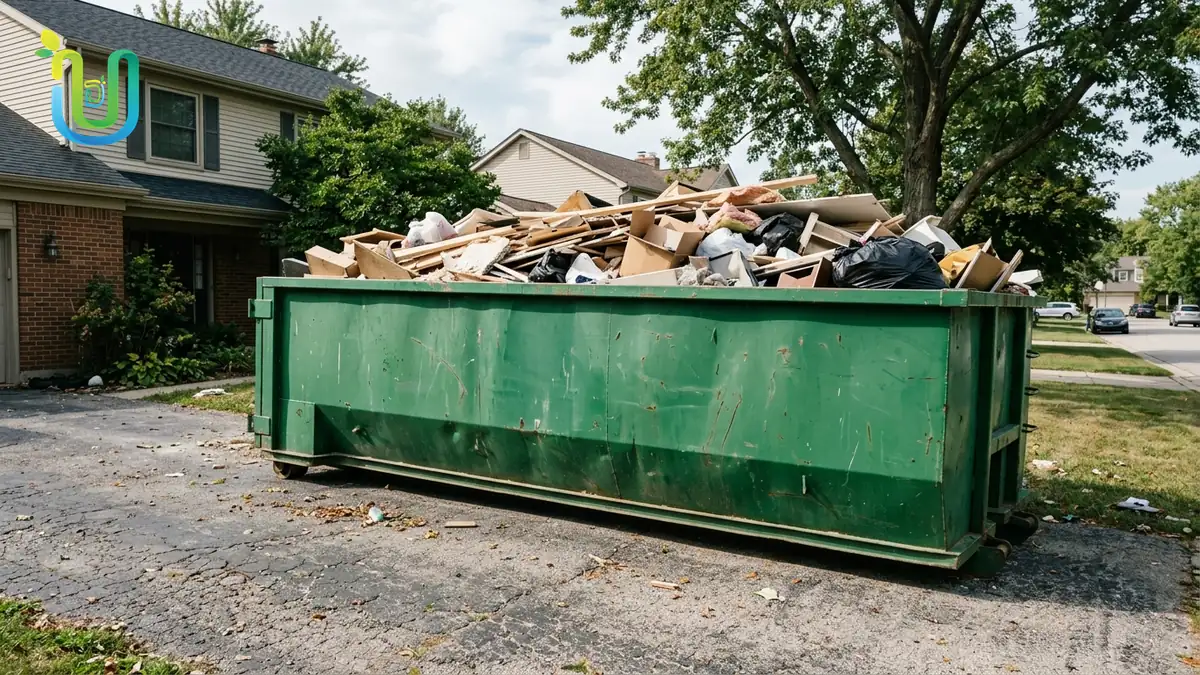
There are two types of overloading. Volume overloading means filling the dumpster above the rim so that debris extends above the top edge. Weight overloading means exceeding the included weight allowance.
Volume overloading is a safety and legal issue. Dumpsters with debris extending above the rim cannot be legally transported on public roads. If the truck arrives and the dumpster is overfilled, you will need to remove items until the load is level with the rim. This wastes time, and some haulers charge a trip fee for the delay.
Weight overloading triggers overage charges, typically $150 to $185 per ton over the allowance, with the exact rate disclosed in your quote. Heavy materials like concrete, soil, roofing shingles, and brick are the usual culprits. A 20-yard dumpster might look half-empty but already be at its weight limit if the bottom is loaded with concrete.
What it costs you: Typically $150 to $185 per excess ton in overage charges, or time wasted removing items from an overfilled container.
How to avoid it: Keep the fill level at or below the rim. If your project involves heavy materials like dirt, brick, or concrete, tell the hauler upfront: heavy material goes in dedicated 10 to 20-yard boxes at separate heavy-material rates, never mixed with regular garbage. Know the weight of your materials: concrete is about 4,000 lbs per cubic yard, roofing shingles about 200-350 lbs per square, and soil about 2,200 lbs per cubic yard.
Mistake 4: Not Preparing the Delivery Area
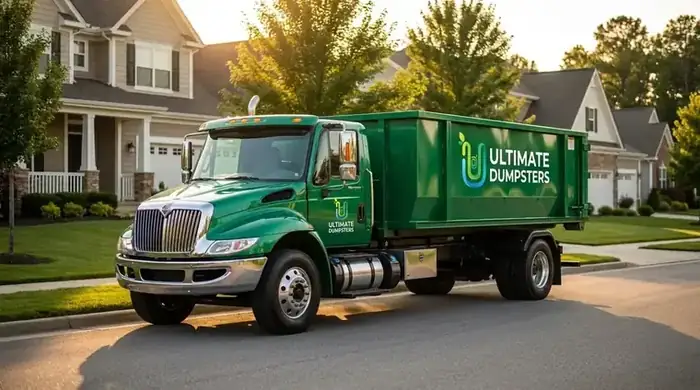
The delivery truck needs a clear path to the placement spot and enough overhead clearance for the roll-off mechanism. Low-hanging tree branches, overhead wires, basketball hoops, and narrow gates are the most common obstacles. If the truck arrives and cannot place the dumpster due to access issues, you may be charged a dry run fee.
What it costs you: A dry run fee, plus the delay of rescheduling delivery.
How to avoid it: Before scheduling delivery, stand in the spot where you want the dumpster and look up. Make sure there is 23 feet of vertical clearance; that is the height the roll-off arm reaches during placement. Check the driveway width: most dumpsters are 8 feet wide, so the access point needs to be at least 10 feet wide. Move vehicles, trash cans, and any obstacles out of the way before the delivery window.
Mistake 5: Waiting Until the Last Minute to Order
Peak season for dumpster rentals runs from April through September. During these months, demand is high and availability can be tight, especially for popular sizes like the 15-yard and 20-yard. Waiting until the day before your project to call for a dumpster means you may not get the size you want, the delivery date you need, or the best price.
Last-minute orders also eliminate your ability to compare quotes from multiple providers, which means you are more likely to overpay. And while same-day delivery is something we excel at (order before noon and we can usually make it happen), it is never guaranteed.
What it costs you: Limited size availability, higher prices due to inability to comparison shop, and potential project delays.
How to avoid it: Book your dumpster at least one week in advance, two weeks during peak season. Get quotes from multiple providers before booking. If your project date is flexible, ask the hauler which delivery days offer the best rates and availability.
The Common Thread
All five of these mistakes share a common cause: insufficient planning. Spending 30 minutes before your project to research sizes, review prohibited items, prepare the delivery area, and book in advance can save you hundreds of dollars and prevent frustrating delays. The cheapest dumpster rental is not the one with the lowest sticker price; it is the one that goes smoothly from delivery to pickup with no surprises.
At Ultimate Dumpsters, we guide every customer through these potential pitfalls during the booking process. We ask about your project, recommend the right size, review prohibited items, confirm the delivery area is accessible, and make sure you are fully prepared before the truck rolls. That level of customer support is what separates a good rental experience from a costly one.