The Weight of the Task
An estate cleanout is unlike any other cleanup project. It carries emotional weight that a garage declutter or a renovation demo does not. You are not just moving furniture and bagging trash. You are making decisions about a lifetime of accumulated possessions, often while processing grief, navigating family dynamics, and managing the practical demands of settling an estate.
This guide approaches the task with both the practical and emotional dimensions in mind. The goal is to give you a clear process that makes the work manageable without pretending it is easy.
Before You Touch Anything
Secure the property. Change the locks if necessary. Make sure the insurance on the home is current. Most homeowner's policies have provisions that reduce coverage on unoccupied properties after a certain number of days. If the home will sit empty for an extended period, notify the insurance company.
Gather the legal framework. Determine who has authority to make decisions about the estate's property. If there is a will, the executor has this authority. If there is no will, the administrator appointed by the probate court does. Having clear authority prevents disputes later.
Walk through and document. Before anyone removes a single item, walk through the entire property: every room, every closet, every storage area, the garage, the attic, the basement, the shed. Take comprehensive photos and video. This documentation serves multiple purposes: it protects against disputes among family members, supports insurance claims if needed, and helps the estate's executor account for assets.
Identify high-value items. During the walkthrough, flag anything that might have significant financial value: jewelry, art, antiques, coin or stamp collections, firearms, vintage items, and important documents like deeds, stock certificates, and insurance policies. These items need professional appraisal before any decisions about their disposition are made.
Assembling Your Team
Estate cleanouts are not solo projects. A moderately furnished three-bedroom home contains thousands of individual items. A home where the occupant lived for decades and accumulated extensively can take a week or more of full-time work.
Family and friends. The core team for most estate cleanouts. Assign roles to prevent bottlenecks: a decision-maker who determines what stays and what goes, a packer who prepares items for donation or transport, and a loader who moves items to the dumpster or donation staging area.
Professional cleanout services. If the family cannot do the physical work, or if the volume is overwhelming, professional estate cleanout companies handle the entire process. Costs range from $2,000 for a small home with moderate contents to $10,000 or more for large homes with extensive accumulation. These companies sort, remove, donate, recycle, and dispose of everything.
Estate sale companies. If the estate contains a significant volume of sellable items (furniture, collectibles, art, tools, housewares), an estate sale company will organize and conduct a sale, typically keeping 25 to 40 percent of the proceeds as their fee. This can generate meaningful income for the estate while reducing the volume of items that need other disposition.
The Sorting Framework
Every item needs to go somewhere. Create four clearly marked zones:
Keep. Items that family members want. Be deliberate about this category. The temptation is to keep everything out of sentiment, but moving boxes of items to family members' homes where they sit in closets and garages is not preserving memories; it is relocating clutter. Keep what is truly meaningful and useful.
Sell. Items with significant resale value. An estate sale is the most efficient way to sell large volumes. For individual high-value items, consignment shops, online marketplaces, and specialty dealers may achieve better prices.
Donate. Items in good condition that can benefit others. Furniture, clothing, kitchenware, linens, books, tools, and working electronics are all accepted by charitable organizations. Habitat for Humanity ReStores specialize in building materials and home goods. Contact organizations in advance to understand what they accept and whether they offer pickup service.
Dispose. Everything that does not fit the other three categories goes in the dumpster. Broken items, worn-out goods, stained mattresses, damaged furniture, outdated electronics that have no resale or donation value, and general household trash.
Handling Sensitive Materials
Financial documents. Bank statements, tax returns, investment records, and any document containing Social Security numbers or account numbers must be shredded, not thrown in a dumpster. Mobile shredding services can come to the property and process boxes of documents on site.
Photographs and personal papers. Distribute family photos among family members. Consider digitizing irreplaceable photos and documents before distributing the originals. Letters, journals, and personal papers should be offered to family members before disposal.
Medications. Remove all medications from the home. Most pharmacies participate in drug take-back programs. Some police departments also accept medications for safe disposal. Never flush medications or place them in the regular trash.
Firearms. State laws vary significantly regarding the transfer and possession of firearms from an estate. Consult with a licensed firearms dealer or an attorney who specializes in firearms law. Many police departments will accept surrendered firearms.
The Dumpster Decision
For most estate cleanouts, a 20-yard dumpster handles a standard 2-3 bedroom home. A 30-yard is appropriate for larger homes, homes with packed basements and attics, or homes where the occupant accumulated extensively over many decades.
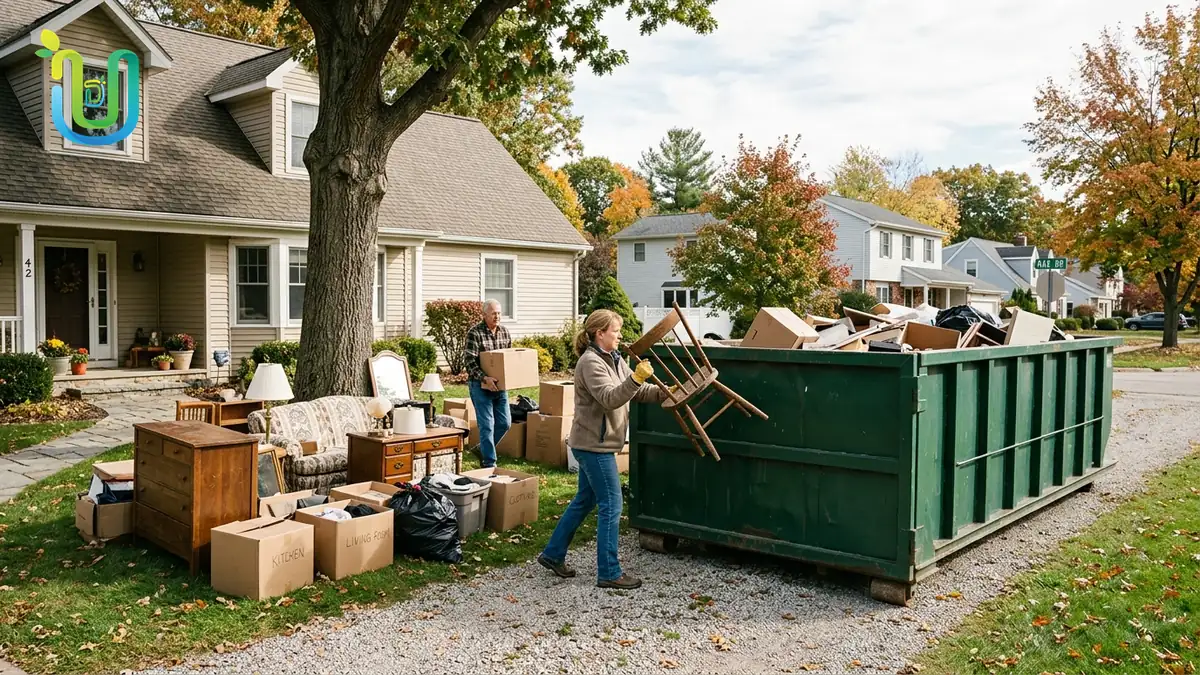
Have the dumpster on site before you start. Loading items directly into the dumpster as you sort through each room is far more efficient than creating staging piles that you have to handle a second time.
If the estate contains heavy items (stone or tile from an older home, large amounts of books, cast iron fixtures), monitor the weight as you load. A dumpster that looks half-full but is loaded with heavy items can exceed its weight allowance.
Working Through the House
Start with the least emotional spaces. Garages, utility rooms, and storage areas have the least sentimental attachment. Working through these first builds momentum, frees up space for staging, and gives the team a chance to establish their rhythm before tackling more personal rooms.
Move to secondary rooms. Spare bedrooms, bathrooms, the laundry room. These spaces are less emotionally charged than the primary living areas.
Finish with the heart of the home. The master bedroom, the kitchen, the living room, and any personal spaces like a home office or craft room. These are the rooms where the person's presence is most felt. Having the mechanical process well-established by the time you reach these rooms helps you maintain efficiency even when the emotional weight is heaviest.
After the Cleanout
Once the home is empty, clean it thoroughly. If the property is being sold, consult with a real estate agent about cost-effective improvements (fresh paint, professional carpet cleaning, minor repairs) that enhance marketability. An empty, clean home photographs well and shows better than one cluttered with furniture.
At Ultimate Dumpsters, we support families through estate cleanouts by providing the right-sized dumpster, flexible scheduling that accommodates the unpredictable pace of this kind of work, and a team that understands the sensitivity of the situation. Let us handle the logistics so you can focus on what matters.