
Renovation Waste Is Unavoidable, But Manageable
Whether you are gutting a kitchen, adding a bathroom, finishing a basement, or simply updating flooring throughout the house, every renovation project generates waste. Old cabinets, demolished drywall, torn-out flooring, stripped wiring, removed fixtures, and countless bags of dust and debris all need to go somewhere.
The amount and type of waste depends entirely on the scope of your project. A cosmetic refresh that involves painting and new hardware generates almost nothing. A full gut renovation of a kitchen or bathroom generates hundreds or thousands of pounds of material. Understanding what your specific project will produce, and planning for its disposal before demolition day, is essential for keeping your renovation on schedule and on budget.
Waste by Project Type
Kitchen Renovation
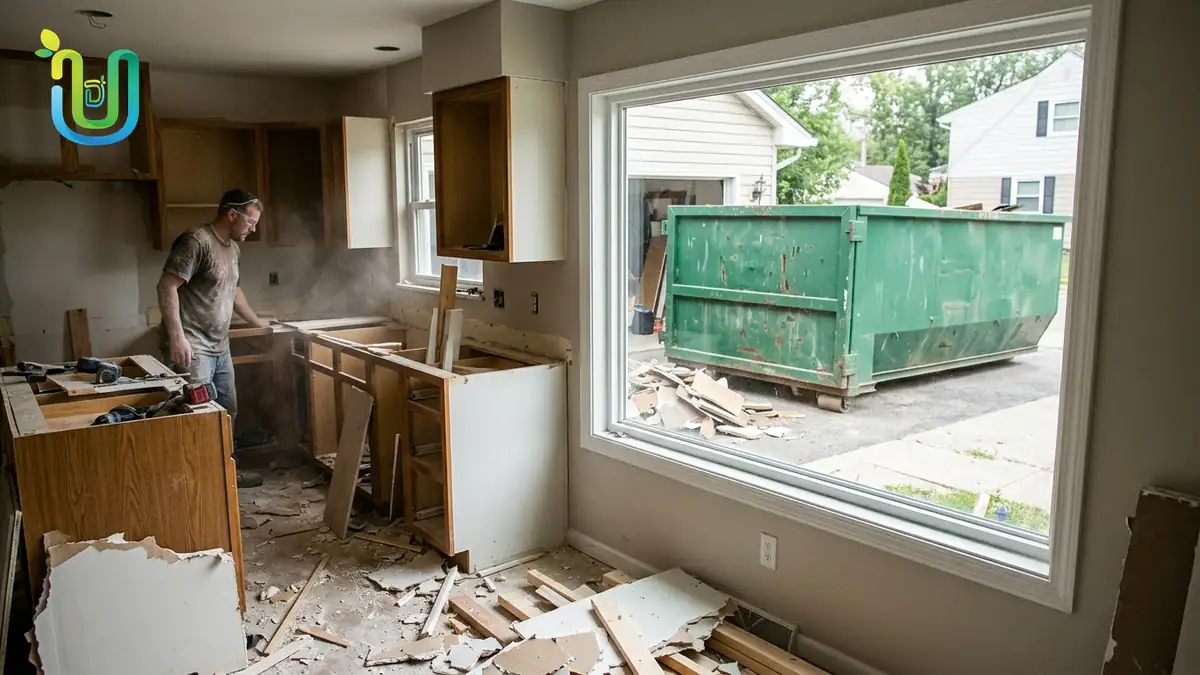
A full kitchen renovation is one of the most waste-intensive residential projects. Removing old cabinets, countertops, flooring, backsplash, drywall, and appliances from a typical kitchen generates 2,000 to 4,000 pounds of debris occupying 10 to 15 cubic yards of dumpster space.
The waste stream from a kitchen includes wood and particleboard (cabinets), stone or laminate (countertops), ceramic or porcelain (backsplash tile), vinyl, tile, or hardwood (flooring), drywall, and potentially old plumbing and electrical materials. Heavy countertop materials like granite and concrete can significantly affect the weight of your load.
Recommended dumpster: 15-yard for a standard kitchen. 20-yard if you are also disposing of old appliances and flooring from adjacent rooms.
Bathroom Renovation
Bathrooms are smaller than kitchens but generate a disproportionate amount of waste relative to their square footage because they contain heavy fixtures (cast iron tubs, ceramic tile, porcelain toilets and sinks) and multiple layers of moisture-resistant drywall and backer board.
A full bathroom gut produces 1,000 to 2,500 pounds of debris occupying 5 to 10 cubic yards of space. A cast iron bathtub alone can weigh 300 to 400 pounds.
Recommended dumpster: 10-yard for a small bathroom. 15-yard for a master bathroom or if you are renovating two bathrooms simultaneously.
Flooring Replacement
Removing and replacing flooring throughout a home generates a surprisingly large volume of waste. Carpet is bulky and awkward to handle. Tile is heavy and generates a lot of dust and small fragments. Hardwood and laminate fall somewhere in between.
For a 1,500 square-foot home, expect roughly 3 to 5 cubic yards of waste from carpet and pad removal, 5 to 8 cubic yards from tile removal (tile plus thinset plus backer board), or 3 to 4 cubic yards from hardwood or laminate removal.
Recommended dumpster: 15-yard for a full-house carpet removal. 20-yard for tile removal from a large home.
Basement Finishing or Renovation
Unfinished basements require framing, insulation, drywall, flooring, and electrical work, all of which generate cut-off waste. Finished basements being renovated generate demolition waste from the existing finishes. If you are also addressing water damage, expect to remove and dispose of water-damaged drywall, insulation, flooring, and possibly mold-affected materials.
Recommended dumpster: 10-yard for a clean-finish project (new construction waste only). 20-yard if you are demolishing existing finishes and replacing them.
Whole-House Renovation
A comprehensive renovation that touches multiple rooms (updating kitchens, bathrooms, flooring, and common areas) generates the most waste of any residential project. Total waste volumes for a 2,000 square-foot whole-house renovation typically range from 15 to 30 cubic yards.
Recommended dumpster: 30-yard, or a 20-yard with one scheduled swap mid-project.
How to Estimate Your Waste Volume
Measure the demolition area. Calculate the square footage of surfaces being removed: walls, floors, ceilings. For drywall, each 4x8 sheet covers 32 square feet and generates roughly 0.1 cubic yards of debris when broken up. For flooring, measure total square footage and reference the per-material estimates above.
Account for fixtures and structures. Cabinets, vanities, tubs, and built-in shelving add bulk that is hard to estimate by square footage. As a rule of thumb, a standard bathroom vanity with countertop equals about 0.5 cubic yards. A full set of kitchen base and wall cabinets equals 3 to 5 cubic yards.
Add a buffer. Renovation projects almost always generate more waste than estimated. Old houses reveal surprises: double layers of drywall, hidden materials behind walls, subfloor damage that requires additional removal. Add 20 percent to your estimate to be safe.
Managing Waste During the Renovation
Time your dumpster delivery. Have the dumpster delivered the day before demolition starts so it is ready when the debris starts flowing. There is nothing more frustrating than a pile of debris with nowhere to put it.
Load as you go. Do not let debris accumulate in the work area. Hauling it to the dumpster at the end of each day keeps the site clean, reduces trip hazards, and makes it easier to assess progress.
Break down large items. Disassemble cabinets, cut long boards in half, and flatten bulky materials before loading. This maximizes the usable space in your dumpster and can prevent the need for a second container.
Keep the fill level below the rim. Dumpsters cannot be transported if the contents extend above the top edge. Leave a few inches of clearance when loading to avoid having to remove items before pickup.
Recycling Renovation Waste
Many renovation materials are recyclable when separated. Metal fixtures, copper pipe, and steel framing can go to a scrap dealer. Clean concrete and masonry can be recycled into aggregate. Clean wood can be chipped for mulch or processed for biomass energy. Cardboard from packaging is readily recyclable.
Separating recyclable materials from general waste can reduce your disposal costs and your environmental impact. If your project generates a large volume of a single material, such as concrete from a patio demo or metal from a commercial renovation, a dedicated container for that material type may qualify for a lower disposal rate.
Working with Your Contractor
If you are hiring a contractor for your renovation, discuss waste management during the bidding process. Some contractors include waste disposal in their bid. Others expect the homeowner to provide a dumpster. Getting clarity on this before work begins prevents surprises and ensures that waste management does not fall through the cracks.
At Ultimate Dumpsters, we work directly with both homeowners and contractors. Whether you are managing your own renovation or coordinating with a professional, we will help you choose the right dumpster size, time the delivery to match your project schedule, and handle pickup when the work is done.