Roofing Waste Is Different from Other Debris
Roofing materials are among the heaviest items that go into a dumpster. A single square (100 sq ft) of asphalt shingles weighs between 200 and 350 pounds, and a typical residential roof has 18 to 24 squares. That means the shingles alone from a standard roof tear-off can weigh several tons, and that is before you add underlayment, flashing, ridge caps, nails, and rotten decking.
Because roofing waste is so heavy relative to its volume, it behaves differently from household junk or general construction debris. You will hit the weight limit on your dumpster long before you fill it to the top. This is the key fact that drives every decision about dumpster selection for roofing projects.
How Much Waste Does a Roof Generate?
The roofing industry measures roof area in "squares": one square equals 100 square feet of roof surface. A 2,000 square-foot home typically has a roof area of 1,800 to 2,400 square feet, or 18 to 24 squares, depending on the roof pitch and complexity.
Each square of old shingles (single layer) weighs approximately 200 to 350 pounds. A roof with two layers of shingles doubles that weight. Here is a quick reference:
- 1,000 sq ft roof (single layer): 2,000 to 3,500 lbs
- 1,500 sq ft roof (single layer): 3,000 to 5,250 lbs
- 2,000 sq ft roof (single layer): 4,000 to 7,000 lbs
- 2,500 sq ft roof (single layer): 5,000 to 8,750 lbs
Add 500 to 1,000 pounds for underlayment, flashing, and miscellaneous materials. If the decking needs replacement, plywood sheets add significant additional weight and volume.
Choosing the Right Dumpster Size
For roofing projects, the weight capacity matters more than the volume capacity. Here are the standard recommendations:
10-yard dumpster: Suitable for small roofing jobs up to about 15 squares (1,500 sq ft). The compact size fits easily in driveways and is ideal for single-layer tear-offs on smaller homes, garages, or sheds.
20-yard dumpster: The most common choice for standard residential roofing projects. It handles 20 to 30 squares comfortably when paired with an adequate weight allowance. This is the go-to for most single-family homes.
30-yard dumpster: Necessary for large homes, multi-layer tear-offs, or projects where significant decking replacement is needed. Also appropriate for commercial roofing jobs on small buildings.
Always confirm the weight allowance with your rental provider. A 20-yard dumpster with a 2-ton weight limit will not be enough for a roof that generates 3.5 tons of waste, even though the volume fits. That is why Ultimate Dumpsters doubles the included weight on roofing jobs: a roofing 20-yard comes prepaid at 4 tons instead of the standard 2.
Dumpster Placement for Roofing Jobs
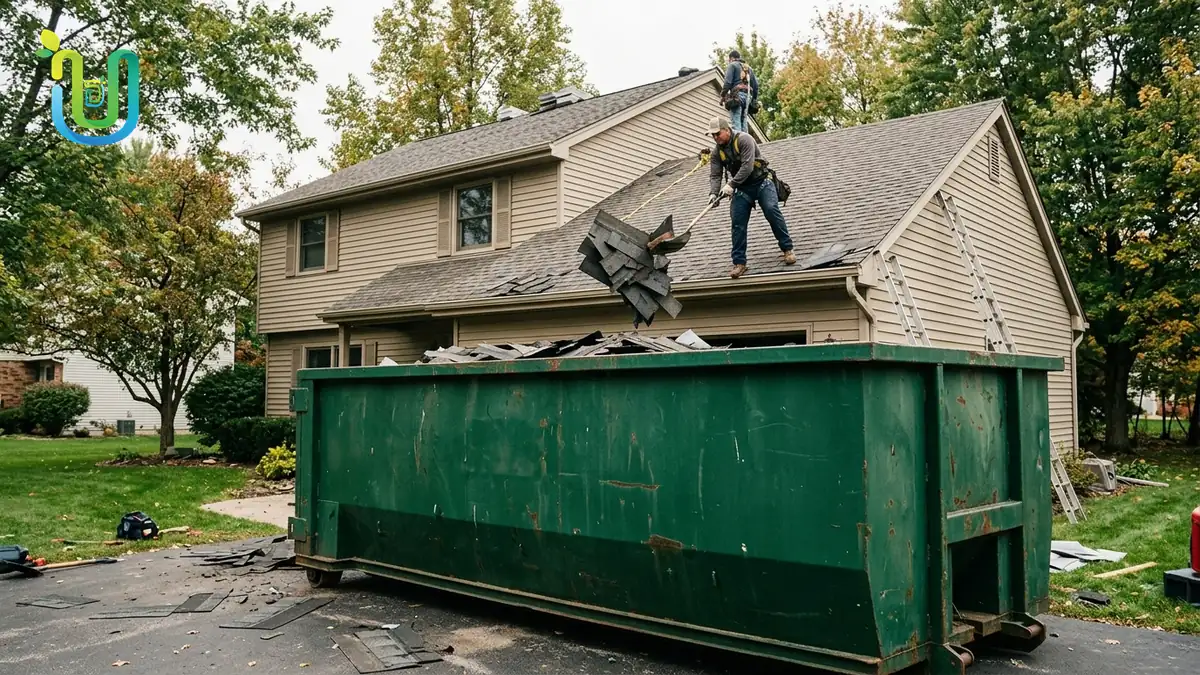
Placement is especially important for roofing projects because roofers need to throw debris directly from the roof into the dumpster. The ideal placement puts the dumpster as close to the house as possible, positioned so that at least one long side faces the roof edge.
Ask the roofing crew where they want the dumpster before scheduling delivery. Experienced roofers have strong preferences about placement because it directly affects their productivity. A well-placed dumpster saves hours of labor compared to one that requires workers to carry debris across the roof to reach it.
Protect your driveway. Roofing nails will fall around the dumpster during the tear-off. Lay plywood sheets on the driveway around the delivery area to catch nails and prevent damage to the surface. A magnetic nail sweeper is essential for cleanup after the dumpster is removed.
Single Layer vs. Multiple Layers
If your roof has been re-shingled over the original layer without a tear-off, you are dealing with double or even triple the weight. Many homes built in the 1970s through 1990s have two layers of shingles. Some older homes have three.
Multiple layers mean you need a larger weight allowance, potentially double what a single-layer job requires. This is one of the most common sources of overage charges on roofing dumpsters. Make sure your roofer inspects the roof edge or cuts a small sample before you order the dumpster so you know how many layers you are dealing with.
Shingle Recycling
Asphalt shingles are one of the most recyclable construction materials. Recycled shingles are processed into hot-mix asphalt for road paving, saving both raw materials and landfill space. In areas where shingle recycling is available, the disposal cost for a clean load of shingles may be lower than the landfill rate for mixed debris.
To qualify for shingle recycling rates, the load must be clean: shingles only, with no wood, metal, plastic, or other materials mixed in. Talk to your dumpster provider about whether shingle recycling is available in your area and whether clean loads qualify for a reduced rate.
Timing and Scheduling
Roofing is weather-dependent, and dumpster timing needs to align with the work schedule. Have the dumpster delivered the day before the tear-off begins. Most roofing crews can complete a standard residential tear-off and reshingle in two to three days, so a 7-day rental period provides adequate buffer for weather delays.
If rain is in the forecast, coordinate with both the roofing crew and the dumpster company. A partially loaded dumpster full of wet shingles weighs significantly more than dry shingles, which can push you over the weight limit unexpectedly.
At Ultimate Dumpsters, roofing projects are one of our most common rental types. We offer heavy-debris weight allowances specifically designed for roofing tear-offs, and our team can help you choose the right size based on your roof dimensions, number of layers, and material type.