Call Now:(866) 858-3867Live agents standing by
ALL THE DEBRIS THAT'S FIT TO DUMP
On a long job site the dumpster is not a one-and-done. Two sizes handle most of the work, the box has to actually fit your space, and when it fills you want it gone and back the same day. Here is how contractors size it, and how we keep it moving.
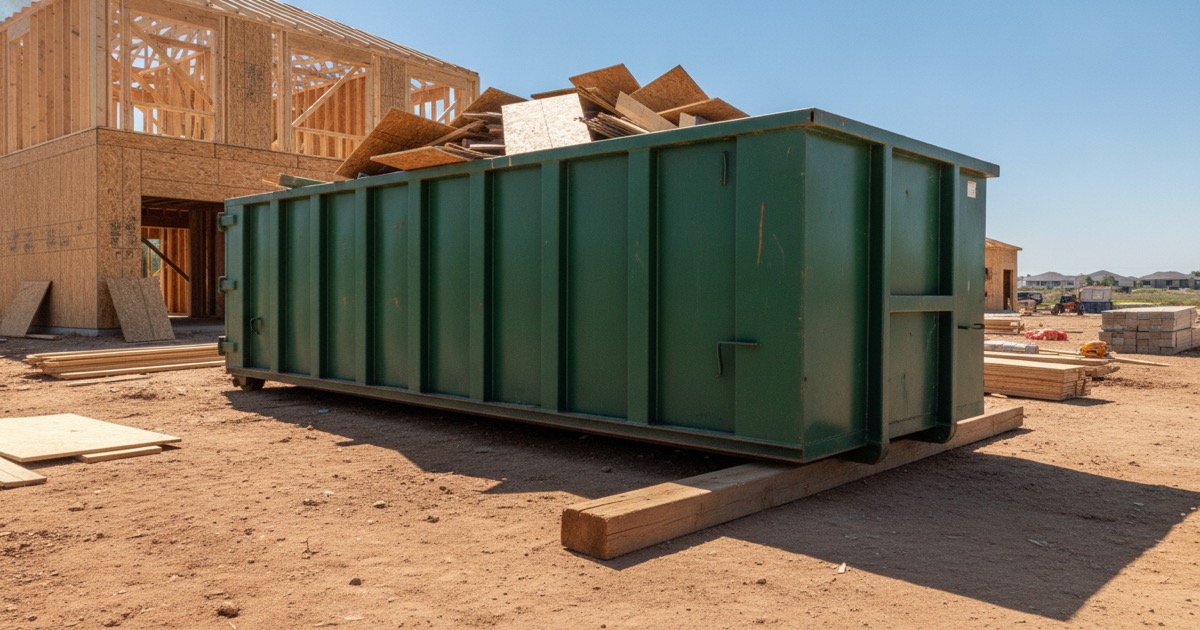
Construction is the single biggest reason a dumpster gets rented, and contractors are consistent about size. On construction jobs, 37.6 percent go with a 30-yard and 28.5 percent go with a 20-yard, so 66 percent of all construction rentals are one of those two boxes. The 10-yard takes about 13 percent, the 40 about 10 percent, and the 15 rounds it out. When two-thirds of pros land on the same two sizes, it is not a coincidence, it is what the work actually needs.
Size is not just volume, it is footprint, and that is where a lot of first-timers get it wrong. A 20-yard runs about 22 feet long by 8 feet wide with roughly 4.5-foot walls. A 30-yard is the SAME 22 by 8 footprint but taller walls, about 6 feet, so it holds close to 50 percent more without taking another inch of your site. That matters when you are trying to rent a dumpster for a tight lot or a busy driveway. A 10-yard is shorter at about 14 feet for a small urban site or a quick job. Know your access and your wall height before you pick, not after the truck shows up.
The 20-yard is the everyday framing-and-remodel box. It swallows drywall, lumber, flooring, cabinets and fixtures without eating the whole driveway, and its lower walls make it easy to load debris over the side by hand. For a kitchen gut, a bath remodel, a deck tear-off or a mid-size renovation, the 20 is the honest default. The 30-yard is the box for volume, new construction, a whole-house renovation, a big commercial cleanout or a roofing tear-off, which is why it edges out the 20 as the most-rented construction size.
On a long job site one box is rarely enough, and you do not want the work stopping because the dumpster is full. That is where dump-and-return and same-day swap-outs come in. When your box fills, we haul it, empty it, and bring the same one right back, or drop a fresh one, often the same day. We stay on call for active job sites, so the crew never stands around waiting on a container. It is one of the biggest differences between a broker who actually answers the phone and a cheap number that disappears after the first drop.
So when do you break from the two workhorses? Go to a 40 only when the debris is genuinely high-volume and light, like a full framing job or a large light-demo, because a 40 filled with anything heavy blows past the weight limit before it is full. Drop to a 10 for a tight site or a small punch-list. And heavy material, concrete, brick and dirt, never rides in a big box, it goes in a dedicated 10, 15 or 20 clean load priced on its own. Whether you are a contractor running a six-month build or a homeowner who just wants to rent a dumpster near me for a weekend cleanout, the rule is the same: size to the debris, and keep a number that answers.
Share of Ultimate Dumpsters construction dumpster orders by box size, from the order ledger. The 20 and 30-yard together are two-thirds of all construction rentals. Shares are directional and exclude cancelled orders.
“The 20 and the 30 are the two you grab without thinking. But on a long job the real value is the swap. When it is full we dump it and bring it right back, often the same day, so nobody is standing around. That is the difference between a broker who answers and a cheap number that ghosts you after the first drop.”
Tony D., Commercial and National Accounts
People size a dumpster by how much they are throwing out and forget the footprint. A 20 and a 30 take the exact same 22 by 8 feet of ground, the 30 just has taller walls and holds about half again as much. So on a tight site you are not choosing between space, you are choosing wall height. Check your access, your overhead, and where the truck sets it down before you pick a size.
On a long job the size is only half of it, the other half is keeping it moving. When a box fills we do a dump-and-return or a same-day swap so the crew never loses a shift waiting on a container. We stay on call for active sites. A cheap outfit drops one box and you cannot reach them for the second, and that is where a job actually loses money.
Yes. On active job sites we do same-day dump-and-return and swap-outs: when your box fills, we haul it, empty it, and bring the same container right back, or drop a fresh one, often the same day so your crew never stops working. We stay on call for long-running sites, which is the practical difference between a broker who answers the phone and a cheap number that disappears after the first drop. For sizing, most contractors run a 20-yard for framing and remodels and a 30-yard when there is real volume, and heavy material like concrete or dirt always rides in a dedicated clean load, never a big mixed box.
Construction dumpster rental →Placed by the desks of Ultimate Dumpsters. Every listing is real.
LONG JOB? WE STAY ON CALL. Same-day dump-and-return and swap-outs for active job sites. When it fills, we haul it, empty it, and bring it right back so the crew never stops.
CONSTRUCTION RENTAL →RENT A DUMPSTER NEAR YOU. Same-day delivery in 40,000+ ZIP codes. Enter your spot and get a guaranteed, deliverable price you can book right now.
SEE YOUR RATE →SIZE IT RIGHT. A 20 for a remodel, a 30 when there's real volume. See what fits each size before you order.
SIZE GUIDE →AN ADVERTISEMENT FROM THE PUBLISHER
The Box Arrives Before The Coffee Is Done
(866) 858-3867or skip the call entirely
Order online in about 2 minutesExact local pricing, tonnage and rental days included, e-sign and pay from your phone.
Construction size shares computed from the Ultimate Dumpsters roll-off order ledger, counting non-cancelled dumpster orders tagged construction by their box size. Dimensions are standard roll-off figures and vary slightly by yard and region. Shares are directional, not exact accounting. Published weekday mornings by Ultimate Dumpsters. Vol. I · No. 10.