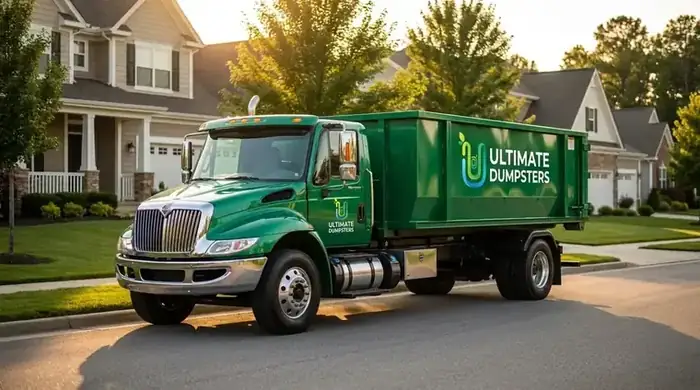
Nobody books a dumpster for fun. There's a crew showing up, a closing date, a roof half torn off. The container is step one of something bigger, and when it's late, everything behind it slides. I've spent years on the operations side of this industry, and the honest truth is that most delayed deliveries were preventable by either us or the customer. Here's the real list, straight from the dispatch board, and what prevents each one.
1. Something Is Parked in the Drop Zone
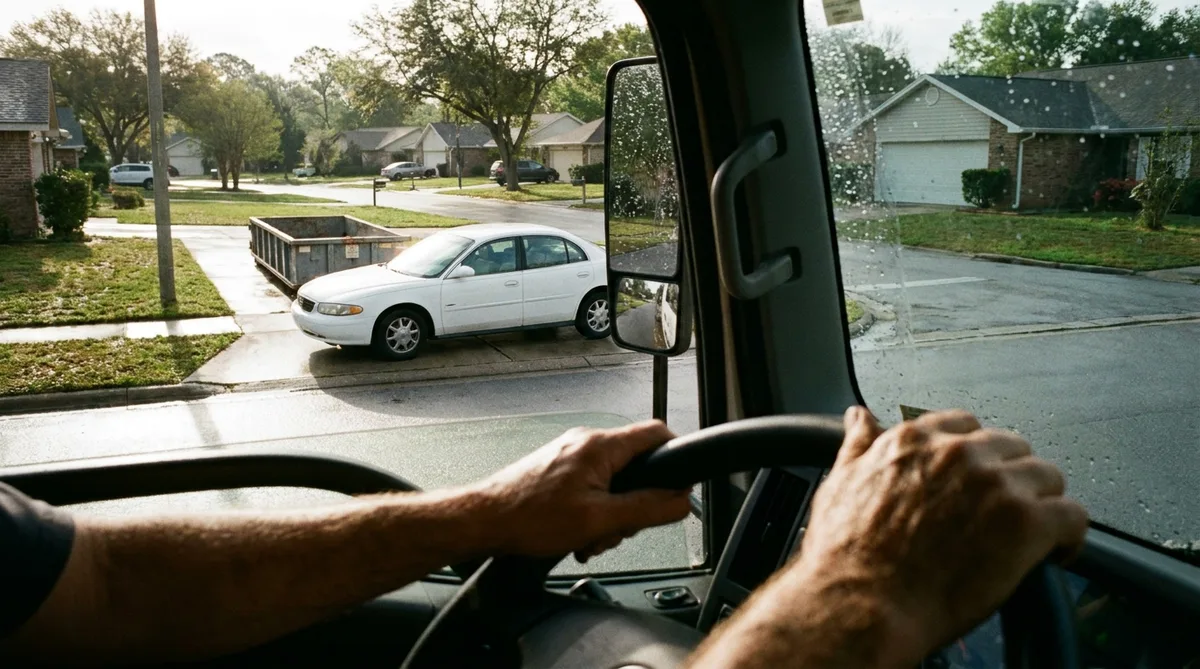
The most common preventable delay in the business. The truck arrives, the placement spot has a sedan in it, the driver calls, nobody answers, and now your delivery is competing with the rest of the day's board for a second attempt.
The fix: Move vehicles the night before. If street parking is tight in your area, cone off the spot. If you won't be home, make sure whoever is there knows a truck is coming.
2. The Approach Doesn't Work
The container spot itself is fine, but the driver can't get to it. Cars lining a narrow street, a gate that's two feet too narrow, a tight cul-de-sac, scaffolding that went up yesterday.
The fix: Walk the truck's path in your head: from the street, to the spot, sixty-ish feet of straight approach. Open gates before the window starts. If access is genuinely tight, tell us at booking. A smaller container or a different angle usually solves it when we know in advance.
3. Overhead Obstructions
Power lines, cable drops, tree limbs, carport roofs. The truck bed rises well above the container height during the drop, and no driver will raise steel into a wire. That's a hard stop, every time, for good reason.
The fix: Stand at your placement spot and look straight up. If anything crosses the sky above it, pick a different spot or flag it at booking so dispatch plans around it.
4. Permits That Aren't Ready
Street placement usually needs a temporary right-of-way permit from your city. When the container is booked for Monday but the permit clears Wednesday, the delivery waits. Legally, it has to.
The fix: If the dumpster can't go on private property, start the permit process when you book, not the day before. Ask us what your city requires; we watch these rules across the country and can tell you what to expect and how long approvals usually take.
5. Weather That Changes the Ground
Rain rarely stops a delivery; steel doesn't mind getting wet. What stops deliveries is what rain does to soft ground. A truck that would sink to its axles on a soaked lawn isn't delivering anything that day.
The fix: Pave-surface placements shrug off weather. If your only option is grass or dirt, have plywood ready and expect dispatch to call about timing after heavy storms. Ice is the other exception: safety wins, and we'll be there the moment roads allow.
6. The Address Pin Is Wrong
More common than you'd think: new construction that mapping apps don't know yet, rural roads with unmarked turnoffs, duplicate street names one town apart.
The fix: For new builds or rural sites, drop us the cross street or GPS coordinates in the notes. One accurate landmark saves a driver twenty minutes of hunting.
7. The Wrong Size Was Ordered for the Space
Occasionally the container fits the debris but not the property: a 40-yard is over twenty feet long, and some driveways just can't host one plus the truck that delivers it.
The fix: If your space is tight, say so when you book and we'll match the footprint, not just the volume. Two 20-yard containers on a swap schedule often beat one 40 that doesn't fit.
What We Owe You on Our Side
Prevention isn't only on the customer. Our end of the deal: accurate delivery windows, a driver who calls when something on-site doesn't match the plan instead of just leaving, and dispatch that tells you the truth about timing. A delivery that slips without communication is a failure on our side of the board, full stop.
Five minutes of prep (spot cleared, path open, sky checked, notes written), and your container shows up like it was always going to. That's the whole secret.