I run operations at Ultimate Dumpsters, which means every delivery on the board eventually crosses my desk: government contracts, roofing crews, single-driveway cleanouts, all of it. The single biggest thing I wish customers knew is this: a dumpster delivery is a small logistics operation, and five minutes of site prep on your end is the difference between a perfect drop and a phone call you don't want.
Here's what actually happens after you book, and how to make your delivery boring, which, in my world, is the highest compliment.
Behind the Scenes: From Your Order to a Truck on Your Street
When your order comes in, three things happen fast.
1. Your job gets matched to a truck and a container
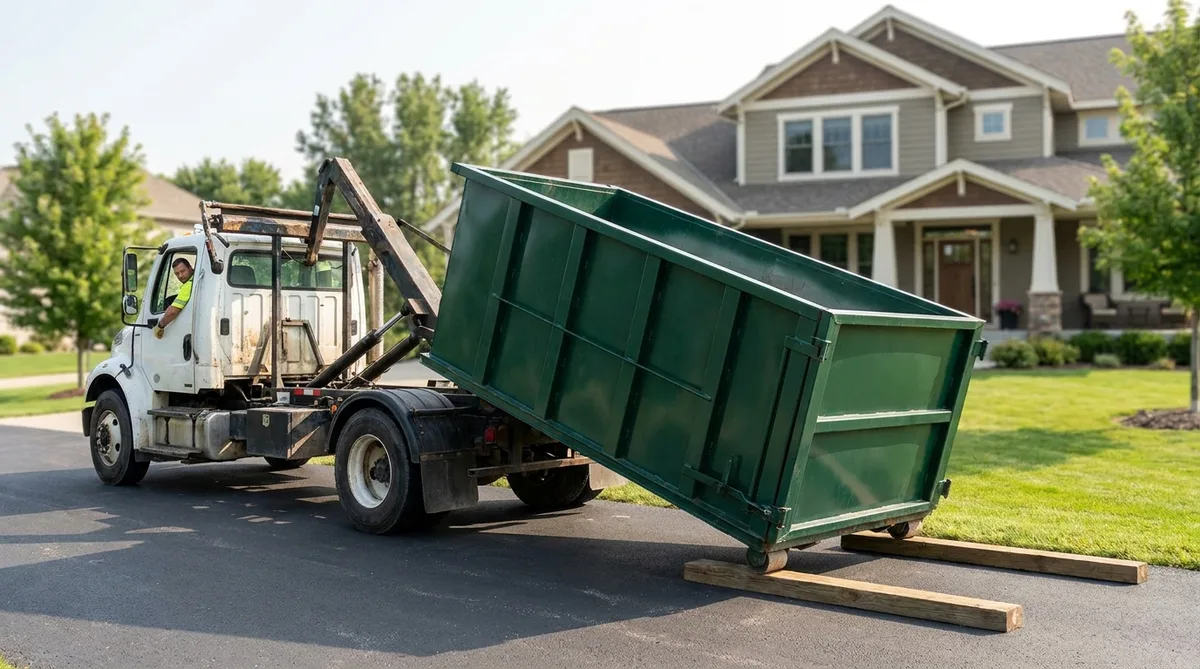
We confirm the container size you booked is staged and route it against the day's board. A roll-off truck doesn't carry a stack of dumpsters like an Amazon van carries boxes; it hauls one container at a time on a hydraulic hoist. That means your delivery is a dedicated trip, and it's why placement details matter so much: the driver plans the approach before the truck ever leaves the yard.
2. Dispatch reviews your placement notes
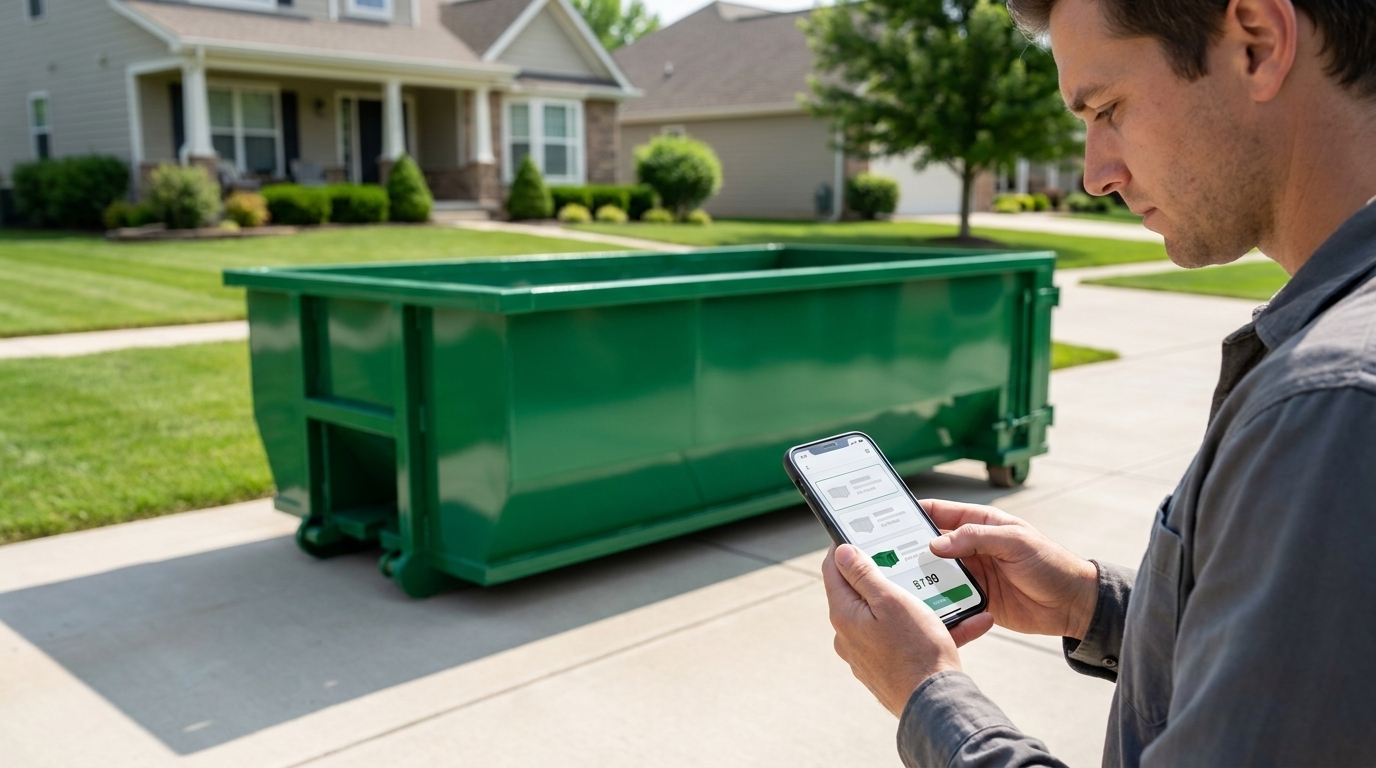
Every note you leave at booking gets read. "Left side of driveway, doors facing the garage" tells the driver how to line up before he's on your street. No notes means the driver makes a judgment call, usually a good one, but your project knows things dispatch doesn't, like where the concrete truck needs to squeeze past next Tuesday.
3. The delivery window gets set
Most deliveries land in a morning or afternoon window. Same-day is genuinely possible in a lot of our markets when you order before noon. The constraint is almost never willingness, it's whether a truck and container are positioned near you.
What the Driver Needs From Your Site
A roll-off truck is big, and the physics of tilting a steel container off the back need more room than people expect.
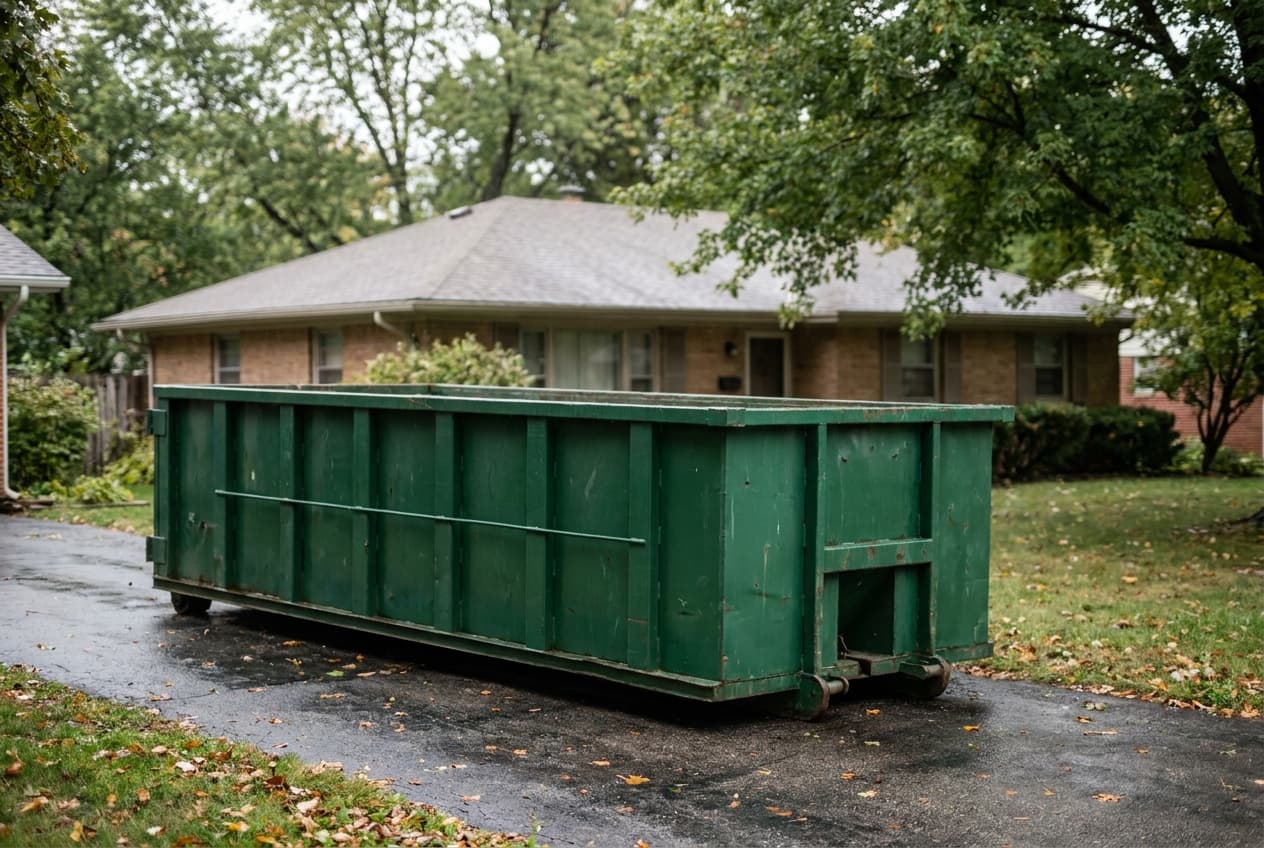
- A straight approach. The truck backs into position and tilts the container off the rails, so it needs a straight run-up to your placement spot: figure roughly sixty feet of clear line, about three to four car lengths.
- Overhead clearance. The bed raises high during the drop. Low branches, power lines, and carport roofs are the classic problem trio. Look up before delivery day; it's the check almost everyone skips.
- Width. Add a couple of feet of working room on each side of the container spot.
- Firm ground. Driveways and pavement are ideal. Soft lawn after a week of rain can swallow container rails and truck tires. If grass is the only option, plywood under the rails saves your yard.
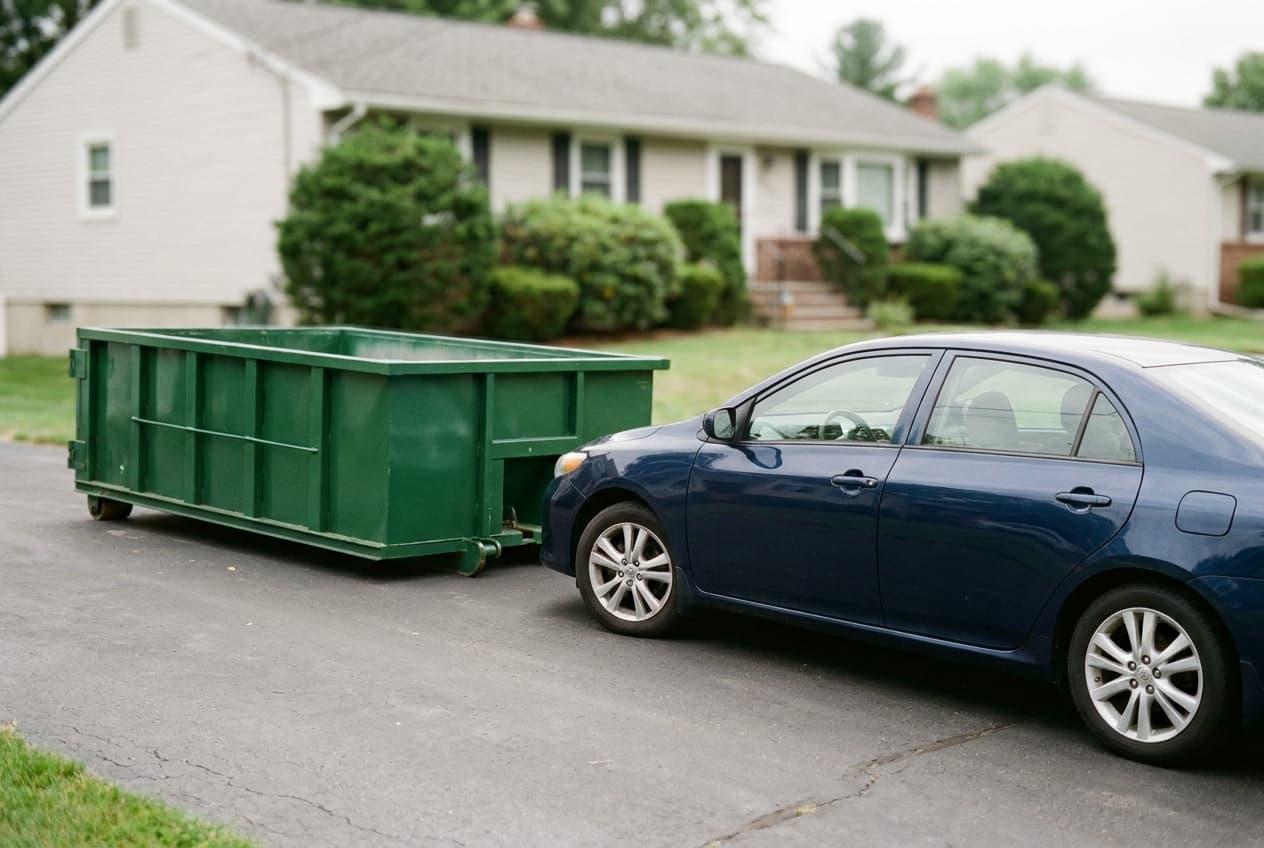
- Nothing parked in the zone. The number one fixable delay in our operation: a car parked where the dumpster goes. Move vehicles the night before, not when you hear the backup alarm.
The Delivery Itself
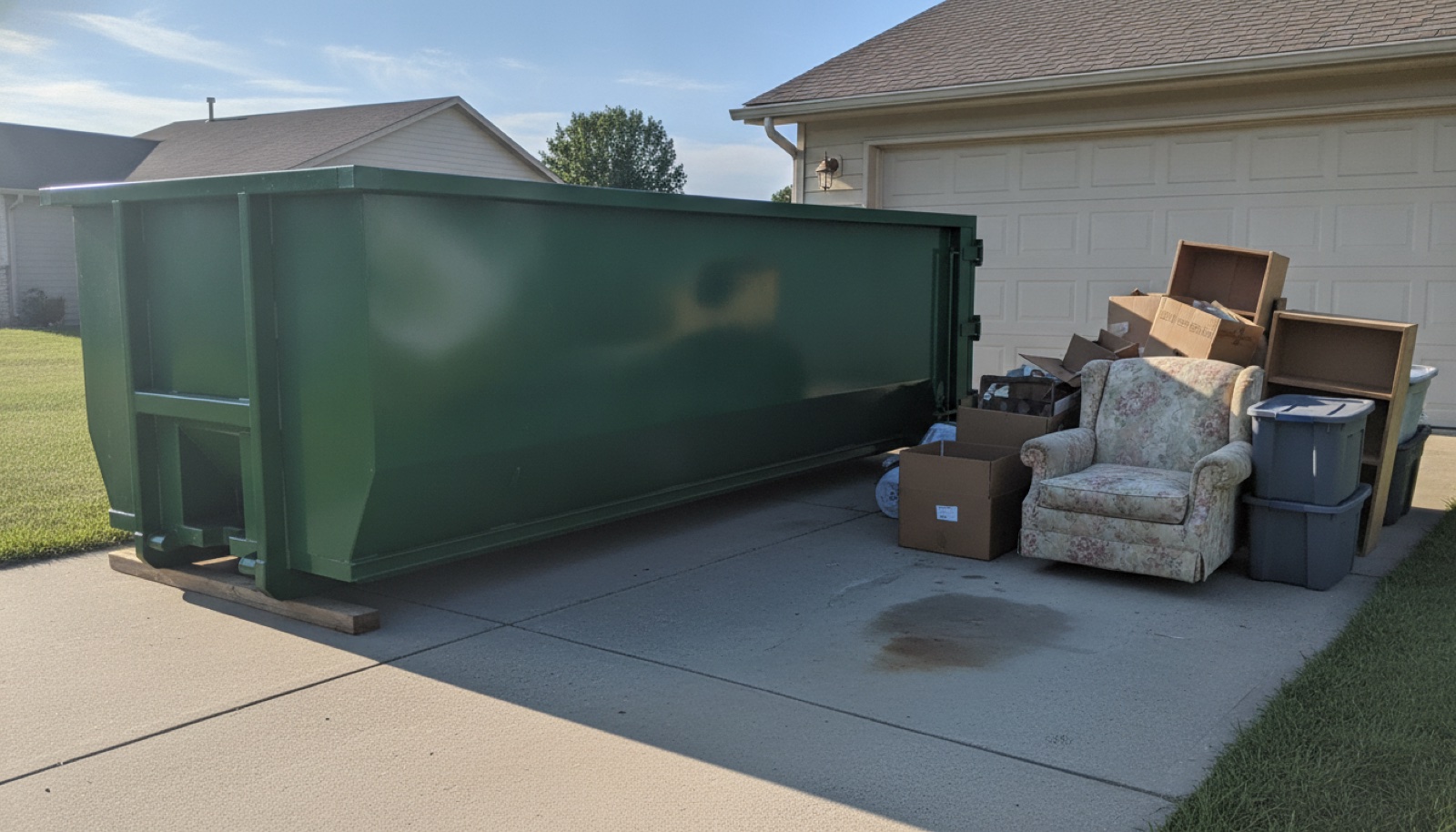
The actual drop takes about ten to fifteen minutes. The driver positions, tilts the bed, and walks the container down on cables until it sits flat. If you asked for driveway protection, boards go under the rails first. I recommend them on any surface you care about, and they're worth requesting at booking so they're on the truck.
You don't need to be home. Honestly, most of our smoothest deliveries happen at empty houses with great placement notes. If you are home, give the driver space to work, and if something about the spot changed since you booked, tell him before the container comes off the truck, not after.
After the Drop
Load it level with the top rim (that's a transport law, not a preference) and call when you're ready for pickup. If your project timeline slips, extensions are a phone call. If your placement spot has to change mid-project, do not push the container with a skid steer; one call and we'll relocate it properly with the truck.
That's the whole machine. Book with good notes, clear the approach, look up for wires, and your delivery will be the most uneventful part of your project, exactly how we like it.