Call Now:(866) 858-3867Live agents standing by
ALL THE DEBRIS THAT'S FIT TO DUMP
One of the most common searches we see is for a one-ton dumpster, and it points to a mix-up that trips up a lot of first-time renters: size and weight are two completely different things. A dumpster's SIZE is measured in cubic yards, how much stuff fits. Its WEIGHT allowance is measured in tons, how heavy that stuff can be before an overage fee kicks in. You can fill a big box with light junk and stay well under, or half-fill a small box with concrete and blow right past the limit. This is the honest, plain-English guide to what tonnage really means, how many tons come included with each size, which materials are secretly heavy, and the simple way to make sure your load does not go over.
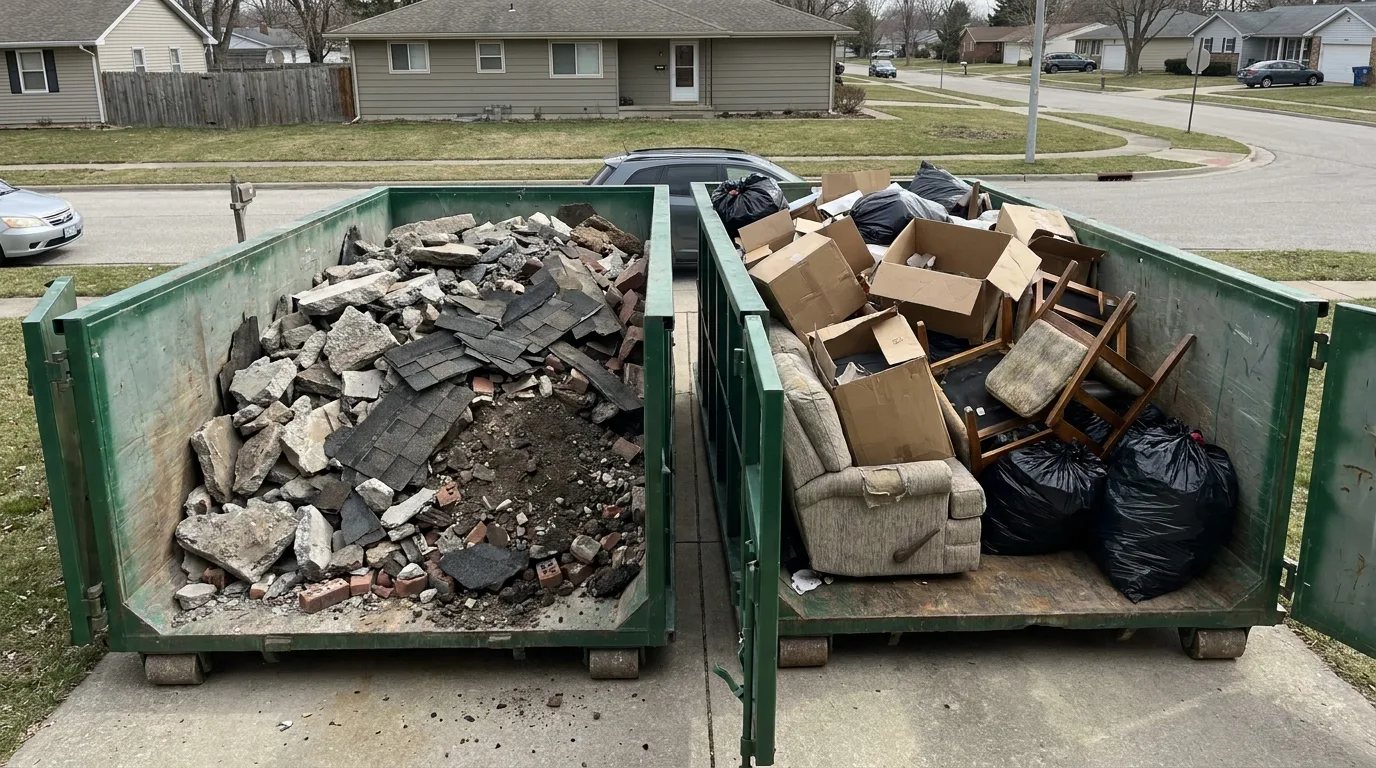
Let us clear up the single most common confusion in this whole business, because getting it wrong is what leads to a surprise line on the final bill. A dumpster has two separate measurements, and people constantly mix them up. The first is SIZE, measured in cubic yards, which is purely about volume, how much material physically fits inside the box. A 10-yard holds about ten cubic yards of stuff; a 40-yard holds about forty. The second is the WEIGHT allowance, measured in tons, which is a completely independent limit on how HEAVY that material can be. When someone searches for a one-ton dumpster, what they usually mean is the smallest, lightest-duty rental, and the one ton they are thinking of is not a size at all, it is the weight allowance that comes included with it.
Here is why the two never line up neatly: different materials weigh wildly different amounts for the same volume. A 10-yard box packed with couch cushions, cardboard, old clothes, and light household junk might only weigh a few hundred pounds, nowhere near a ton. That same 10-yard box filled halfway with broken concrete, dirt, roofing shingles, or tile could weigh well over two tons. Same box, same volume, but one load is featherlight and the other is a back-breaker. It is not a small effect: the U.S. EPA reports that concrete makes up the overwhelming majority of construction and demolition debris by weight, which is exactly why a load that looks modest can be so heavy. That is the whole reason weight is billed separately from size: the company still has to haul that container to the landfill and pay to dump it BY WEIGHT, and a heavy load costs far more to dispose of than a light one, even though they take up the same space in the truck.
So how much weight actually comes included? With Ultimate Dumpsters, every rental comes with a real tonnage allowance built into the flat price, and it scales up with the size. A 10-yard and a 12-yard each include 1 ton. A 15-yard includes 1.5 tons. A 20-yard includes 2 tons. A 30-yard includes 3 tons. And a 40-yard includes 4 tons. That included weight covers the overwhelming majority of normal jobs, a garage cleanout, a room remodel, a yard project, general household junk almost never comes close to the limit, because everyday debris is bulky but light. The included tonnage is not a trick or a teaser; it is a genuine allowance sized to the box, and for most renters it is simply never a factor.
The place people DO run into the weight limit is with what we call heavy debris, and it is worth knowing the list because it is short and predictable. The usual suspects are concrete, brick, and asphalt; dirt, soil, sand, and gravel; roofing shingles; ceramic tile and porcelain; plaster and drywall in large quantities; and wet or waterlogged material of any kind. These are dense, and they add up fast, a single pickup-truck load of concrete can weigh a ton or more by itself. If your project is a patio tear-out, a roof replacement, a bathroom gut with a tile floor, or hauling out a pile of dirt, you are in heavy-debris territory and the weight allowance matters more than the size of the box. For those jobs, the smart move is often a SMALLER box with the tonnage you need, not a bigger one, because a 40-yard full of concrete is not only over weight, it may be too heavy for the truck to legally haul.
What happens if you do go over? It is simple and it is not a penalty, it is just the real cost of the extra disposal. When the container is picked up, it is weighed at the landfill, and any weight beyond your included allowance bills per ton on the final invoice. Across most of the country that runs roughly $150 to $185 per additional ton, and dense metro areas run higher. The key thing, and this is the honest part, is that it is never a surprise number: your exact per-ton overage rate is listed right on your quote before you ever book, so if you think you might go over, you know the math in advance. You are only ever charged for the actual weight, measured on a certified scale, not an estimate or a guess.
There is one nice exception worth calling out, because it saves heavy-job customers real money. For jobs we KNOW are heavy, like roofing, we pre-load extra tonnage into the rental at the honest rate instead of letting you get surprised at the end. A roofing 20-yard, for example, comes prepaid at 4 tons instead of the standard 2, because a roof tear-off is almost always heavy and we would rather build the right weight in up front than hit you with an overage later. That is the difference between an honest all-inclusive rental and a bait price: we would rather quote you the real number for the real job than advertise a low one and make it up on the back end.
So here is the simple rule of thumb to make sure your load never goes over. First, be honest with yourself about what is going in the box: is it mostly light and bulky (furniture, boxes, general junk, brush) or mostly dense and heavy (concrete, dirt, tile, shingles)? Light and bulky, pick the size that fits the VOLUME and stop worrying about weight, you will almost never hit the limit. Dense and heavy, think about the TONS first, keep heavy material in its own load, do not fill a big box to the top with it, and ask us up front so we can prepay the right tonnage. And if you are ever not sure, that is exactly what we are here for. Tell us the job, and we will tell you the size AND the weight you actually need, no guessing.
The bottom line: a one-ton dumpster is not a size, it is a weight allowance, and understanding the difference is how you avoid the one surprise fee in this whole process. You can see every size with its included tonnage laid out plainly, use the free size calculator to match the box to your job, or just get a real ZIP-level quote in a couple of minutes that shows your flat price, your included tons, and your exact per-ton overage rate right up front. Our assistant Sam is on chat and the phone 24/7 to size it with you, weight and all, so you order the right box the first time and never think about tonnage again.
These are the standard included weight allowances that come built into Ultimate Dumpsters' flat rate for each size. Heavy-debris jobs such as roofing are prepaid with extra tonnage. Anything over the included allowance bills per ton at the rate shown on your quote. Bar widths reflect included tons, not physical size.
| Size | Volume (dimensions) | Included weight | Best for |
|---|---|---|---|
| 10 Yard | About 10 cu yd (12' x 8' x 3.5') | 1 ton | Small cleanouts, garage, single room, light household junk |
| 15 Yard | About 15 cu yd (16' x 7.5' x 4.5') | 1.5 tons | Medium cleanouts and small remodels |
| 20 Yard | About 20 cu yd (22' x 7.5' x 4.5') | 2 tons | Whole-house cleanouts, large remodels; roofing prepaid at 4 tons |
| 30 Yard | About 30 cu yd (22' x 7.5' x 6') | 3 tons | Construction and commercial project debris |
| 40 Yard | About 40 cu yd (22' x 7.5' x 8') | 4 tons | Large construction and demolition; use a smaller box for very heavy loads |
Included weight is built into the flat rate for each size. Everyday light debris rarely approaches these limits; heavy material (concrete, dirt, tile, shingles) does. Overage bills per ton at the rate on your quote. For known-heavy jobs like roofing, extra tonnage is prepaid up front.
“The number one thing I explain on the phone is that the size of the box and the weight it can hold are two different things. Somebody calls for a one-ton dumpster, and what they really need is help figuring out whether their load is heavy or just big. If it is a garage full of old furniture, weight is never going to be an issue, get the size that fits. If it is a torn-up concrete patio, forget the size for a second, let us talk tons, because that is what will actually cost you. I would rather spend two minutes getting the weight right up front than have somebody see an overage on the invoice and feel blindsided. Honest sizing is the whole job.”
From the sizing desk
The load that gets people is the heavy one they did not think about. Concrete, dirt, tile, roofing shingles, that stuff is dense, and a container that looks half empty can already be over its weight allowance. My rule for customers is simple: if the material is heavy, keep it in its own load and do not fill a big box to the top with it. A 40-yard full of concrete is not just over weight, it can be too heavy to legally haul. Tell me it is a heavy job up front and I will get you the right box with the right tons, so there is no surprise at the scale.
Weight is where honesty really shows. Every one of our loads is weighed on a certified scale at the landfill, and the overage rate is printed on the quote before anyone books, so there is never a mystery number. And for jobs we know run heavy, like roofing, we prepay the extra tonnage at the real rate instead of advertising a cheap price and springing the weight fee at the end. A roofing 20-yard comes with four tons, not two, because that is what a roof actually weighs. That is the difference between a real quote and a bait price.
For contractors this is bread and butter, but for homeowners it is the one thing worth slowing down on. On a commercial or construction job, we size by tons as much as by yards, because the debris is dense and predictable. A homeowner doing a one-time project just needs to answer one question honestly: is my junk mostly light and bulky, or mostly heavy? Get that right and you order the correct box the first time, stay inside your included weight, and never think about it again. That is what good sizing buys you, no swaps, no overage, no surprises.
A one-ton dumpster is not a size, it is a weight allowance. Dumpster SIZE is measured in cubic yards and describes how much material fits inside (a 10-yard holds about ten cubic yards, a 40-yard about forty). WEIGHT is measured in tons and is a separate limit on how heavy that material can be before an overage fee applies. The two are billed separately because the container has to be hauled to a landfill and disposed of by weight, and a heavy load costs far more to dump than a light one of the same volume. With Ultimate Dumpsters, every rental includes a real tonnage allowance built into the flat price that scales with size: 1 ton on a 10-yard or 12-yard, 1.5 tons on a 15-yard, 2 tons on a 20-yard, 3 tons on a 30-yard, and 4 tons on a 40-yard. That included weight covers the overwhelming majority of normal jobs, because everyday debris like furniture, boxes, and general household junk is bulky but light and rarely comes close to the limit. The place people hit the weight cap is heavy debris: concrete, brick, and asphalt; dirt, soil, sand, and gravel; roofing shingles; ceramic tile and porcelain; plaster and drywall in large amounts; and any wet or waterlogged material. These are dense and add up fast, so for heavy jobs the tonnage matters more than the box size, and a smaller container with the right weight allowance is often smarter than a big one, which can end up too heavy to legally haul. If you do go over, the load is weighed on a certified scale at the landfill and the extra weight bills per ton on the final invoice, roughly $150 to $185 per ton across most of the country and higher in dense metros, with your exact rate shown on your quote before you book, so it is never a surprise. For jobs known to run heavy, such as roofing, Ultimate Dumpsters prepays extra tonnage into the rental at the honest rate up front (a roofing 20-yard comes with 4 tons instead of 2) rather than springing a fee later. The simple rule: if your debris is light and bulky, pick the size that fits the volume and do not worry about weight; if it is dense and heavy, think about tons first, keep heavy material in its own load, and ask up front so the right tonnage is prepaid. You can see every size with its included tonnage, use the free size calculator, or get a real ZIP-level quote in a couple of minutes that shows your flat price, included tons, and exact per-ton overage rate, and the assistant Sam is available 24/7 to size it with you.
See every size with included tonnage →Placed by the desks of Ultimate Dumpsters. Every listing is real.
NOT SURE ON SIZE OR WEIGHT?. The free size calculator matches the right box to your job, by volume and by weight, so you order once and stay inside your included tonnage.
Size it free →HEAVY JOB? WE PREPAY THE TONS. Roofing, concrete, dirt, and tile run heavy. Tell us the job and we build the right tonnage into your flat rate up front, no surprise overage.
See what's included →GET YOUR REAL NUMBER. A ZIP-level quote in a couple minutes shows your flat price, your included tons, and your exact per-ton overage rate right up front. No mystery fees.
Get my quote →RATHER WE DID THE LIFTING?. Junk removal means we handle the heavy loading and hauling for you, still one flat price, and we sort out the weight so you do not have to.
Book junk removal →AN ADVERTISEMENT FROM THE PUBLISHER
The Box Arrives Before The Coffee Is Done
(866) 858-3867or skip the call entirely
Order online in about 2 minutesExact local pricing, tonnage and rental days included, e-sign and pay from your phone.
This edition explains the difference between dumpster size (volume, in cubic yards) and weight allowance (in tons) in response to common searches such as 1 ton dumpster and dumpster weight limit. All size, dimension, and included-tonnage figures, 1 ton on a 10-yard and 12-yard, 1.5 tons on a 15-yard, 2 tons on a 20-yard, 3 tons on a 30-yard, and 4 tons on a 40-yard, plus the roofing prepaid-tonnage example (a roofing 20-yard at 4 tons), are Ultimate Dumpsters' real published specifications. Overage pricing of roughly $150 to $185 per additional ton reflects Ultimate Dumpsters' national pricing range, with the note that dense metro areas run higher and that the customer's exact per-ton rate is shown on the quote before booking; loads are weighed on a certified scale at the disposal facility. The list of heavy materials (concrete, brick, asphalt, dirt, soil, sand, gravel, roofing shingles, ceramic tile, porcelain, plaster, drywall, and wet or waterlogged material) is general industry knowledge. All statements about Ultimate Dumpsters services and policy, one flat all-inclusive rate covering delivery, a seven-day rental period, pickup, disposal, and the included weight allowance, six sizes from ten to forty yards, 24/7 assistance from the assistant named Sam, and the company being licensed and insured, family owned for more than fifteen years, with 180,000+ rentals delivered and 2,200+ reviews, are longstanding facts. No proprietary figures or invented statistics are used. Team quotes are verbatim from Ultimate Dumpsters staff. Article copy was drafted with an external model and fact-checked against Ultimate Dumpsters' real published size, tonnage, and pricing specifications. Published weekday mornings by Ultimate Dumpsters. Vol. I · No. 55.