
The Daily Haul
ALL THE DEBRIS THAT'S FIT TO DUMP
Concrete Dumpster Rental: The Right Box for Heavy Debris, and Why Weight Beats Volume
Concrete, brick, dirt and asphalt fill a dumpster by weight, not volume, so the box that looks half empty can already be over its limit. Here is how concrete dumpster rental actually works, which size to pick, what it weighs, and how to price it before you pour a single chunk in.
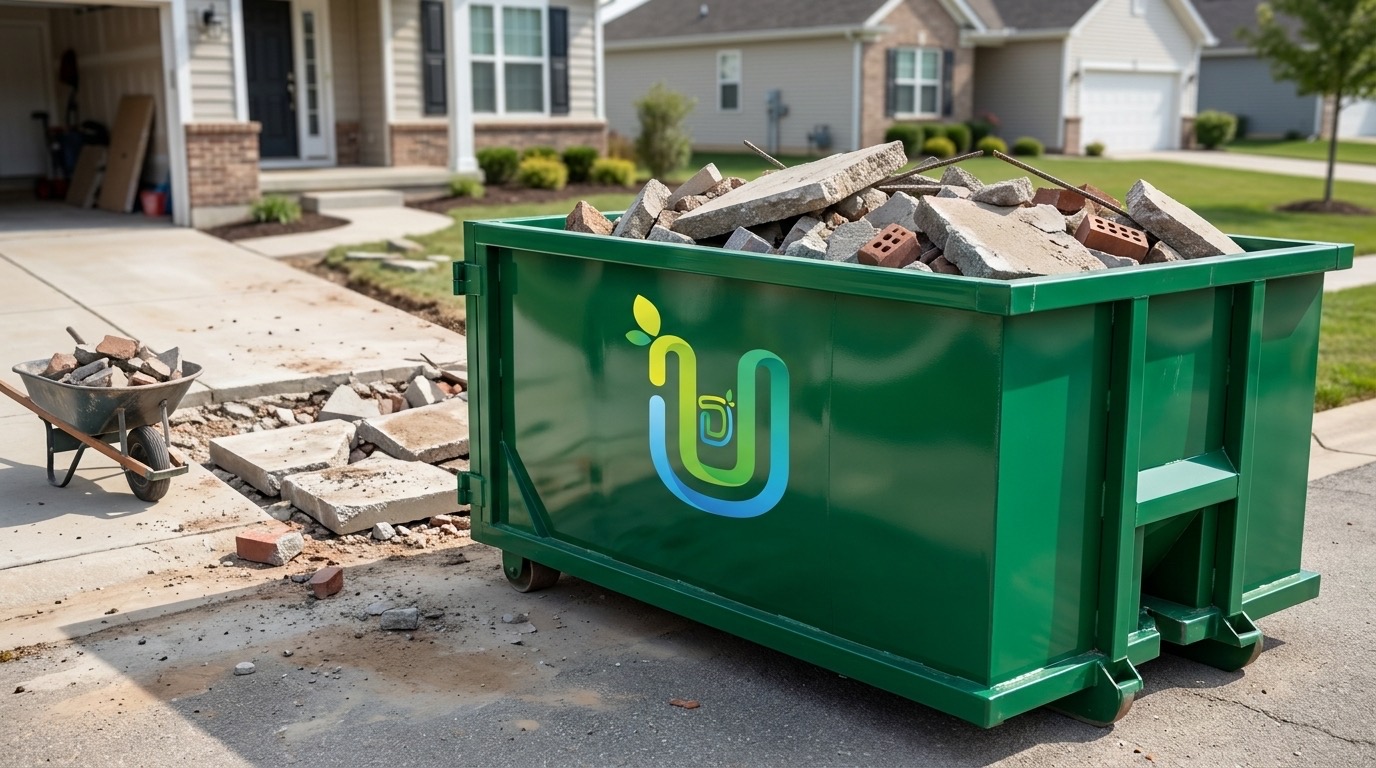
The one thing that trips people up on a concrete job is thinking about space when they should be thinking about weight. A concrete dumpster rental is not sized like a household cleanout, because a cubic yard of broken concrete weighs about 4,000 pounds, roughly ten times a cubic yard of loose household debris. That means a box can hit its weight limit while it still looks half empty, and the difference between doing it right and getting hit with an overage is knowing the weight before you load, not after. Run the numbers first with the free concrete calculator and the weight estimator, then pick the box, and the whole job gets predictable.
For concrete, brick, block, dirt, sand and asphalt, the right box is almost always the 10 yard, the low, compact heavy-debris container. It is not that a bigger box could not physically hold more concrete, it is that a bigger box loaded with concrete would be too heavy to legally and safely haul on the road. Federal and state trucking rules cap the gross weight of a loaded roll-off truck, which is the real reason heavy material rides in a smaller, dedicated box. A 20 yard can work for lighter mixed loads, but pure concrete or dirt belongs in the 10, and Ultimate Dumpsters quotes heavy material as a dedicated flat-rate box rather than by the ton, so the number holds.
The honest rule Ultimate Dumpsters gives every concrete customer is simple: do not mix. Real heavy material (concrete, brick, rock, dirt, sand) rides in its own dedicated box, and mixing regular trash or wood into a heavy-material box carries a mixing fee in some areas because it fouls the recycling and disposal path concrete takes. Clean concrete is often crushed and recycled, which is part of why a dedicated heavy box is priced differently from a standard mixed-debris rental. If your job is a driveway tear-out, a patio, a foundation or a sidewalk, keep the concrete separate, and if there is also framing lumber or drywall coming out, that goes in a standard box on its own. The weight limits guide lays out the included tonnage by size and what an overage costs, and the size calculator will point you to the right container when you are not sure.
On Long Island this comes up constantly, because Suffolk County is full of concrete tear-outs: patios, driveways and foundations from Islip to Brookhaven. A Bay Shore concrete dumpster rental for a driveway demo, a job in Ronkonkoma, Brentwood, Shirley or across Brookhaven all run on the same rule: size for the weight, keep the concrete clean, and price the dedicated box up front. The volume of a patio slab looks small in a driveway, but the weight is what sets the box and the number, every time.
So the concrete playbook is short and it saves money: estimate the weight before you rent, put heavy material in a dedicated 10 yard, keep it clean of trash and wood, and get a flat quote for the heavy box instead of guessing at tonnage. The story behind our numbers is 180,000-plus real orders, which is what the concrete and weight tools run on, so the estimate you get is real. When you know the weight and the box, price your ZIP and order online, or start from the concrete dumpster rental page and we will quote the dedicated heavy box for your exact job.
A cubic yard of concrete weighs roughly ten times a cubic yard of household debris, which is why heavy material rides in a smaller, dedicated box priced flat rather than by the ton. Bar length is a visual scale of weight per cubic yard, not a percentage. Material weights are typical ranges; your exact tonnage depends on the debris.
“Concrete is the one where people fight me on the size, they see a little patio and want the big box. But a cubic yard of concrete is two tons. Put that in a 20 or a 30 and the truck cannot legally lift it off your driveway, let alone drive it. The 10 yard is not us upselling a smaller box, it is physics and DOT weight law. Estimate the weight, take the dedicated heavy box, keep it clean, and the job is boring in the best way. That is what you want with concrete: boring.”
From the heavy-material desk
The mistake I see most on concrete jobs is mixing. People throw the old fence boards and a couple bags of trash on top of the broken slab to save a second box. That contaminates a clean concrete load that would otherwise get crushed and recycled, and in a lot of areas it triggers a mixing fee. Keep the concrete clean in its own box, put the wood and trash in a standard box, and you usually come out cheaper and greener.
For a homeowner doing a patio or a driveway tear-out, run the concrete calculator first. It takes the square footage and thickness and tells you the real tonnage, and once people see that a 12 by 12 patio is already a couple tons, the 10 yard makes sense instantly. Estimate first, then rent. It is the whole difference between a flat quote and an overage surprise.
On the commercial and contractor side, we quote heavy material as a dedicated flat-rate box on purpose. By-the-ton pricing on concrete is where budgets blow up, because nobody guesses the tonnage right. A flat heavy box for the ZIP, clean concrete only, and the number on the bid is the number on the invoice. That is what keeps a demo job on budget.
TODAY'S NUMBERS · FROM THE ORDER LEDGER
What size dumpster do I need for concrete, and why is it smaller than a regular dumpster?
For concrete, brick, block, dirt, sand or asphalt, the right container is almost always a 10 yard, the low, compact heavy-debris box, and it is smaller on purpose. A cubic yard of broken concrete weighs about 4,000 pounds, roughly ten times a cubic yard of loose household debris, so a concrete load hits its weight limit long before the box looks full. It is not that a bigger box could not physically hold more concrete, it is that a bigger box full of concrete would exceed the gross vehicle weight that federal and state rules allow a loaded roll-off truck to carry on the road, so it could not be legally or safely hauled. That is the real reason heavy material rides in a smaller, dedicated box. Ultimate Dumpsters quotes concrete and other heavy material as a dedicated flat-rate box rather than by the ton, so the price holds and there is no tonnage guessing game. The honest rules for a concrete job: estimate the weight before you rent using the free concrete calculator and weight estimator; put the concrete in its own box and do not mix in trash or wood, because clean concrete is often crushed and recycled and mixing can trigger a fee; and if the job also produces lumber or drywall, put that in a separate standard box. A driveway, patio, sidewalk or foundation tear-out is a classic 10 yard heavy-material job. Price your exact ZIP for a flat quote on the dedicated heavy box before you start.
See concrete dumpster rental →CONCRETE, TOOLS & SIZES
Placed by the desks of Ultimate Dumpsters. Every listing is real.
ESTIMATE THE WEIGHT FIRST. A 12x12 concrete patio is already a couple tons. The free concrete calculator turns square footage and thickness into real tonnage before you rent. Run it first.
Concrete calculator →THE HEAVY BOX. Concrete, brick, dirt and asphalt belong in a 10 yard, the low heavy-debris container. It is smaller on purpose because a cubic yard of concrete is about 4,000 lbs.
Price a 10 yard →DO NOT MIX. Keep concrete clean in its own box so it can be crushed and recycled. Wood and trash go in a standard box. Mixing can trigger a fee. See the weight rules.
Weight limits guide →FLAT QUOTE, NO TONNAGE GUESS. We quote heavy material as a dedicated flat-rate box, not by the ton, so the number holds. Price your ZIP for a concrete dumpster and order online.
Concrete rental →AN ADVERTISEMENT FROM THE PUBLISHER
The Box Arrives Before The Coffee Is Done
(866) 858-3867or skip the call entirely
Order online in about 2 minutesExact local pricing, tonnage and rental days included, e-sign and pay from your phone.
This edition targets concrete and heavy-material dumpster queries where dumpsterrentals.us shows real but under-clicked search demand in Search Console: a cluster of concrete dumpster rental queries (national plus Long Island cities such as Bay Shore, Ronkonkoma, Brookhaven, Shirley and Brentwood) sitting at the edge of page one, roughly position six to thirteen, with real impressions and almost no clicks, plus the broad concrete dumpster rental head term. It is written to route that intent into the existing live concrete service page, the concrete and weight tools, the weight limits guide, and the size and order pages, and every internal link here is a live page. The facts are real and verifiable: a cubic yard of concrete weighs roughly 4,000 pounds, about ten times a cubic yard of household debris, which is why concrete rides in a smaller dedicated box; heavy material is quoted as a dedicated flat-rate box rather than by the ton; federal and state gross vehicle weight rules cap how heavy a loaded roll-off truck can be, which is the real constraint on box size for concrete; clean concrete is commonly crushed and recycled, and mixing trash or wood into a heavy-material box can trigger a fee. Material weights are presented as typical ranges. The 180,000-plus order figure is the approved company brag with no exact proprietary count implied. External references are the U.S. EPA construction and demolition debris resource and the U.S. Department of Transportation federal vehicle weight overview. Team quotes are verbatim from Ultimate Dumpsters staff. No invented statistics. Article copy drafted with an external model and fact-checked against the live concrete service page, tools and ordering flow. Published weekday mornings by Ultimate Dumpsters. Vol. I · No. 41.
Cite this research: Ultimate Dumpsters, “Concrete Dumpster Rental: The Right Box for Heavy Debris, and Why Weight Beats Volume,” The Daily Haul, No. 41, Wednesday, September 9, 2026. https://dumpsterrentals.us/the-daily-haul/2026-09-09