Events Generate More Waste Than You Expect
Whether you are organizing a community festival, a corporate event, a wedding reception, a concert, a charity fundraiser, or a sporting event, waste management is one of those logistical details that can make or break the experience. A well-managed waste plan keeps the venue clean during the event, simplifies post-event cleanup, and prevents complaints from neighbors, venue owners, and local authorities.
The volume of waste an event generates depends on the number of attendees, the duration, whether food and beverages are served, and the type of venue. A general rule of thumb: events with food service generate approximately 2 to 4 pounds of waste per attendee. A 500-person outdoor festival serving food and drinks can easily produce 1,000 to 2,000 pounds of waste over the course of a day.
Planning Your Event Waste Management
Estimate waste volume. Use the per-attendee estimate above and adjust based on your event specifics. Events with extensive food service, vendor booths, and merchandise generate more waste. Events that are purely entertainment (concerts, sporting events) generate less, unless food and beverages are sold.
Identify waste streams. Most events produce three distinct waste streams: general trash, recyclables (bottles, cans, cardboard), and food waste. Separating these streams reduces disposal costs and demonstrates environmental responsibility to attendees and sponsors.
Check venue requirements. Many venues have specific waste management requirements written into their rental agreements. Public parks, convention centers, and fairgrounds may require you to use specific haulers, achieve certain recycling rates, or post waste management bonds.
Obtain permits. If your event is on public property, you may need a special event permit that includes waste management provisions. The permitting authority may require a waste management plan as part of your application.
Choosing the Right Dumpster Setup
For small events (under 100 attendees), a single 10-yard or 15-yard dumpster may be sufficient for post-event cleanup. Supplement with strategically placed trash cans and recycling bins during the event.
For medium events (100 to 500 attendees), plan for one or two 20-yard dumpsters. If the event spans multiple days, you may need a mid-event pickup and replacement or a larger container.
For large events (500+ attendees), work with your dumpster provider to develop a comprehensive waste management plan. This may include multiple dumpsters for different waste streams, scheduled pickups during the event, and dedicated recycling containers.
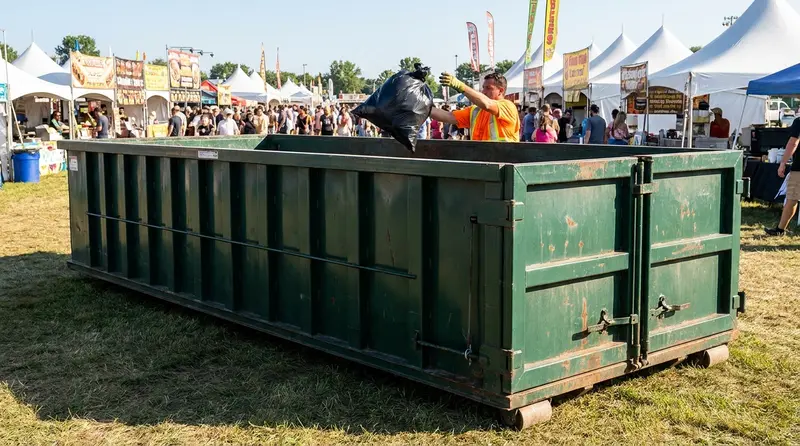
Placement matters. Position dumpsters in locations that are accessible to cleanup crews but not visible to attendees. Behind vendor areas, near kitchen or catering staging areas, and at venue exits are common placement spots. Ensure the delivery truck can access the dumpster for pickup without driving through the event area.
During the Event
Staff your waste stations. Attendees are much more likely to sort their waste correctly when a volunteer or staff member is present at waste stations to guide them. Studies show that staffed waste stations achieve recycling rates two to three times higher than unstaffed stations.
Empty bins frequently. Overflowing trash cans are unsightly and cause attendees to leave waste on the ground. Assign crew members to monitor and empty bins into the dumpster regularly throughout the event.
Handle food waste separately. If your event serves food, food waste can often be composted rather than landfilled. Partner with a local composting service or arrange a separate collection container for food scraps.
Post-Event Cleanup
The real waste management work happens after the last attendee leaves. Plan for a cleanup crew that can work immediately after the event ends while debris is still contained. Waiting until the next day allows wind to scatter lightweight items and makes the job significantly harder.
Walk the entire venue systematically, collecting waste from the perimeter inward. Break down vendor booths and collect their waste. Remove all signage, banners, and decorations. Check restroom areas for overflow.
Load the dumpster methodically: flatten cardboard, break down large items, and compact waste as you load. A well-loaded dumpster holds significantly more than one that is randomly filled.
Environmental Considerations
Events are an opportunity to demonstrate environmental leadership. Consider using compostable serviceware instead of plastic. Provide clearly labeled recycling stations. Partner with a waste hauler that prioritizes recycling and material recovery. Communicate your sustainability efforts to attendees. It builds goodwill and differentiates your event.
Some municipalities require large events to submit waste diversion reports showing what percentage of waste was recycled or composted. Even where not required, tracking this data demonstrates responsible event management and can support future permit applications.
Cost Planning
Budget for dumpster rental as part of your overall event costs. Typical costs for event waste management include the dumpster rental itself, any mid-event pickups, additional containers for recycling, staffing for waste stations, and post-event cleanup labor. For a 500-person one-day outdoor event, expect to spend $500 to $1,500 on waste management, depending on the setup complexity.
At Ultimate Dumpsters, we work with event organizers to design waste management plans that keep venues clean and costs predictable. From a single dumpster for a small fundraiser to a multi-container setup for a large festival, our team will help you get the logistics right.