Landscaping Waste Adds Up Fast
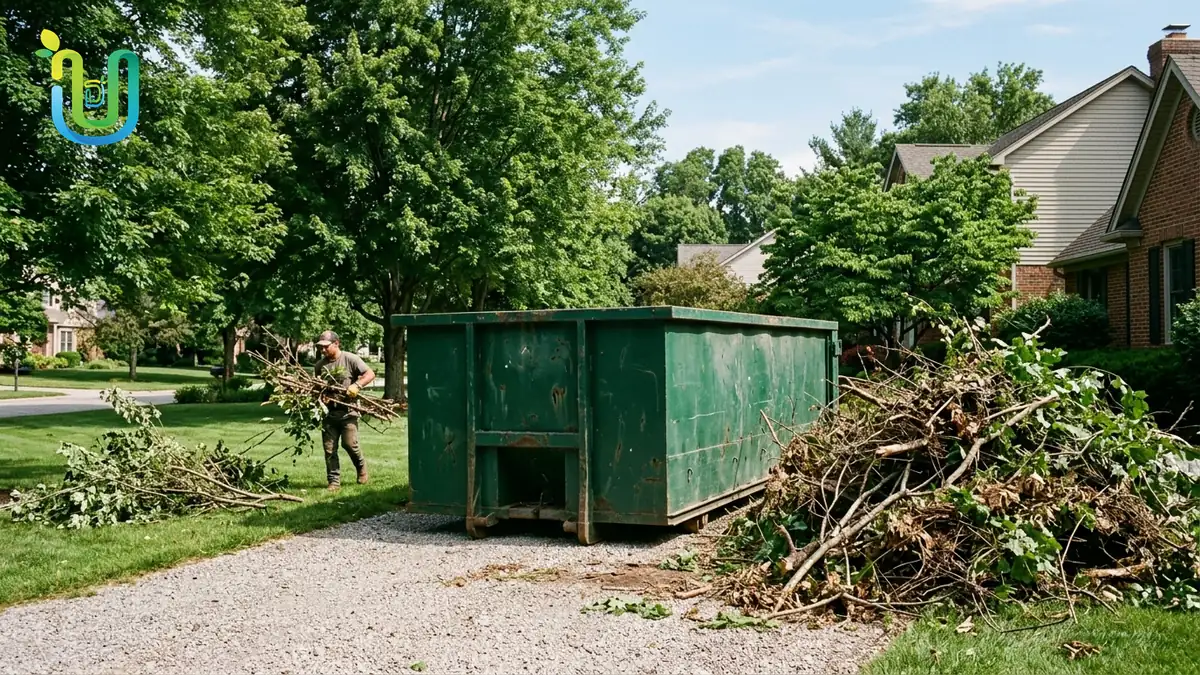
That weekend project to clean up the yard never seems as big in your head as it turns out to be in reality. Pulling out overgrown shrubs, removing a dead tree, tearing out old fencing, clearing brush, or regrading a section of the yard all produce surprisingly large volumes of waste. A single mature shrub can fill two cubic yards of dumpster space when it is cut up and loaded with its root ball. A fence line generates a truckload of posts, rails, and hardware.
The challenge with landscaping waste is its variety. You might be dealing with organic green waste, soil and dirt, stone and gravel, concrete from old patios or walkways, wood from fencing and structures, and general debris, all from a single project. Each material type has different disposal requirements and costs.
Types of Landscaping Waste
Green waste and brush. Branches, shrubs, hedge trimmings, tree limbs, and pulled plants are classified as green waste. Most municipalities offer green waste collection programs, and many recycling facilities accept green waste for composting or chipping into mulch. Green waste is light but bulky. It takes up a lot of dumpster space relative to its weight.
Soil and dirt. Clean fill dirt is one of the heaviest materials you will encounter in landscaping. A cubic yard of soil weighs approximately 2,200 pounds. Even a small regrading project can generate several tons of material. The good news is that clean soil is rarely a disposal problem: it can often be given away for free through community exchange sites or hauled to a fill site at minimal cost.
Sod and grass. Old sod is heavy, dirty, and awkward to handle. A pallet of sod weighs about 2,000 pounds, and removing sod from a yard means peeling up material of similar weight. It composts well but takes up significant space in a dumpster.
Concrete and stone. Old patio pavers, concrete walkways, retaining wall blocks, and decorative stone are extremely heavy. A dumpster loaded with concrete will hit its weight limit very quickly. Many recycling facilities accept clean concrete for crushing into aggregate, often at lower rates than landfill disposal.
Wood and fencing. Old fence posts, rails, and boards, along with deck lumber, landscape timbers, and railroad ties, are common in landscaping waste. Untreated wood can often be recycled. Pressure-treated, painted, or creosote-treated wood (like railroad ties) requires standard landfill disposal due to chemical content.
Dumpster Selection for Landscaping
The right dumpster for your landscaping project depends heavily on the type of material. For lightweight green waste and brush, volume is the limiting factor: you need space more than weight capacity. A 20-yard or 30-yard dumpster works well. For heavy materials like soil, concrete, and stone, weight is the limiting factor. A 10-yard dumpster with a heavy-debris weight allowance is usually the right choice.
Light landscaping cleanup (trimming, weeding, small shrub removal): 10-yard dumpster
Medium projects (fence removal, multiple shrub removal, garden bed overhaul): 15 to 20-yard dumpster
Major landscaping overhaul (tree removal, patio demolition, complete yard redesign): 20 to 30-yard dumpster
Heavy material only (concrete, stone, soil): 10-yard heavy-debris dumpster
Never mix heavy materials with light materials in the same dumpster if you can avoid it. A dumpster loaded with concrete on the bottom and brush on top will likely exceed its weight limit while appearing only half full. Rent a separate heavy-debris container for concrete and stone.
Green Waste Alternatives
Before putting green waste in a dumpster, consider these alternatives that may be cheaper or free:
Municipal green waste pickup. Many cities offer curbside green waste collection. Branches and yard waste placed at the curb in designated bins or bundles are collected on a regular schedule.
Composting. If you have space, creating a compost pile for organic landscaping waste produces valuable soil amendment and costs nothing. Leaves, grass clippings, small branches, and pulled plants all compost well.
Chipping services. Some tree service companies offer chipping for branches and brush. The chips can be used as mulch on your own property or hauled away by the service.
Community exchange. Clean fill dirt, rocks, and gravel are often wanted by other homeowners and can be listed for free pickup on community exchange sites.
Disposal Regulations
Most landscaping waste is classified as non-hazardous and can be disposed of in standard dumpsters. However, there are exceptions. Certain treated woods contain chemicals like chromated copper arsenate or creosote that classify them as hazardous in some jurisdictions. Soil that has been contaminated by pesticide application, fuel spills, or industrial activity requires testing and specialized disposal.
If you are unsure about a specific material, check with your dumpster provider or local waste management authority before loading it.
Seasonal Timing Tips
Spring and fall are the busiest seasons for landscaping projects and for dumpster rentals. If your project is flexible, scheduling during the quieter summer or winter months may give you better availability and potentially lower rates. However, working around frozen ground in winter or extreme heat in summer has its own challenges.
At Ultimate Dumpsters, we handle landscaping waste projects year-round. Our team will help you determine whether you need a standard dumpster, a heavy-debris container, or a combination of both based on your specific project scope and materials.