
The Daily Haul
ALL THE DEBRIS THAT'S FIT TO DUMP
The 40 Yard Dumpster: The Biggest Roll-Off We Run, and the Jobs That Actually Need It
The 40 yard is the largest roll-off box on the truck, and most people who think they need one do not. The big-box desk breaks down what a 40 yard really holds, the jobs it is built for, what it costs all in, and the one number that decides whether you should book it or step down to a 30.
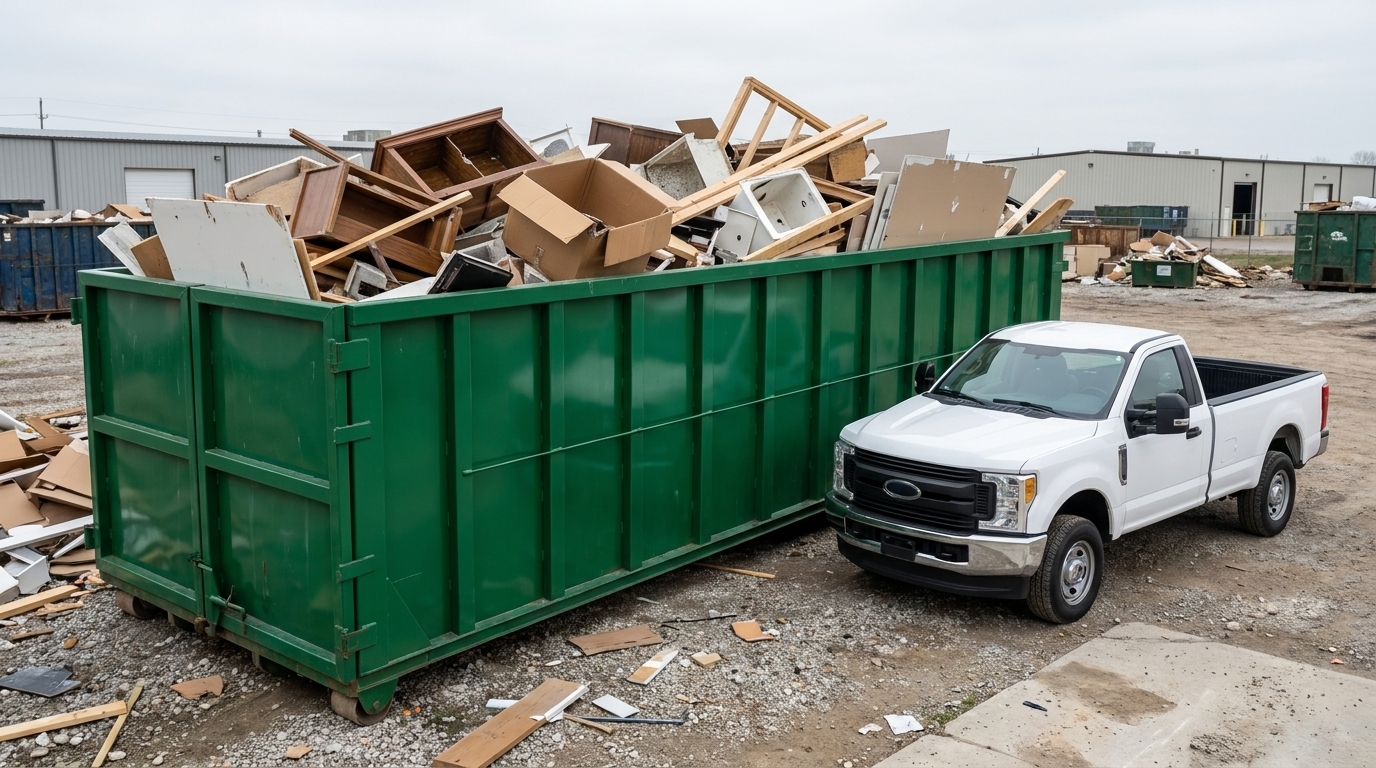
The 40 yard dumpster is the biggest roll-off container we deliver, roughly 40 cubic yards of space, about the volume of 16 to 20 pickup-truck loads. It is built for big, bulky, LIGHT debris: a full commercial cleanout, a large construction or demolition job, a whole-estate purge, a warehouse or retail gut. What it is NOT built for is heavy material. It comes with 4 tons included and an overage around $155 to $185 per ton depending on your market, and the box has a legal road weight limit no matter how much air is left inside. So the rule is simple: a 40 yard is for VOLUME, not weight. Fill it with concrete, dirt, shingles or tile and you will hit the weight ceiling with the box half empty, which is why heavy debris belongs in a smaller heavy-material box, not a 40.
Here is when the 40 yard is the right call. A commercial cleanout of an office, store or warehouse, where the debris is furniture, fixtures, cardboard and light fixtures that eat volume fast. A large construction or renovation job with framing lumber, drywall, insulation and packaging. A full demolition of a deck, an interior tear-out or a light structure. Or a whole-house estate cleanout where decades of belongings come out at once and a junk removal style haul in one big box beats five small pickups. If your pile is tall and bulky but not dense, the 40 earns its keep.
Now the number that actually decides it: WEIGHT, not how full the pile looks. Because the 40 comes with 4 tons and charges around $155 to $185 for each ton over, a load that goes heavy gets expensive quietly. Two tons over is roughly $310 to $370 you did not plan for. So before you book the biggest box, ask what the debris weighs, not just what it fills. Clean, light, bulky waste, book the 40 and enjoy the space. Anything with concrete, brick, dirt, roofing or tile mixed in, and you are better served pricing it as a heavy load in a 20 or 30 yard box, where the pricing is built for the tonnage. The disposal guides break down what common materials weigh so the bid is right the first time.
The most common mistake we see is renting a 40 when a 30 yard would have done the job for less. The jump from a 30 to a 40 is only about 10 cubic yards, roughly a third more space, but the 40 costs more and, on a tight driveway, it is a longer, heavier box that is harder to place. If you are between sizes, the honest answer is usually the 30. We would rather right-size you down and have you happy than sell you air you never fill. Compare the full size lineup and if you are not sure, tell us the job and we will call it.
So the 40 yard playbook: book it for big, bulky, LIGHT loads, a commercial gut, a large build, a full estate cleanout. Skip it for anything heavy and price that as a heavy-material load instead. Know the weight before you book so the overage never surprises you. And if you are torn between the 40 and the 30 yard, lean to the 30 unless the pile is genuinely huge. Get an exact all-in price for the 40 in your area at dumpsterrentals.us/order, or call (866) 858-3867 and tell us what the job is, we will make sure the box matches the debris, not just the fear of running out.
A 40 yard holds about 16 to 20 pickup loads and comes with 4 tons; overage runs about $155 to $185 per ton. It is a volume box, not a weight box. Most people between sizes should take the 30. Live per-ZIP pricing at order.
“The 40 is a volume box, not a weight box. If your pile is tall, bulky and light, it is perfect. If it is heavy, you will pay for air. Know the weight before you book the biggest one.”
From the big-box desk
Nine times out of ten when someone asks for a 40, a 30 does the job for less. The jump is only about a third more space, but a 40 is a longer, heavier box to place on a driveway. I would rather right-size you down than sell you air. If the pile is genuinely huge and light, the 40 is right, and I will tell you so.
The 40 is built for a commercial gut or a big build, furniture, fixtures, cardboard, framing, the bulky light stuff that eats volume. I set up the account and the drop so a warehouse or store cleanout goes into one big box instead of five small ones. Just keep the heavy material out of it, that is a different box.
A 40 yard is a big footprint, so placement matters. On a tight lot I will tell you straight whether it fits or whether a 30 is the smarter drop. Boards down to protect the surface, angled so it does not block access, and I confirm the spot before the truck rolls with a box this size.
TODAY'S NUMBERS · FROM THE ORDER LEDGER
What is a 40 yard dumpster used for, and how much does it cost?
A 40 yard dumpster is the largest roll-off container, holding about 40 cubic yards or roughly 16 to 20 pickup-truck loads, and it is built for big, bulky, lightweight debris rather than heavy material. It suits commercial cleanouts, large construction and renovation jobs, demolition of decks or interiors, and whole-house or estate cleanouts. It typically runs about $885 to $1,150 all in depending on the market, with 4 tons included and overage around $155 to $185 per ton. Because a roll-off has a legal road weight limit, a 40 yard is a volume box, not a weight box: heavy debris like concrete, dirt, roofing or tile belongs in a smaller heavy-material dumpster priced for the tonnage. Most people choosing between a 30 and a 40 are better served by the 30, since the 40 is only about a third larger. Get an exact all-in price for your area at dumpsterrentals.us/order or call (866) 858-3867.
The 40 yard dumpster →THE 40 YARD, AND WHEN TO STEP DOWN
Placed by the desks of Ultimate Dumpsters. Every listing is real.
THE BIGGEST BOX. 40 cubic yards, about 16 to 20 pickup loads, 4 tons included. Built for big bulky light loads, a commercial gut, a large build, a full estate cleanout.
The 40 yard dumpster →PROBABLY THE 30. Between a 30 and a 40? The 40 is only about a third bigger and costs more. Most jobs take the 30. We will right-size you down, not sell you air.
The 30 yard box →KEEP HEAVY OUT. Concrete, dirt, roofing and tile are weight, not volume. They belong in a smaller heavy-material box priced for the tonnage, not a 40.
Heavy-material sizes →AN ADVERTISEMENT FROM THE PUBLISHER
The Box Arrives Before The Coffee Is Done
(866) 858-3867or skip the call entirely
Order online in about 2 minutesExact local pricing, tonnage and rental days included, e-sign and pay from your phone.
This edition targets the 40 yard dumpster query cluster (40 yard dumpster, 40 yard dumpster rental, 40 yard roll off, biggest dumpster size, largest dumpster) which we currently rank poorly for and have no dedicated edition on. Prices are Ultimate Dumpsters service facts from live per-ZIP pricing: a 40 yard about $885 to $1,150 all in depending on market, 4 tons included, overage about $155 to $185 per ton, 7 rental days. Capacity figures (about 40 cubic yards, 16 to 20 pickup loads) are standard roll-off industry references. The volume-versus-weight guidance and the right-size-down-to-a-30 recommendation are Ultimate Dumpsters operating practice. Team quotes are verbatim from Ultimate Dumpsters staff. No invented statistics and no proprietary order counts. Article copy drafted with an external model and fact-checked against Ultimate Dumpsters real pricing and service data. Published weekday mornings by Ultimate Dumpsters. Vol. I · No. 31.
Cite this research: Ultimate Dumpsters, “The 40 Yard Dumpster: The Biggest Roll-Off We Run, and the Jobs That Actually Need It,” The Daily Haul, No. 31, Tuesday, August 25, 2026. https://dumpsterrentals.us/the-daily-haul/2026-08-25