Call Now:(866) 858-3867Live agents standing by
ALL THE DEBRIS THAT'S FIT TO DUMP
Weight is not something most homeowners need to think about. It is a contractor's number. Household cleanout debris is some of the lightest material there is, while a full interior demo can outrun a 20 yard's two tons in a hurry. That gap is exactly why every project gets a project manager and a custom quote.
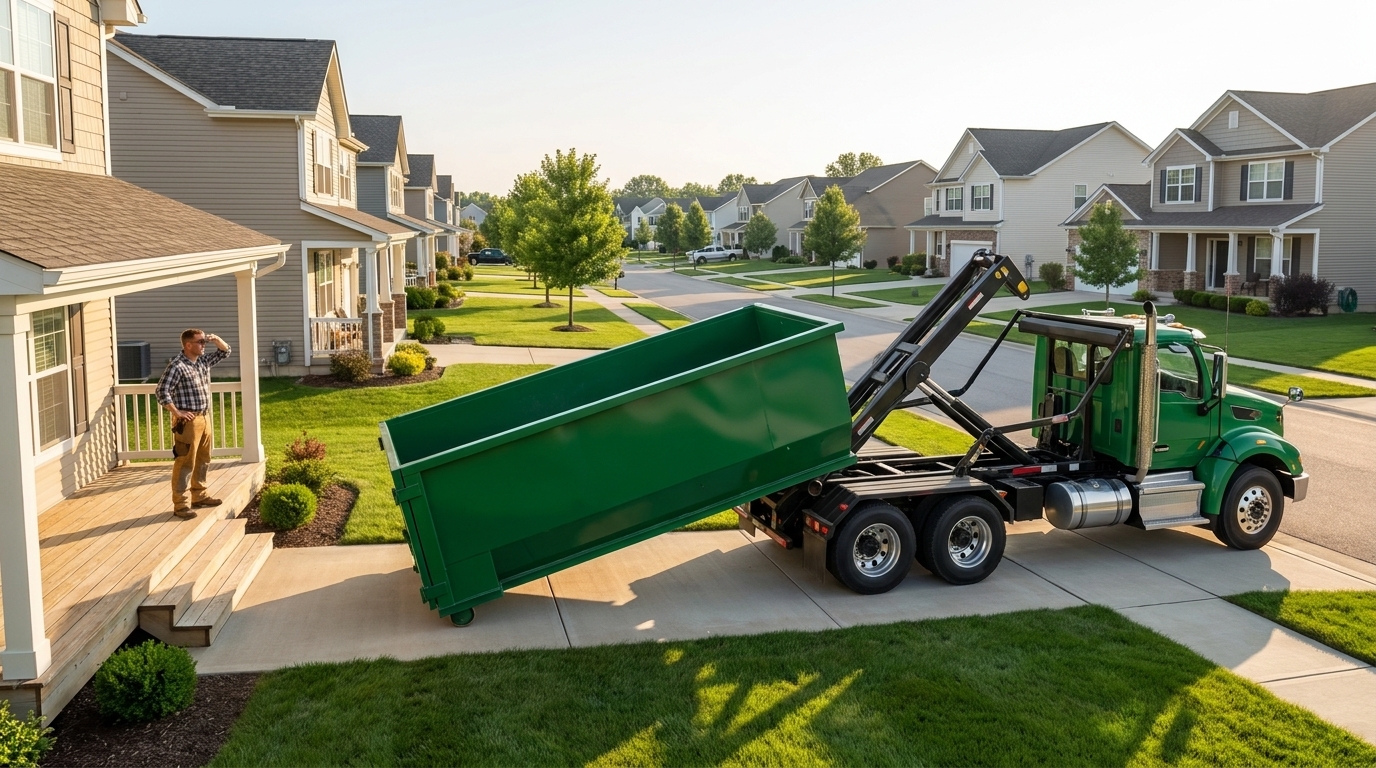
Start with the good news, because it applies to most people reading this. If you are clearing out a garage, a basement, or an estate, weight is almost never your problem. Household junk, furniture, boxes, and old carpet are some of the lightest material we haul, roughly 200 to 400 pounds a cubic yard. You will run out of room in the box long before you run out of allowance. For a normal cleanout, the weight limit is a non-issue.
Weight is a contractor's concern. When a crew is demoing a whole interior, plaster, tile, old subfloor, cabinets, the same 20 yard that would swallow three garages can blow past its two-ton allowance before it is even full. That is not the dumpster failing. It is the reality that a container comes in a handful of sizes, but the ways to fill one run into the hundreds. A demo, a re-roof, and a spring cleanout can use the identical box and land at wildly different weights.
That gap is the entire reason we quote every project instead of selling a box off a shelf. A project manager asks what you are actually tearing out, then sizes the container and the weight allowance to the job. Heavy material, dirt, concrete, brick, sand, rides in its own dedicated box on a flat rate, so the per-ton math disappears entirely. Match the debris to the right setup up front and the whole weight question goes quiet.
Here is how the number is actually measured, because it is more honest than people expect. After we pick up your box, the truck drives it to the waste facility and rolls across a certified scale on the way in, then dumps, then crosses the scale again on the way out. The difference between the two weights is your debris, printed on a ticket. It is extremely accurate, and it is the same scale the whole industry answers to.
Where we part ways with a lot of companies is the billing. We pro-rate overages. If your allowance is two tons and the ticket reads 2.1, you pay for one tenth of a ton, not a rounded-up full ton the way many haulers charge. Overage runs roughly $150 to $185 a ton and the exact rate for your ZIP is on your quote before you book. We usually get the weight back over the phone or by text to keep things moving; a formal weight ticket can be requested and takes a few business days to process.
Approximate weight per cubic yard by material; bar length scaled to concrete as the heavyweight reference, not a percentage.
“A homeowner cleaning out a house almost never hits a weight limit. It is the contractor gutting an interior who needs to plan. That is why we quote the project, not the box, and why we pro-rate the overage instead of rounding you up a full ton.”
Judi K., Site Services Specialist
If you are doing a cleanout, stop worrying about weight, your stuff is light and you will fill the box before you fill the allowance. It is the demo crews and the concrete guys who need to call ahead. And when there is an overage, we bill the actual tenths off the scale ticket. We do not round you up to the next full ton like the big guys do.
Contractors, this is your number, not the homeowner's. A full interior tear-out will find the ceiling on a 20 yard fast. Tell me what you are demoing and I size the box and the allowance to it up front. One call and the overage conversation never happens.
The loaded box is weighed on a certified scale at the waste facility: the truck weighs in, dumps, and weighs out, and the difference is your debris on a printed ticket. We pro-rate the overage to the tenth of a ton, so if your allowance is two tons and the ticket reads 2.1, you pay for one tenth, not a rounded-up full ton. Overage runs about $150 to $185 per ton and the exact rate for your ZIP is on your quote before you book. If your project is a demo or anything heavy, a project manager sizes the box and allowance to the job up front.
The full weight-limits guide →Placed by the desks of Ultimate Dumpsters. Every listing is real.
DO THE MATH FIRST. Our weight estimator turns your project into a tonnage and a dumpster size in about a minute. Free, no booking required.
WEIGHT ESTIMATOR →FOR ROOFERS. Tear-offs are heavy. Enter your roof square footage and layers, get the weight and the right box before you climb up.
SHINGLE CALCULATOR →HEAVY MATERIAL. Concrete, dirt, brick, and sand ride in a dedicated box on a flat rate. Call for a quote and skip the per-ton math entirely.
HEAVY DEBRIS BOXES →WE DON'T ROUND UP. Overage billed to the tenth of a ton off the scale ticket, not rounded to the next full ton like the big guys. Every quote shows your rate upfront.
ORDER ONLINE →FROM THE ARCHIVE. Yesterday's edition: the standard porta unit does 84 percent of the work, and the mix is the rest.
READ THE PORTA DESK →HOME OFFICE. Ultimate Dumpsters, nationwide roll-off and site services. Family owned, 180,000 rentals and counting.
ULTIMATEDUMPSTERS →AN ADVERTISEMENT FROM THE PUBLISHER
The Box Arrives Before The Coffee Is Done
(866) 858-3867or skip the call entirely
Order online in about 2 minutesExact local pricing, tonnage and rental days included, e-sign and pay from your phone.
Weight allowances and per-ton overage ranges from Ultimate Dumpsters live national pricing, July 2026; material weights per cubic yard are standard industry densities used in our own calculators. The legal road limit is the federal gross vehicle weight standard. Exact per-ZIP rates are quoted before booking. Published weekday mornings by Ultimate Dumpsters. Vol. I · No. 6.