Call Now:(866) 858-3867Live agents standing by
ALL THE DEBRIS THAT'S FIT TO DUMP
The wrong box is the most common way to overpay on a rental, and it happens two ways: too small, so you pay for a second haul, or too big for the weight, so you hit the allowance long before the box looks full. Here is how to size it once and be done, by the job, not by the guess.
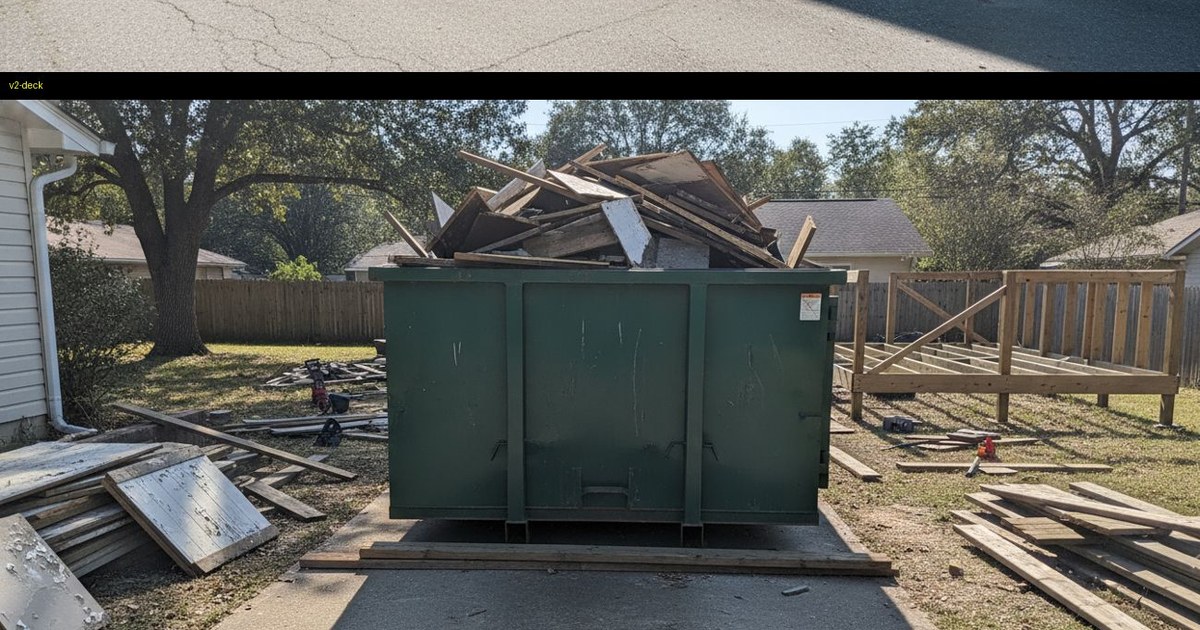
Most people size a dumpster by looking at the pile and guessing. That is exactly how the overpay happens. A dumpster has two limits, not one: the space inside it, and the weight it is allowed to carry. Light, bulky junk, an attic, a garage, a basement cleanout, fills the space long before it touches the weight. Dense material, a torn-out deck, tile, plaster, a small demo, hits the weight allowance while the box still looks half empty. Size to whichever limit your job hits first, and you never pay twice.
Start with the dimensions, because they are more alike than people expect. A 10 yard runs about 12 to 14 feet long, 8 feet wide, and 3.5 feet high, and holds roughly what fits in three to four pickup truck beds. A 15 yard is the same footprint with taller walls, closer to 4 feet, and it is the honest sweet spot a lot of homeowners skip because they do not know it exists. The 20 yard, our most popular by a wide margin, is about 22 feet long, 8 wide, and 4.5 high, and swallows six to eight pickup loads, enough for a full kitchen remodel, a roof tear-off, or a whole-house declutter. The 30 and 40 yards keep that same 22 foot floor and just add height, 6 feet and then 8 feet of wall, which is why they are for volume, an addition, a full gut, a commercial cleanout, and almost never for anything heavy.
Here is the weight math that trips people up, because it is not intuitive. A cubic yard of mixed household debris weighs a few hundred pounds, so a 20 yard box full of couches, drywall scraps, and boxes might come in around two tons, comfortably inside its allowance. Now fill that same box with concrete. A single cubic yard of concrete weighs roughly 4,000 pounds, two full tons, so it takes only about five cubic yards, a quarter of a 20 yard box, to hit the ten-ton legal road limit for the whole truck. That is why heavy material, concrete, dirt, brick, asphalt, and roofing shingles, goes in a small 10 yard box rated for weight, never a big one. A 40 yard packed with concrete is not just expensive, it physically cannot leave your driveway without breaking the law and the truck. When you tell us the material is heavy, we are not upselling by putting you in a smaller box. We are keeping the load legal.
The two mistakes that cost real money are both avoidable. The first is going one size too small to save fifty dollars and then needing a second haul, which costs a full second delivery and pickup, far more than the size up would have. The second is heaping the load over the rim. A box loaded above the top is a load that cannot legally or safely go down the road, and it is the one we care about most. If a piece of wood works loose at highway speed and hits a windshield and causes an accident, we are the ones at fault for that. So when a container comes in overfilled, we may have to ask you to pull some off the top before we can haul it, which stalls your job and helps nobody. Safety is our number one priority here. Everything has to sit level with the rim, nothing can fall out in transit, and getting the size right the first time is what keeps the load legal, keeps the road safe, and keeps your project moving without a return trip.
None of this needs a chart. It needs a two-minute conversation about what is actually going in the box: what the material is, roughly how much, and whether it is heavy. That is the whole game. Tell us that, and we match you to the container that clears the job in a single haul without blowing past the weight allowance or the fill line. Size it to the job in front of you, not to the pile you are staring at, and the rental becomes the thing you never think about again.
Roughly how residential and light-commercial jobs distribute across the four common roll-off sizes, per Ultimate Dumpsters operations. The 20 yard leads because it clears the majority of home projects in a single haul. Heavy material, concrete, dirt, brick, goes in a smaller weight-rated box regardless of volume. Shares are directional, not exact accounting.
“The 20 yard is only a little more expensive than the 10, and you get double the size and double the weight allowed. It is never double the price. Pound for pound it's the best workhorse for most jobs.”
Michael V., Head of Operations
People of course want to save money, so do I. But ordering a roll-off too small doesn't really save you anything if you end up needing a second container.
20 yards are the most common for a reason. They can handle 75 percent or more of projects. Pound for pound it's the best workhorse for most jobs. It's only a little more expensive than the 10 yard, and you get double the size and double the weight allowed. It is never double the price.
You can't put dirt, brick, or concrete in anything bigger than a 20 yard. It gets too heavy, the trucks can't lift it. It's dangerous, and it's just wrong. Heavy materials go in the 10 to 20 yarders, and the rest of the debris on a big project can go in a 30 or 40. If you've never done this before, call me.
Size to the job, not the pile, and remember every box has two limits: interior space and weight allowance. For light, bulky debris like a single room, a small bathroom, a garage, or a modest deck teardown, a 10 or 15 yard is usually right. A whole-house declutter, a kitchen remodel, or a roof tear-off is the 20 yard, our most popular size because it clears most home projects in one haul. Large renovations, full guts, and commercial cleanouts move up to the 30 or 40 yard. The exception is heavy material, concrete, dirt, and brick belong in a smaller box built for weight, because a large container full of dense material exceeds the legal road weight before it is full. One more reason size matters: debris must sit level with the top rim. An overfilled container cannot safely or legally go down the road, so if it is heaped over the top we may have to ask you to pull some off before we can haul it. Getting the size right the first time keeps the load safe and your project moving. The fastest way to get it exactly right is a two-minute call about what is actually going in the box.
The full dumpster size guide →Placed by the desks of Ultimate Dumpsters. Every listing is real.
SIZE IT IN TWO MINUTES. Not sure which box? Tell us what is going in it and we match the job to the right container in one short call. No second-haul surprises.
WHAT SIZE GUIDE →SEE YOUR REAL RATE. No games, no delivery-only headline. Enter your ZIP and job and get a guaranteed, deliverable price you can book right now.
ORDER ONLINE →HEAVY MATERIAL?. Concrete, dirt, or brick belong in a smaller weight-rated box, not a bigger one. Call and we put you in the right container the first time.
CALL FOR A QUOTE →KEEP IT LEVEL, KEEP IT SAFE. Debris must ride level with the top rim. An overfilled box cannot safely go down the road, and nothing can fall out in transit. The right size keeps the load compliant and everyone safe.
HOW TO LOAD IT →FROM THE ARCHIVE. Monday's edition: what a dumpster actually costs in 2026, and the honest reason the number moved, led by diesel up 60 to 70 percent.
READ THE PRICING DESK →HOME OFFICE. Ultimate Dumpsters, nationwide roll-off and site services. Family owned, 180,000 rentals and counting.
ULTIMATEDUMPSTERS →AN ADVERTISEMENT FROM THE PUBLISHER
The Box Arrives Before The Coffee Is Done
(866) 858-3867or skip the call entirely
Order online in about 2 minutesExact local pricing, tonnage and rental days included, e-sign and pay from your phone.
Size-to-job guidance, the project-to-container rules of thumb, and the popularity of the 20 yard are from Ultimate Dumpsters operations, July 2026. Included days and the pro-rated overage range are from live national pricing. The heavy-material weight limitation reflects legal road-weight limits on loaded roll-off containers. Exact per-ZIP rates and the right size for your specific job are confirmed before booking. Published weekday mornings by Ultimate Dumpsters. Vol. I · No. 8.